
Introduction: The Financial Snapshot That Tells Your Business Story
Imagine you could take a single photograph that captures everything about your business’s financial health at a specific moment. That’s exactly what a balance sheet does. It’s not just another financial statement—it’s the cornerstone of understanding where your business stands right now, how it got there, and where it might be headed.
Whether you’re a small business owner, an aspiring investor, a manager looking to advance, or simply someone wanting to understand financial statements better, mastering the balance sheet is non-negotiable. This document holds the answers to critical questions: Can we pay our bills next month? Are we growing too fast? How much is our business really worth?
Quick Insight: The balance sheet gets its name because it always balances—what the company owns (assets) must equal what it owes (liabilities) plus what the owners have invested (equity). This fundamental truth makes it one of the most reliable financial tools available.
In this comprehensive guide, we’ll demystify balance sheets step by step. We’ll start with the absolute basics and gradually build your understanding until you can analyze balance sheets like a pro. You’ll learn not just what the numbers mean, but how to use them to make better decisions, whether you’re running a business, investing in one, or managing your personal finances.
By the end of this guide, you’ll be able to look at any balance sheet and immediately understand the story it tells about financial health, risk exposure, and growth potential. Let’s begin this journey to financial literacy together.
What Exactly Is a Balance Sheet?
A balance sheet is one of the three fundamental financial statements (along with the income statement and cash flow statement) that provides a snapshot of a company’s financial position at a specific point in time. Think of it as a financial photograph taken at midnight on the last day of the accounting period.
Unlike the income statement, which shows performance over a period of time (like a movie), the balance sheet shows the financial position at a single moment (like a photograph). This distinction is crucial for understanding what each statement tells you.
The Core Structure
Every balance sheet follows the same basic structure:
| Assets | Liabilities & Equity |
|---|---|
| What the company owns | How those assets are financed |
| Current Assets | Current Liabilities |
| Cash: $50,000 | Accounts Payable: $30,000 |
| Inventory: $80,000 | Short-term Debt: $20,000 |
| Non-Current Assets | Long-term Liabilities |
| Equipment: $100,000 | Long-term Loan: $60,000 |
| Buildings: $200,000 | |
| Equity | |
| Owner’s Capital: $200,000 | |
| Retained Earnings: $120,000 | |
| Total Assets: $430,000 | Total Liabilities & Equity: $430,000 |
Why Balance Sheets Matter
Balance sheets serve multiple critical functions:
- Financial Health Assessment: Shows liquidity, solvency, and overall stability
- Credit Analysis: Lenders use it to determine creditworthiness
- Investment Decisions: Investors analyze it to assess risk and growth potential
- Management Tool: Helps managers make informed operational decisions
- Regulatory Compliance: Required for tax filings and regulatory reporting
“The balance sheet is the foundation upon which all sound financial decisions are built. You cannot understand a business without understanding what it owns and what it owes.” — Warren Buffett
Every business—from the smallest sole proprietorship to the largest multinational corporation—prepares balance sheets. They’re essential for internal management, external reporting, and strategic planning. Understanding how to read and interpret them is a fundamental business skill that pays dividends throughout your career.
The Three Main Components of Every Balance Sheet
Every balance sheet consists of three fundamental components that must always balance. Understanding these components is the key to unlocking the insights hidden within any balance sheet.
1. Assets: What the Business Owns
Assets are resources with economic value that the business controls, expecting to provide future benefits. They’re categorized based on how quickly they can be converted to cash and how long they’ll be used in the business.
Current Assets (Liquid)
- Cash and cash equivalents
- Accounts receivable
- Inventory
- Prepaid expenses
- Marketable securities
Convertible to cash within one year
Non-Current Assets (Fixed)
- Property, plant, equipment
- Intangible assets
- Long-term investments
- Goodwill
- Deferred tax assets
Used for more than one year
2. Liabilities: What the Business Owes
Liabilities represent obligations arising from past transactions that require future payment of assets or services. They’re claims against the company’s assets by creditors.
Current Liabilities
Due within one year: accounts payable, short-term debt, accrued expenses, deferred revenue.
Long-term Liabilities
Due after one year: long-term loans, bonds payable, lease obligations, pension liabilities.
3. Equity: The Owner’s Stake
Equity represents the residual interest in assets after deducting liabilities. It’s what remains for owners if all assets were sold and all debts paid.
- Contributed Capital: Money invested by owners
- Retained Earnings: Cumulative profits kept in the business
- Treasury Stock: Company’s own repurchased shares
- Other Comprehensive Income: Certain unrealized gains/losses
Remember: Assets = Liabilities + Equity. This equation must always hold true. If it doesn’t, there’s an error in the accounting records. This balancing act is why it’s called a balance sheet.
The relationship between these three components tells a story about how the business is financed (through debt or equity), how resources are allocated, and how much risk the owners are taking.
The Accounting Equation: The Foundation of Every Balance Sheet
At the heart of every balance sheet lies a simple yet profound mathematical truth: Assets = Liabilities + Equity. This isn’t just an accounting convention—it’s a fundamental reality of how businesses are structured and financed.
To truly master this foundational concept, explore our in-depth guide on the Accounting Equation: Assets, Liabilities and Equity Explained, which provides practical examples and real-world applications.
Why This Equation Always Balances
Think of it this way: every asset in your business had to come from somewhere. Either:
- Creditors provided it (creating a liability)
- Owners provided it (creating equity)
- The business earned it through operations (increasing equity via retained earnings)
There is no fourth option. This is why the equation must balance—it’s accounting’s version of the law of conservation of energy. Resources don’t appear from nowhere, and they don’t disappear into nothing.
Real-World Examples
Example 1: Starting a Business
Maria invests $100,000 to start her bakery.
Example 2: Buying Equipment with Loan
The bakery buys an oven for $20,000, paying $5,000 cash and financing $15,000.
Total Assets: $115,000 = Total Liabilities & Equity: $115,000
Example 3: Earning Profit
The bakery earns $10,000 profit in its first month.
Total Assets: $125,000 = Total Liabilities & Equity: $125,000
The Dual Effect of Transactions
Every business transaction affects at least two accounts, maintaining the balance. This is the essence of double-entry bookkeeping, which ensures accuracy and completeness in financial records.
| Transaction | Effect on Assets | Effect on Liabilities | Effect on Equity |
|---|---|---|---|
| Owner investment | Increase | No change | Increase |
| Bank loan | Increase | Increase | No change |
| Purchase inventory for cash | No net change (one asset up, one down) | No change | No change |
| Earn revenue on credit | Increase | No change | Increase |
| Pay expense in cash | Decrease | No change | Decrease |
Understanding this equation and how transactions affect it is the first step toward financial literacy. It transforms the balance sheet from a confusing document into a logical, understandable statement of financial position.
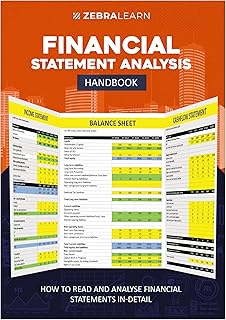
Essential Resources for Financial Mastery
Build your financial analysis toolkit with these carefully selected resources. From beginner guides to advanced analytical tools, having the right references can accelerate your understanding of balance sheets and financial statements.
Explore Financial Analysis Resources on AmazonUnderstanding Assets: The Resources That Drive Value
Assets are the economic resources that enable a business to operate, grow, and generate value. They represent investments made today that are expected to produce benefits tomorrow. Understanding the different types of assets and how they’re valued is crucial for accurate balance sheet analysis.
Current Assets: The Lifeblood of Daily Operations
Current assets are expected to be converted to cash, sold, or consumed within one year or the operating cycle (whichever is longer). They provide liquidity and fund day-to-day operations.
Typical Current Assets Section
| Current Assets | |
| Cash and Cash Equivalents | $125,000 |
| Accounts Receivable (net) | $85,000 |
| Inventory | $150,000 |
| Prepaid Expenses | $15,000 |
| Short-term Investments | $50,000 |
| Total Current Assets | $425,000 |
Key Current Assets Explained:
Cash and Cash Equivalents: The most liquid assets, including physical currency, checking accounts, and highly liquid investments with maturities of three months or less.
Accounts Receivable: Money owed by customers for credit sales. Usually shown “net” of an allowance for doubtful accounts (estimated uncollectible amounts).
Inventory: Goods held for sale or materials for production. Valued at lower of cost or market value. Manufacturing companies show raw materials, work-in-process, and finished goods separately.
Prepaid Expenses: Payments made in advance for future benefits (insurance, rent, subscriptions). These are assets because they represent future economic benefits.
Non-Current Assets: Long-term Value Creation
Non-current assets (fixed assets) are used in operations for more than one year and aren’t intended for resale. They’re typically illiquid and represent long-term investments in the business.
Typical Non-Current Assets Section
| Property, Plant & Equipment | |
| Land | $200,000 |
| Buildings | $500,000 |
| Less: Accumulated Depreciation | ($100,000) |
| Equipment | $300,000 |
| Less: Accumulated Depreciation | ($75,000) |
| Vehicles | $80,000 |
| Less: Accumulated Depreciation | ($30,000) |
| Net Property, Plant & Equipment | $775,000 |
| Intangible Assets | |
| Goodwill | $150,000 |
| Patents (net of amortization) | $50,000 |
| Trademarks | $25,000 |
| Total Non-Current Assets | $1,000,000 |
Key Non-Current Assets Explained:
Property, Plant & Equipment (PP&E): Tangible long-term assets used in operations. Shown at historical cost less accumulated depreciation (except land, which isn’t depreciated).
Intangible Assets: Non-physical assets with economic value (patents, trademarks, copyrights, goodwill). Goodwill arises from acquisitions when purchase price exceeds fair value of net assets.
Long-term Investments: Investments in other companies, real estate, or securities not intended for quick sale.
Asset Valuation Warning: Assets are generally recorded at historical cost, not current market value. A building purchased 20 years ago for $500,000 might be worth $2 million today but still shows as $500,000 less depreciation. This accounting convention can significantly understate true asset values on balance sheets.
Working Capital: The Critical Current Asset Metric
Working capital = Current Assets – Current Liabilities. Positive working capital indicates a company can meet short-term obligations. Negative working capital suggests potential liquidity problems.
Working Capital Calculation
Example: If current assets = $425,000 and current liabilities = $300,000, then working capital = $125,000. This means the company has $125,000 more in liquid assets than short-term obligations.
The composition and quality of assets reveal much about a company’s business model, efficiency, and risk profile. A technology company will have more intangible assets, while a manufacturer will have substantial PP&E. Understanding these differences is key to meaningful analysis.
Understanding Liabilities: The Obligations That Fund Growth
Liabilities represent claims against a company’s assets by creditors and other parties. They’re not inherently bad—in fact, responsible use of debt (liabilities) can fuel growth and increase returns for owners. The key is understanding the types, costs, and risks associated with different liabilities.
Current Liabilities: Short-term Obligations
Current liabilities are due within one year or the operating cycle. They represent the company’s short-term financial obligations and are crucial for assessing liquidity risk.
Typical Current Liabilities Section
| Current Liabilities | |
| Accounts Payable | $180,000 |
| Short-term Debt | $50,000 |
| Accrued Expenses | $45,000 |
| Unearned Revenue | $25,000 |
| Current Portion of Long-term Debt | $30,000 |
| Income Taxes Payable | $20,000 |
| Total Current Liabilities | $350,000 |
Key Current Liabilities Explained:
Accounts Payable: Amounts owed to suppliers for purchases made on credit. This is essentially free short-term financing if paid within discount periods.
Short-term Debt: Loans and lines of credit due within one year. Often used to finance seasonal inventory needs or bridge temporary cash shortfalls.
Accrued Expenses: Expenses incurred but not yet paid (wages, utilities, interest). These represent the matching principle in accounting—recording expenses in the period they help generate revenue.
Unearned Revenue: Payments received for goods or services not yet delivered. This is a liability because the company owes either the product/service or a refund.
Long-term Liabilities: Strategic Financing
Long-term liabilities are obligations due beyond one year. They typically finance major investments in assets that will generate returns over many years.
Typical Long-term Liabilities Section
| Long-term Liabilities | |
| Long-term Debt | $400,000 |
| Less: Current Portion | ($30,000) |
| Bonds Payable | $250,000 |
| Deferred Tax Liability | $60,000 |
| Lease Obligations | $90,000 |
| Pension Liabilities | $40,000 |
| Total Long-term Liabilities | $810,000 |
Key Long-term Liabilities Explained:
Long-term Debt: Loans with repayment terms exceeding one year. Used to finance major capital expenditures like equipment, buildings, or acquisitions.
Bonds Payable: Debt securities issued to investors. Bonds typically have fixed interest rates and maturity dates, making them predictable but potentially expensive if interest rates fall.
Deferred Tax Liability: Taxes owed in future years due to timing differences between accounting and tax rules. Not an actual debt to tax authorities but an obligation that will eventually come due.
Lease Obligations: Under modern accounting rules (ASC 842/IFRS 16), most leases must be recognized as liabilities, reflecting the obligation to make future lease payments.
Contingent Liabilities: The “What If” Obligations
Contingent liabilities are potential obligations that depend on future events. They’re disclosed in notes to financial statements rather than on the balance sheet itself, unless payment is probable and amount can be reasonably estimated.
- Lawsuits: Potential losses from pending litigation
- Warranties: Future costs of honoring product warranties
- Guarantees: Obligations if another party defaults
- Environmental Cleanup: Potential costs of remediation
Analyst Tip: Always read the notes to financial statements! Contingent liabilities disclosed there can significantly impact risk assessment. A company with multiple major lawsuits might be much riskier than the balance sheet alone suggests.
The Debt-to-Equity Ratio: Balancing Risk and Return
This key ratio shows the relative proportion of debt and equity used to finance assets. It helps assess financial risk and leverage.
Debt-to-Equity Ratio
Interpretation:
- Ratio < 1: More equity than debt (conservative financing)
- Ratio = 1: Equal debt and equity
- Ratio > 1: More debt than equity (aggressive financing)
Understanding liabilities requires looking beyond the numbers to the story they tell about financing strategy, risk management, and future obligations. A company with growing liabilities might be aggressively expanding—or it might be struggling to cover operating losses. Context is everything.

Tools for Financial Analysis & Accounting
Streamline your financial analysis with professional-grade software and tools. From accounting platforms to financial modeling software, the right technology can transform complex data into actionable insights and save countless hours.
Discover Financial Analysis Tools on AmazonUnderstanding Equity: The Owner’s Stake in the Business
Equity represents the residual interest in assets after deducting liabilities. It’s what truly belongs to the owners—the portion of the business they’ve funded through investments and retained profits. Unlike liabilities, equity doesn’t have to be repaid on a fixed schedule, but it does represent the owners’ claim on future profits.
Remember: Equity = Assets – Liabilities. This simple calculation shows why equity is called the “net worth” or “book value” of the business. It’s what would remain if all assets were sold and all debts paid.
Components of Equity: Building the Owner’s Stake
Typical Equity Section
| Shareholders’ Equity | |
| Common Stock ($1 par value, 100,000 shares authorized, 50,000 issued) | $50,000 |
| Additional Paid-in Capital | $450,000 |
| Retained Earnings | $320,000 |
| Treasury Stock (5,000 shares at cost) | ($75,000) |
| Accumulated Other Comprehensive Income | $15,000 |
| Total Shareholders’ Equity | $760,000 |
Key Equity Components Explained:
Contributed Capital (Paid-in Capital): What investors have directly put into the business.
- Common Stock: At par value (nominal amount per share)
- Additional Paid-in Capital: Amount above par value paid by investors
Example: If a company issues 1,000 shares at $15 each with $1 par value:
- Common Stock increases by $1,000 (1,000 shares × $1 par)
- Additional Paid-in Capital increases by $14,000 (1,000 shares × $14 excess over par)
- Total equity increases by $15,000
Retained Earnings: Cumulative profits kept in the business rather than distributed as dividends. This is the internally generated portion of equity.
Treasury Stock: Company’s own shares that have been repurchased. Shown as a contra-equity account (negative balance). Reduces total equity and outstanding shares.
Accumulated Other Comprehensive Income (AOCI): Certain unrealized gains and losses not included in net income, such as foreign currency translation adjustments or unrealized gains/losses on available-for-sale securities.
Different Business Structures, Different Equity
| Business Type | Equity Section Name | Key Components | Special Considerations |
|---|---|---|---|
| Sole Proprietorship | Owner’s Equity | Owner’s Capital, Owner’s Drawings | Simplest structure, no stock |
| Partnership | Partners’ Equity | Capital accounts for each partner | Profit/loss allocation per agreement |
| Corporation | Shareholders’ Equity | Common Stock, APIC, Retained Earnings | Most complex, may have multiple stock classes |
| LLC | Members’ Equity | Members’ Capital | Hybrid, often taxed as partnership |
Return on Equity: Measuring Owner’s Return
ROE measures how efficiently a company generates profits from shareholders’ investments. It’s a key metric for investors.
Return on Equity (ROE)
Interpretation:
- Higher ROE = More efficient use of equity capital
- Compare to industry averages and company’s cost of equity
- Sustainable growth rate = ROE × Retention Ratio
“In the long run, the return on equity is the single most important determinant of a company’s value. Businesses earning high returns on equity are worth more than dollar for dollar of earnings than those earning low returns.” — Robert Hagstrom
The Statement of Changes in Equity
While not part of the balance sheet itself, this supporting statement explains how equity changed during the period. It reconciles beginning and ending equity balances, showing:
- New investments by owners
- Net income or loss for the period
- Dividends or distributions to owners
- Other comprehensive income items
- Share repurchases or issuances
Understanding equity means understanding who really owns the business, how much they’ve invested, how much the business has earned for them, and what claims they have on future profits. It’s the ultimate measure of value creation for owners.
How to Read a Balance Sheet: A Step-by-Step Guide
Reading a balance sheet effectively requires more than just understanding the components—it requires knowing what to look for and how to interpret what you find. This systematic approach will help you extract maximum insight from any balance sheet.
Step 1: Start with the Big Picture
Before diving into details, get oriented:
- Date: Balance sheets are snapshots, not movies. Note the exact date.
- Company Name: Context matters—different industries have different norms.
- Currency: Ensure you’re looking at the correct currency units.
- Format: Account format (left-right) or report format (top-down).
Step 2: Verify the Balance
The first check should always be: Do assets equal liabilities plus equity? If not, there’s either an error or you’re missing something (like minority interests).
This simple check catches many basic errors and confirms you’re looking at a complete statement.
Step 3: Analyze Asset Composition
Ask these key questions about assets:
| Question to Ask | What It Reveals | Red Flags |
|---|---|---|
| What percentage of assets is current vs. fixed? | Business model and liquidity | Very low current assets in a trading business |
| How old are fixed assets? (Check accumulated depreciation) | Investment in maintenance vs. growth | Little depreciation on old assets (may be under-investing) |
| What’s the inventory turnover? (Compare to sales) | Sales efficiency and obsolescence risk | Growing inventory with flat sales |
| How much is accounts receivable relative to sales? | Credit policy and collection efficiency | Receivables growing faster than sales |
| Is there significant goodwill? | History of acquisitions | Goodwill impairment risks |
Step 4: Analyze Liability Structure
Evaluate the sources of financing:
Healthy Signs
- Current liabilities covered by current assets
- Reasonable debt levels for the industry
- Long-term debt financing long-term assets
- Growing equity through retained earnings
Warning Signs
- Current liabilities > current assets
- Short-term debt financing fixed assets
- Rising debt with falling profits
- Frequent debt refinancing
Step 5: Evaluate Equity Quality
Not all equity is created equal. High-quality equity comes primarily from retained earnings (profitable operations) rather than continuous new investments.
Equity Quality Ratio = Retained Earnings ÷ Total Equity
Higher ratio (closer to 1) = More internally generated equity
Lower ratio (closer to 0) = More dependent on investor funding
Step 6: Calculate Key Ratios
Transform raw numbers into insights with these essential ratios:
Liquidity Ratios
Measures ability to meet short-term obligations
Solvency Ratios
Measures long-term financial stability
Efficiency Ratios
Measures how efficiently assets generate sales
Step 7: Read the Notes
The balance sheet tells only part of the story. The notes to financial statements provide essential context:
- Accounting policies: How assets and liabilities are valued
- Contingencies: Potential liabilities not on balance sheet
- Debt terms: Interest rates, covenants, maturity dates
- Lease details: Future lease obligations
- Segment information: Performance by business unit
Professional Tip: Always compare balance sheets over time (trend analysis) and against competitors (comparative analysis). A single balance sheet provides limited insight—it’s the changes and comparisons that reveal the real story.
Step 8: Connect to Other Statements
The balance sheet doesn’t exist in isolation. Connect it to:
- Income Statement: Net income flows to retained earnings in equity
- Cash Flow Statement: Changes in balance sheet accounts explain cash flows
- Previous Balance Sheets: Shows how the company is evolving
By following this systematic approach, you’ll move from simply reading numbers to understanding the financial story they tell about the business’s health, strategy, and prospects.
Key Financial Ratios Derived from Balance Sheets
Financial ratios transform balance sheet data into powerful insights about performance, risk, and efficiency. They allow for meaningful comparisons across companies, industries, and time periods. Here are the most important balance sheet ratios every analyst should know.
Liquidity Ratios: Can We Pay Our Bills?
Liquidity ratios measure a company’s ability to meet short-term obligations. They’re crucial for assessing financial stability and risk of default.
Current Ratio
Interpretation:
- > 2.0: Very comfortable liquidity position
- 1.5 – 2.0: Healthy liquidity
- 1.0 – 1.5: Adequate but monitor closely
- < 1.0: Potential liquidity problems (current liabilities exceed current assets)
Quick Ratio (Acid-Test Ratio)
A more conservative measure that excludes inventory (which may not be easily convertible to cash). Particularly important for businesses with slow-moving or specialized inventory.
Cash Ratio
The most conservative liquidity measure. Shows what percentage of current liabilities could be paid immediately with available cash. Rarely exceeds 0.5 in healthy companies (too much cash is inefficient).
Solvency Ratios: Long-term Financial Health
Solvency ratios assess a company’s ability to meet long-term obligations and survive financial stress. They measure the cushion available to withstand losses.
Debt-to-Equity Ratio
Industry Examples:
- Technology companies: 0.2 – 0.5 (low debt)
- Manufacturing: 0.5 – 1.0 (moderate debt)
- Utilities: 1.5 – 2.5 (high debt, stable cash flows)
- Banks: 4.0 – 12.0 (very high, but different business model)
Debt-to-Assets Ratio
Shows what percentage of assets are financed by debt. Lower is generally safer. Also called the “leverage ratio.”
Equity Ratio
The complement to debt-to-assets. Shows what percentage of assets are financed by equity. Higher means less financial risk.
Efficiency Ratios: How Well Are Resources Used?
Efficiency ratios measure how effectively a company uses its assets to generate sales and profits.
Asset Turnover Ratio
Measures sales generated per dollar of assets. Higher is better. Varies by industry:
- Retail: 2.0 – 3.0 (high turnover, low margins)
- Manufacturing: 0.5 – 1.5 (moderate turnover)
- Utilities: 0.3 – 0.5 (low turnover, high asset base)
Inventory Turnover
How quickly inventory is sold and replaced. Higher is usually better, but too high may indicate stockouts. Compare to industry averages.
Days Sales Outstanding (DSO)
Average number of days to collect receivables. Lower is better. Compare to credit terms offered to customers.
Interpreting Ratios: Context is Everything
Critical Warning: No ratio should be interpreted in isolation. Always consider:
- Industry norms: What’s normal for one industry may be abnormal for another
- Company history: Trends over time are more meaningful than single points
- Business cycle: Ratios naturally fluctuate with economic conditions
- Accounting policies: Different methods affect comparability
- Company strategy: A “bad” ratio might reflect a deliberate strategic choice
The most effective analysts use ratios as starting points for investigation, not as definitive answers. A “bad” ratio prompts the question “Why?” rather than the conclusion “Avoid.”
“Financial ratios are like medical vital signs. Individually, they provide limited information. Together, interpreted by a skilled professional who understands context, they reveal the health of the business.” — Unknown Financial Analyst
Mastering these ratios gives you a powerful toolkit for financial analysis. But remember: ratios summarize the past. Your real value as an analyst comes from using them to understand the present and anticipate the future.
Balance Sheet Analysis Techniques
Beyond calculating ratios, sophisticated balance sheet analysis involves multiple techniques that reveal different aspects of financial health. Combining these approaches provides a comprehensive understanding of a company’s position and prospects.
Horizontal Analysis: Tracking Changes Over Time
Horizontal analysis (trend analysis) examines changes in balance sheet items over multiple periods. It answers: “How is the company evolving?”
Horizontal Analysis Example
| Account | Year 1 | Year 2 | Year 3 | 2-Year Change | Annual Growth |
|---|---|---|---|---|---|
| Cash | $50,000 | $65,000 | $80,000 | +60% | +26.5% annually |
| Accounts Receivable | $40,000 | $55,000 | $75,000 | +87.5% | +37% annually |
| Inventory | $60,000 | $70,000 | $85,000 | +41.7% | +19% annually |
| Total Current Assets | $150,000 | $190,000 | $240,000 | +60% | +26.5% annually |
| Property, Plant & Equipment | $200,000 | $230,000 | $270,000 | +35% | +16% annually |
| Total Assets | $350,000 | $420,000 | $510,000 | +45.7% | +20.7% annually |
Key insights from this horizontal analysis:
- Receivables growing faster than sales (potential collection issues or relaxed credit policy)
- Asset growth funded by? (Check liabilities and equity changes)
- Is the growth sustainable? (Compare to industry and economic growth)
Vertical Analysis: Understanding Structure
Vertical analysis (common-size analysis) expresses each balance sheet item as a percentage of total assets. This allows comparison between companies of different sizes and highlights structural differences.
Vertical Analysis Example
| Account | Company A | Company B | Industry Avg | Analysis |
|---|---|---|---|---|
| Assets | ||||
| Cash & Equivalents | 8% | 15% | 10% | B is more conservative/liquid |
| Accounts Receivable | 25% | 15% | 20% | A has longer collection period or more credit sales |
| Inventory | 30% | 20% | 25% | A may have slower turnover or different business model |
| Property, Plant & Equipment | 35% | 48% | 40% | B is more capital intensive |
| Liabilities & Equity | ||||
| Current Liabilities | 28% | 22% | 25% | A uses more trade credit/short-term financing |
| Long-term Debt | 30% | 40% | 35% | B uses more debt financing |
| Equity | 42% | 38% | 40% | A is slightly more equity-financed |
| Total | 100% | 100% | 100% |
Comparative Analysis: Benchmarking Against Peers
Comparing a company’s balance sheet to competitors reveals relative strengths and weaknesses. Essential questions:
- Is the company more or less leveraged than peers?
- Does it hold more or less inventory relative to sales?
- Is its asset mix similar to competitors?
- How does its liquidity position compare?
Audited financial statements provide greater reliability for comparative analysis. Audits verify that financial statements are prepared according to accounting standards, making comparisons more meaningful.
DuPont Analysis: Decomposing Return on Equity
The DuPont formula breaks ROE into components, revealing what’s driving returns:
Three drivers of ROE:
- Profitability: How much profit from each dollar of sales
- Efficiency: How many sales from each dollar of assets
- Leverage: How many assets from each dollar of equity
This analysis reveals whether high ROE comes from operational excellence (high margins/turnover) or financial engineering (high leverage).
Quality of Earnings Analysis
Examining the relationship between earnings (income statement) and cash/working capital (balance sheet) reveals earnings quality:
| Scenario | Balance Sheet Signal | Earnings Quality |
|---|---|---|
| Earnings growth with stable/receivables | Receivables growing with sales | High quality |
| Earnings growth with ballooning receivables | Receivables growing faster than sales | Low quality (may be inflating sales) |
| Earnings growth with declining inventory | Inventory turnover improving | High quality (efficiency gains) |
| Earnings growth with soaring inventory | Inventory growing faster than sales | Low quality (potential obsolescence) |
| Consistent earnings with strong cash balance | Cash growing with earnings | High quality |
| Earnings growth but deteriorating cash | Cash declining despite profits | Low quality (where’s the cash?) |
Z-Score Analysis: Predicting Financial Distress
Altman’s Z-Score uses balance sheet ratios to predict bankruptcy risk:
Where:
- A = Working Capital / Total Assets
- B = Retained Earnings / Total Assets
- C = EBIT / Total Assets
- D = Market Value of Equity / Total Liabilities
- E = Sales / Total Assets
Interpretation:
- Z > 2.99: Safe zone
- 1.81 < Z < 2.99: Gray zone
- Z < 1.81: Distress zone
While not perfect, Z-Score provides an objective measure of financial health that considers multiple balance sheet factors simultaneously.
“The balance sheet is the most neglected of the three main financial statements, yet it often provides the earliest warning signs of trouble. Changes in the balance sheet usually precede problems on the income statement.” — Howard Schilit, Financial Shenanigans
Mastering these analysis techniques transforms the balance sheet from a static statement into a dynamic tool for understanding business performance, predicting problems, and identifying opportunities. The most insightful analysts don’t just calculate numbers—they tell the story behind them.

Advanced Financial Analysis Resources
Take your analysis skills to the next level with these advanced resources on corporate finance, investment analysis, and financial modeling. Perfect for professionals looking to deepen their expertise or students preparing for finance careers.
Browse Advanced Finance Books on AmazonBalance Sheet vs. Other Financial Statements
Understanding how the balance sheet relates to and differs from other financial statements is crucial for comprehensive financial analysis. Each statement tells part of the story; together, they provide a complete picture of financial performance and position.
The Three Core Financial Statements
| Aspect | Balance Sheet | Income Statement | Cash Flow Statement |
|---|---|---|---|
| What it shows | Financial position at a point in time | Performance over a period of time | Cash movements over a period |
| Time perspective | Snapshot (as of specific date) | Movie (over a period) | Movie (over a period) |
| Key equation | Assets = Liabilities + Equity | Revenue – Expenses = Net Income | Δ Cash = Operations + Investing + Financing |
| Primary users | Creditors, investors, management | Investors, management, analysts | Management, creditors, investors |
| Focus | Financial position, liquidity, solvency | Profitability, efficiency, growth | Liquidity, cash generation, flexibility |
| Key metrics derived | Current ratio, debt-to-equity, ROE | Gross margin, net margin, EPS | Operating cash flow, free cash flow |
How They Connect: The Financial Statement Interrelationships
The statements are fundamentally interconnected:
The Integration: Net income from the income statement flows to retained earnings in equity on the balance sheet. Changes in balance sheet accounts (except cash) explain the differences between net income and operating cash flow. The cash flow statement reconciles beginning and ending cash on the balance sheet.
1. Income Statement → Balance Sheet Connection
Net income (or loss) from the income statement directly affects the balance sheet through retained earnings:
Example: If a company earns $100,000 net income and pays $30,000 in dividends:
- Retained earnings increases by $70,000
- Equity on balance sheet increases by $70,000
- Assets must increase or liabilities decrease by $70,000 to maintain balance
2. Balance Sheet → Cash Flow Statement Connection
The cash flow statement explains changes in cash between two balance sheet dates:
Changes in balance sheet accounts (other than cash) are used to prepare the cash flow statement:
- Increase in accounts receivable = Cash used (sale on credit doesn’t generate cash yet)
- Decrease in inventory = Cash provided (selling inventory generates cash)
- Increase in accounts payable = Cash provided (delaying payment preserves cash)
3. Comprehensive Example: A Complete Transaction
A company sells $50,000 of inventory that cost $30,000, collecting $40,000 cash immediately and $10,000 on credit:
| Statement | Effect | Amount |
|---|---|---|
| Income Statement | Sales Revenue | +$50,000 |
| Cost of Goods Sold | -$30,000 | |
| Gross Profit | +$20,000 | |
| Balance Sheet | Cash | +$40,000 |
| Accounts Receivable | +$10,000 | |
| Inventory | -$30,000 | |
| Retained Earnings (via net income) | +$20,000 | |
| Cash Flow Statement | Operating Activities: Collections | +$40,000 |
| Change in Working Capital (net) | -$20,000 (A/R +10, Inventory -30) |
All three statements tell different aspects of the same story: profitable sale, improved financial position (but with increased receivables), and positive (but not full) cash collection.
Which Statement is Most Important?
Arguments for Balance Sheet
- Shows financial stability and risk
- Less subject to manipulation than income
- Reveals capital structure and liquidity
- Provides basis for many key ratios
- Shows cumulative position, not just period performance
Arguments for Income Statement
- Shows profitability and growth
- More forward-looking (trends)
- Directly affects stock prices (EPS)
- Easier for non-experts to understand
- Focuses on operational performance
The truth is: all three are essential. As accounting expert Peter Drucker noted, “What gets measured gets managed.” Each statement measures different but interconnected aspects of performance. Sophisticated analysts use all three together to:
- Verify consistency between statements
- Identify red flags (e.g., profits without cash)
- Understand the complete financial story
- Make informed decisions and predictions
“The income statement tells you how you did last year; the balance sheet tells you where you stand today; the cash flow statement tells you if you’ll be here tomorrow. You need all three to navigate successfully.” — Unknown Finance Director
Mastering the interrelationships between financial statements is what separates casual readers from serious analysts. It enables you to see beyond individual numbers to the complete financial narrative of the business.
Common Balance Sheet Mistakes to Avoid
Even experienced professionals can misinterpret balance sheets if they fall into common analytical traps. Being aware of these pitfalls will make you a more astute analyst and help you avoid costly errors in judgment.
1. Ignoring the Notes to Financial Statements
The Mistake: Analyzing only the balance sheet numbers without reading the accompanying notes.
Why It’s Problematic: Critical information about accounting policies, contingencies, commitments, and off-balance-sheet items appears only in the notes.
Example: A company might show moderate debt on its balance sheet but have significant operating lease commitments disclosed only in notes. Under current accounting rules, many leases must now be recognized on balance sheets, but the details in notes remain essential.
The Fix: Always read the notes. They’re not optional supplementary information—they’re an integral part of the financial statements.
2. Overlooking Off-Balance-Sheet Items
The Mistake: Assuming everything material appears on the balance sheet.
Why It’s Problematic: Companies can structure transactions to keep liabilities off the balance sheet while retaining economic exposure.
Common Off-Balance-Sheet Items:
- Operating Leases: (Now mostly on balance sheet, but details in notes)
- Special Purpose Entities: Made infamous by Enron
- Purchase Commitments: Obligations to buy inventory in future
- Guarantees: Contingent liabilities for others’ debts
The Fix: Scrutinize commitments and contingencies in the notes. Ask: “What economic risks exist that don’t appear as balance sheet liabilities?”
3. Misunderstanding Historical Cost vs. Market Value
The Mistake: Assuming balance sheet values represent current market values.
Why It’s Problematic: Most assets are recorded at historical cost, which may differ significantly from current value.
Example: A company bought land for $100,000 in 1980 that’s now worth $5 million. The balance sheet still shows $100,000 (less any impairment). This understatement can dramatically affect ratios like return on assets.
The Fix: Understand which assets might be significantly undervalued (real estate, brands, intellectual property) and consider this in your analysis. For some assets (marketable securities), fair value is shown.
4. Failing to Analyze Trends
The Mistake: Analyzing a single balance sheet in isolation.
Why It’s Problematic: A single snapshot reveals little about direction, velocity, or sustainability.
Example: A current ratio of 1.5 seems healthy. But if it was 2.5 last year and 3.5 the year before, the trend suggests deteriorating liquidity.
The Fix: Always analyze multiple periods (preferably 3-5 years). Look for trends, not just point-in-time values.
5. Comparing Across Industries Without Adjustment
The Mistake: Applying the same ratio benchmarks to all companies regardless of industry.
Why It’s Problematic: Different industries have different business models, capital requirements, and risk profiles.
| Ratio | Technology Company | Utility Company | Retailer | Why Different |
|---|---|---|---|---|
| Debt-to-Equity | 0.3 | 2.0 | 0.8 | Capital intensity, cash flow stability |
| Current Ratio | 2.5 | 0.8 | 1.2 | Working capital needs, billing cycles |
| Asset Turnover | 0.7 | 0.3 | 2.5 | Business model, margin structure |
The Fix: Compare companies within the same industry. Use industry averages as benchmarks, not universal standards.
6. Overemphasizing Single Ratios
The Mistake: Basing decisions on one or two ratios without considering the broader context.
Why It’s Problematic: Ratios can be manipulated or distorted. A company might maintain a healthy current ratio by delaying payables while inventory becomes obsolete.
The Fix: Use multiple ratios that assess different aspects (liquidity, solvency, efficiency). Look for consistency across ratios. If one ratio looks too good, check if others confirm the story.
7. Ignoring Seasonality
The Mistake: Comparing balance sheets from different points in the operating cycle.
Why It’s Problematic: Many businesses have seasonal fluctuations in working capital.
Example: A retailer’s December 31 balance sheet (after holiday season) will show low inventory and high cash compared to its October 31 balance sheet (built-up inventory for holidays). Comparing these directly would suggest improving efficiency when it’s just normal seasonality.
The Fix: Compare year-over-year same-period balance sheets (Dec 2023 vs Dec 2022, not Dec 2023 vs Mar 2023). Understand the company’s seasonal patterns.
8. Confusing Book Value with Market Value
The Mistake: Assuming the equity section represents what the business is worth.
Why It’s Problematic: Book value (balance sheet equity) and market value (stock price × shares) often differ significantly.
Technology companies often trade at 5-10× book value (intangibles, growth potential). Distressed companies may trade below book value.
The Fix: Understand that book value is an accounting measure, not a market measure. For valuation, consider both but recognize their different purposes.
Analyst’s Checklist: Before concluding your balance sheet analysis, ask:
- Have I read all relevant notes?
- Have I analyzed trends over 3-5 years?
- Have I compared to industry peers?
- Have I considered seasonal factors?
- Have I used multiple ratios and metrics?
- Do the income statement and cash flow statement tell a consistent story?
Avoiding these common mistakes won’t guarantee perfect analysis, but it will significantly improve your accuracy and insight. The most valuable skill in financial analysis isn’t calculating ratios—it’s knowing their limitations and interpreting them wisely.
Frequently Asked Questions About Balance Sheets
The balance sheet shows financial position at a specific point in time (like a snapshot), while the income statement shows performance over a period of time (like a movie). The balance sheet answers “What do we own and owe?” while the income statement answers “How did we perform?” They’re interconnected: net income from the income statement flows to retained earnings on the balance sheet.
A balance sheet must always balance because of the fundamental accounting equation: Assets = Liabilities + Equity. This equation represents the fact that all assets must be financed either by creditors (liabilities) or owners (equity). If it doesn’t balance, there’s an accounting error. This balancing feature is actually a built-in error-checking mechanism that makes double-entry bookkeeping reliable.
Public companies must prepare balance sheets quarterly (10-Q filings) and annually (10-K filings). Private companies typically prepare them monthly for management purposes and annually for tax reporting. The frequency depends on the business’s needs: small businesses might prepare them quarterly, while larger businesses usually prepare them monthly to monitor financial position more closely.
A strong balance sheet typically has: (1) Healthy liquidity (current ratio > 1.5, with quality current assets), (2) Reasonable leverage (debt-to-equity appropriate for the industry), (3) Growing equity primarily from retained earnings rather than continuous new investments, (4) Efficient asset utilization (appropriate turnover ratios), and (5) High-quality assets (not inflated with questionable intangibles or obsolete inventory). However, “strong” varies by industry and business model.
Yes, absolutely. A company can show profits on its income statement while having a weak balance sheet. This happens when: (1) Profits aren’t converting to cash (high receivables, inventory buildup), (2) The company is taking on excessive debt to fund operations, (3) Assets are deteriorating or becoming obsolete, or (4) Dividends or distributions exceed earnings. This is why analyzing all three financial statements together is crucial—the income statement alone doesn’t reveal financial health.
Current assets are expected to be converted to cash or used within one year (cash, inventory, receivables). Non-current assets provide benefits for more than one year (property, equipment, intangibles). Current liabilities must be paid within one year (accounts payable, short-term debt). Non-current liabilities are due after one year (long-term loans, bonds). This classification helps assess liquidity (ability to meet short-term obligations) and financial structure.
Inventory is classified as current because it’s intended for sale in the normal operating cycle (usually less than a year). Even if specific items might take longer to sell, the inventory as a whole is expected to turn over within the operating cycle. However, slow-moving or obsolete inventory should be written down, which reduces both inventory (asset) and earnings. This is why inventory turnover ratios and days inventory outstanding are important metrics to monitor.
They’re essentially the same concept—the residual interest in assets after deducting liabilities—but the terminology differs by business structure. Shareholders’ equity is used for corporations (owned by shareholders). Owners’ equity is used for sole proprietorships. Partners’ equity is used for partnerships. Members’ equity is used for LLCs. The components also differ: corporations have stock accounts, while sole proprietorships have capital and drawing accounts.
Dividends reduce retained earnings (part of equity) and either reduce cash (if paid in cash) or create a liability (dividends payable if declared but not yet paid). They don’t affect the income statement—dividends are distributions of profits, not expenses. The accounting entry when dividends are declared is: debit Retained Earnings, credit Dividends Payable. When paid: debit Dividends Payable, credit Cash. This reduces both equity and assets.
Working capital = Current Assets – Current Liabilities. It represents the liquid resources available to fund day-to-day operations. Positive working capital means a company can meet short-term obligations and invest in growth. Negative working capital suggests potential liquidity problems. However, some efficient businesses (like Walmart) operate with negative working capital by collecting from customers before paying suppliers. The trend in working capital is often more important than the absolute amount.
Depreciation spreads the cost of tangible assets over their useful lives. On the balance sheet, it reduces the value of property, plant, and equipment through “accumulated depreciation” (a contra-asset account). For example: Equipment costing $100,000 with $30,000 accumulated depreciation shows as $70,000 net book value. Depreciation also reduces net income on the income statement, which reduces retained earnings on the balance sheet. It’s a non-cash expense—it reduces profit but not cash.
Intangible assets like patents, trademarks, and goodwill are recorded at cost (or fair value at acquisition) and amortized over their useful lives (except goodwill, which is tested for impairment annually). Their balance sheet values may differ significantly from their true economic value. A patent might be worthless if technology changes, or a brand might be worth far more than its recorded value. Analysts often scrutinize intangible assets, particularly goodwill, as they can inflate asset values and distort ratios if impaired.
Conclusion: Your Journey to Balance Sheet Mastery
Throughout this comprehensive guide, we’ve explored the balance sheet from every angle—from its fundamental equation to advanced analysis techniques. You’ve learned not just what a balance sheet is, but how to read it, analyze it, and use it to make better financial decisions.
The balance sheet is more than just numbers on a page. It’s a story about how a business is built, financed, and positioned for the future. It reveals:
- Financial health: Can the business survive and thrive?
- Strategic choices: How does management balance risk and growth?
- Operational efficiency: How well are resources being used?
- Future potential: What foundations are in place for growth?
Remember the key principles we’ve covered:
- The accounting equation (Assets = Liabilities + Equity) is the foundation
- Context matters—compare to industry norms and historical trends
- All three financial statements tell different parts of the same story
- Ratios are tools for insight, not answers in themselves
- The notes to financial statements contain essential information
To continue building your financial expertise, explore our guide on The Golden Rules of Accounting, which provides the foundation for understanding how transactions become the numbers on financial statements.
Your Next Steps
Knowledge without application is like a balance sheet without analysis—it exists but provides little value. Here’s how to put your new understanding to work:
If You’re a Business Owner/Manager
- Review your own balance sheet monthly
- Calculate key ratios and track trends
- Compare to industry benchmarks
- Use insights to inform decisions about financing, investing, and operations
If You’re an Investor/Analyst
- Analyze balance sheets of potential investments
- Look beyond the numbers to the story they tell
- Combine balance sheet analysis with other statements
- Develop your own checklists and frameworks
Financial literacy is a journey, not a destination. Each balance sheet you analyze will deepen your understanding and sharpen your insights. The patterns will become clearer, the red flags more obvious, and the opportunities more apparent.
“The balance sheet is the foundation. The income statement is the builder. The cash flow statement is the reality check. Master all three, and you master the financial story.” — Your Journey to Financial Mastery
You now have the knowledge to understand balance sheets at a professional level. What separates good analysts from great ones isn’t just knowledge—it’s consistent practice, thoughtful questioning, and the wisdom to know that every number has a story behind it.
Download Our Free Balance Sheet Analysis TemplateIncludes ratio calculators, trend analysis templates, and industry comparison frameworks.