
The Ultimate Investment Guide for 2026: Wealth Building in a New Era
Market Outlook 2026: The “Utility Era” Begins
The investment landscape of 2026 is vastly different from the speculative frenzies of the early 2020s. We have officially exited the era of “easy money” and zero interest rates, entering what economists are calling the “Utility Era.” In this new paradigm, valuations are driven by tangible cash flow, real-world application, and strategic necessity rather than hype.
Inflation has largely stabilized, but the geopolitical landscape remains fragmented. This has accelerated the trend of “near-shoring,” where companies move manufacturing closer to home to secure supply chains. This shift is creating massive opportunities in domestic infrastructure and automation.
Key Macro Trends for 2026:
- The Great Wealth Transfer: Trillions of dollars are moving from Baby Boomers to Millennials, shifting capital preference toward sustainable and digital assets.
- AI Maturity: We are moving past the “chatbots” phase into the “industrial application” phase, where AI manages power grids, logistics, and healthcare diagnostics.
- Sovereign Debt Concerns: With national debts at record highs globally, investors are increasingly looking for “hard assets” (gold, land, Bitcoin) as a hedge against currency debasement.
This guide is designed to be your roadmap. We will dissect the most promising asset classes, not just by looking at what worked yesterday, but by analyzing the structural forces shaping tomorrow.
Stock Market: Beyond the Tech Giants
For the last decade, investing was simple: buy the biggest tech stocks and wait. In 2026, the strategy is more nuanced. While the “Magnificent Seven” remain foundational, the explosive growth is moving downstream to the companies that provide the “picks and shovels” for the AI revolution.
To find specific tickers and deep sector analysis, refer to our continuously updated stocks to buy right now guide.
1. The “Physical AI” Sector
Software AI was the story of 2024. Physical AI is the story of 2026. This includes robotics, humanoid automation for warehouses, and autonomous agricultural machinery. As labor shortages persist globally, companies that build the robots to fill these gaps are seeing record order backlogs.
2. Quantum Computing
We are on the cusp of “Quantum Advantage.” While still risky, early movers in quantum computing are beginning to solve problems in materials science and cryptography that classical computers cannot touches. This is a high-risk, high-reward sector similar to the internet boom of the late 90s.
3. The Space Economy
Space is no longer just for governments. The commercial space sector is booming, driven by satellite internet constellations (like Starlink’s competitors) and orbital manufacturing. Companies that specialize in reusable rocketry and low-earth orbit logistics are becoming essential utilities for telecommunications.
Strategic Pivot: Active Management
In a high-interest-rate environment, “zombie companies” (those that survive only on cheap debt) are failing. This makes 2026 a year where active stock picking and quality-focused ETFs are likely to outperform broad, passive index funds that are weighed down by failing legacy companies.
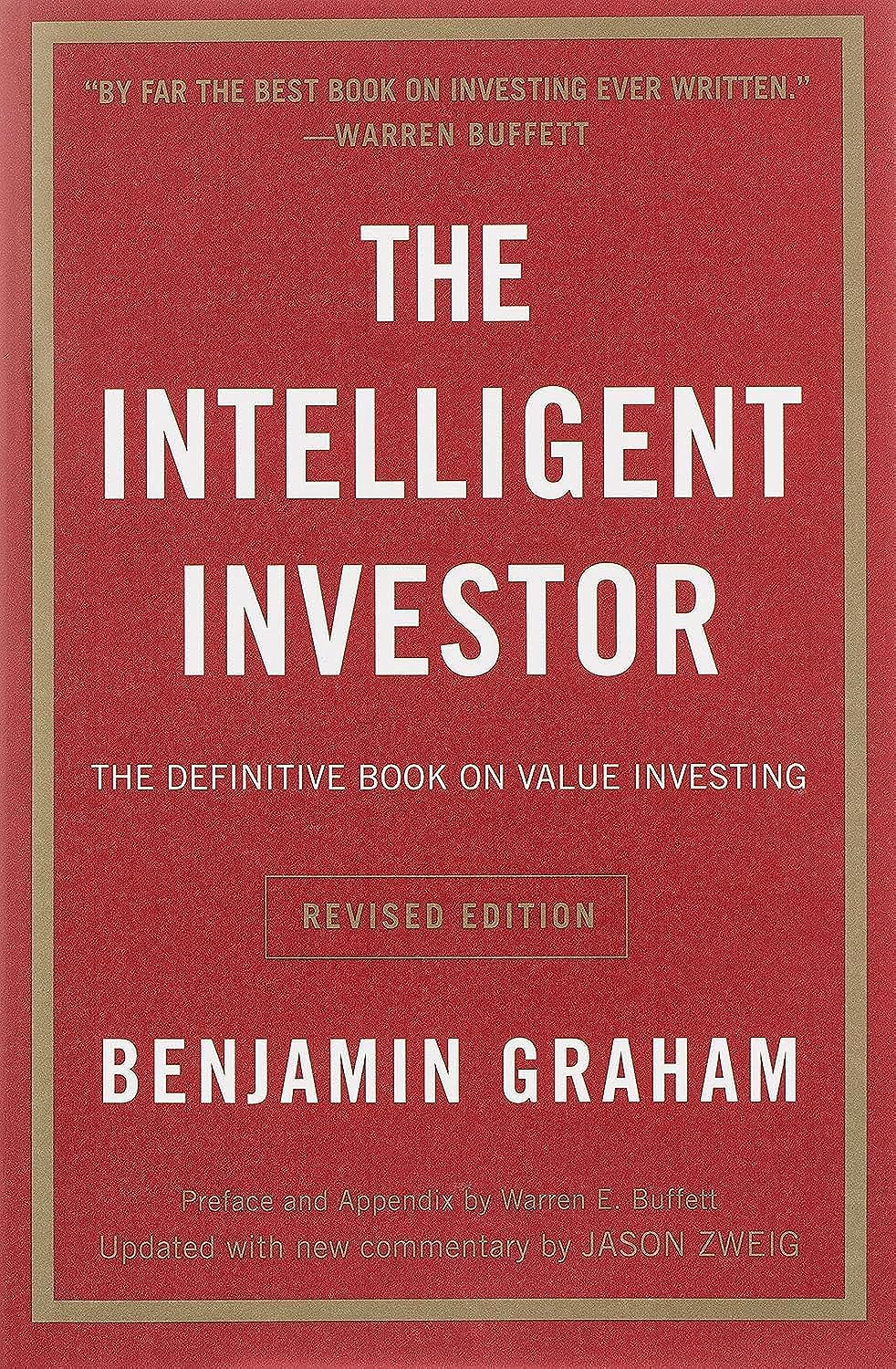
Warren Buffett’s favorite book. In a market filled with noise and AI-driven volatility, Benjamin Graham’s principles of value investing are more relevant in 2026 than ever before. Learn how to identify true value.
Check Price on AmazonCrypto: The Era of Regulation & Utility
The “Wild West” days of crypto are fading. In 2026, the digital asset market is defined by regulatory clarity and institutional adoption. With global banking giants now offering custodial services, crypto has firmly established itself as an alternative asset class alongside commodities and real estate.
For a detailed breakdown of the coins leading this new era, read our full report on best crypto investments.
The Tokenization of Real World Assets (RWA)
This is the single biggest trend in crypto for 2026. RWA protocols are taking assets like U.S. Treasury Bills, commercial real estate deeds, and even carbon credits and putting them on the blockchain. This allows for 24/7 trading, instant settlement, and fractional ownership of assets that were previously illiquid.
DeFi 2.0: Sustainable Yield
Decentralized Finance (DeFi) has evolved. The “Ponzi-nomics” of high-yield farming are gone, replaced by protocols that generate yield through real economic activity—such as lending fees, trading commissions, and liquid staking. These “Real Yield” protocols offer safer, more predictable returns for conservative crypto investors.
| Sector | Focus | 2026 Outlook |
|---|---|---|
| Layer 1 (BTC/ETH) | Store of Value / Settlement | Continued adoption as “pristine collateral” for the financial system. |
| Layer 2 Scaling | Speed & Low Fees | Massive growth as they handle the bulk of consumer transactions (gaming/social). |
| Gaming (GameFi) | Digital Ownership | Transition from “Play-to-Earn” to “Play-and-Own” with AAA-quality games. |

Don’t leave your 2026 gains on an exchange. Self-custody is the only way to truly own your crypto assets. The Ledger Nano X offers state-of-the-art Bluetooth security for managing your portfolio on the go.
Check Price on AmazonReal Estate: The Search for Niche Yield
The days of buying any single-family home and watching it appreciate 20% a year are paused. High mortgage rates have cooled the traditional housing market, forcing investors to look for “niche yield” in specialized sectors.
Discover actionable strategies for this difficult market in our real estate investing guide.
1. Data Center Real Estate
The AI boom requires massive amounts of computing power. This has created an insatiable demand for Data Centers—the physical buildings that house servers. REITs (Real Estate Investment Trusts) that specialize in data centers are performing exceptionally well, acting as the landlords of the digital age.
2. Senior Living & Healthcare Facilities
Demographics are destiny. The “Silver Tsunami” (the aging Baby Boomer population) is creating urgent demand for assisted living facilities and medical office buildings. These assets offer recession-resistant leases and long-term stability.
3. Farmland Investing
As the global population grows and climate change disrupts food supply chains, arable land is becoming one of the most valuable resources on earth. New crowdfunding platforms allow retail investors to own shares of working farms, generating passive income from crop yields while banking on land appreciation.
Commodities & Safe Havens: The Hard Asset Rotation
In a world of digital abundance, physical scarcity is king. 2026 is seeing a “Supercycle” in commodities essential for the green energy transition.
Battery Metals (Lithium, Cobalt, Copper)
The electrification of the global vehicle fleet is non-negotiable. This creates a structural supply deficit for copper (used in wiring) and lithium (used in batteries). Mining stocks and commodity ETFs offer exposure to this trend, though they come with high volatility.
Water Rights
Often called “The Blue Gold,” water is becoming a tradeable asset class. With droughts affecting major agricultural regions, funds that invest in water infrastructure, filtration technology, and water rights are seeing increased inflows.
Gold & Silver
Gold remains the ultimate hedge against monetary failure. In 2026, Central Banks are the biggest buyers of gold, diversifying their reserves away from the US Dollar. Silver, meanwhile, is seeing dual demand as both a monetary metal and an industrial component in solar panels.
Retirement Strategy: The 60/40 Rule is Dead
The traditional advice of holding 60% stocks and 40% bonds failed millions of retirees when both asset classes crashed simultaneously in the early 2020s. The retirement portfolio of 2026 requires a “Endowment Model” approach—similar to how universities manage their billions.
See our full breakdown on modern retirement strategies.
Alternative Diversification
A modern portfolio might look like 50% equities, 20% fixed income, and 30% alternatives (Real Estate, Commodities, Private Credit). This broadens the base of return sources and reduces correlation risk.
Tax-Advantaged Strategies
With tax rates likely to rise to service national debts, utilizing Roth IRAs and Health Savings Accounts (HSAs) is more critical than ever. The HSA, in particular, is being hailed as the “Ultimate Retirement Vehicle” due to its triple-tax advantage: tax-free contributions, tax-free growth, and tax-free withdrawals for medical expenses (which are high in retirement).
Bonds & Fixed Income: Yield Without the Rollercoaster
After a decade in the wilderness, bonds are relevant again. When interest rates sat near zero, fixed income offered almost nothing in the way of income, pushing conservative savers into riskier territory just to keep pace with inflation. That equation has flipped. With yields on government and corporate debt sitting at levels not seen in a generation, a well-built bond ladder is once again capable of funding a meaningful slice of retirement income on its own.
Treasury Bonds, Notes, and Bills
U.S. Treasuries remain the benchmark “risk-free” asset. Bills mature in a year or less and are ideal for parking cash you’ll need soon. Notes run from two to ten years and anchor the middle of a ladder. Bonds stretch to twenty or thirty years and carry the most interest-rate sensitivity, meaning their prices swing hardest when the Federal Reserve moves rates. Building a ladder—owning bonds that mature in a staggered sequence—lets an investor reinvest maturing principal at whatever the going rate happens to be, smoothing out the guesswork of trying to time interest-rate cycles.
Corporate and Municipal Bonds
Investment-grade corporate bonds pay a premium over Treasuries in exchange for taking on company-specific credit risk. High-yield (“junk”) corporate debt pays even more but behaves more like equity during downturns, since default risk rises when the economy weakens. Municipal bonds, issued by states and cities to fund infrastructure, offer interest that’s often exempt from federal—and sometimes state—income tax, making them especially attractive to investors in higher tax brackets.
TIPS and Inflation Protection
Treasury Inflation-Protected Securities (TIPS) adjust their principal value with the Consumer Price Index, guaranteeing that the bond’s purchasing power keeps pace with inflation. They won’t outperform in a low-inflation environment, but they function as an insurance policy against the exact scenario that erodes a traditional bond portfolio: a sudden, sustained rise in prices.
ETFs vs. Index Funds vs. Mutual Funds: Choosing Your Wrapper
Before picking individual securities, most investors need to decide how they want to hold their investments. The “wrapper” you choose affects cost, tax efficiency, and flexibility just as much as the underlying assets do.
Exchange-Traded Funds (ETFs)
ETFs trade throughout the day like a stock, typically carry low expense ratios, and are structured in a way that tends to minimize taxable capital gains distributions. Broad-market ETFs tracking the S&P 500 or total stock market remain the simplest way to get diversified equity exposure in a single trade, and sector-specific ETFs let investors tilt toward themes like robotics, semiconductors, or clean energy without picking individual winners.
Traditional Index Mutual Funds
Index mutual funds track the same benchmarks as their ETF cousins but price only once per day after markets close. For investors who dollar-cost average through automatic payroll deductions or a 401(k), index mutual funds are often the default option, and many of the largest fund families now charge expense ratios nearly identical to ETFs.
Actively Managed Funds
Active funds employ a manager or team attempting to beat a benchmark through security selection or market timing. They charge higher fees to cover that research and decision-making. In the “zombie company” environment discussed earlier, active management has a stronger case than it did during the last bull run, but the majority of active managers still underperform their benchmark over long time horizons once fees are factored in—so due diligence on a fund’s track record and process is essential before paying up for active management.
| Wrapper | Typical Cost | Best For |
|---|---|---|
| ETF | Very Low (0.02%–0.20%) | Taxable brokerage accounts, intraday trading flexibility |
| Index Mutual Fund | Low (0.02%–0.15%) | 401(k)s, automatic recurring contributions |
| Active Mutual Fund | Higher (0.50%–1.50%+) | Niche strategies, experienced managers with a proven edge |
Dividend Investing: Building a Passive Income Machine
Dividend investing appeals to a specific kind of investor—one who values a steady, growing income stream over pure capital appreciation. Rather than hoping a stock’s price climbs, dividend investors collect a portion of company profits every quarter, then decide whether to spend that cash or reinvest it to buy more shares.
Dividend Aristocrats and Kings
“Dividend Aristocrats” are S&P 500 companies that have raised their payout every year for at least 25 consecutive years; “Dividend Kings” have done so for 50 years or more. These lists skew toward consumer staples, healthcare, and industrial companies with durable competitive advantages and disciplined capital allocation—qualities that tend to hold up across economic cycles.
Dividend Growth vs. High Yield
A stock yielding 8% can look tempting next to one yielding 2%, but an unusually high yield is often a warning sign that the market expects a dividend cut. Dividend growth investors instead prioritize companies with a lower current yield but a long history of double-digit annual dividend increases, betting that the income stream will compound meaningfully over a decade or more even though it starts smaller.
DRIP: Dividend Reinvestment Plans
Automatically reinvesting dividends to purchase additional fractional shares—rather than taking the cash—accelerates compounding significantly over long holding periods. Most brokerages now offer commission-free DRIP enrollment, making it one of the easiest “set it and forget it” wealth-building tools available to retail investors.
Robo-Advisors & Modern Investing Apps
Automated investment platforms have matured well past their novelty phase. Using algorithms built on modern portfolio theory, robo-advisors construct a diversified portfolio of low-cost ETFs based on an investor’s goals, time horizon, and risk tolerance, then automatically rebalance and, in taxable accounts, harvest losses to offset gains.
Who Robo-Advisors Fit Best
These platforms suit investors who want a hands-off, disciplined approach without the cost of a traditional human financial advisor, whose fees often run 1% of assets annually versus a robo-advisor’s typical 0.25%–0.40%. New investors just getting started, and busy professionals who don’t want to manage individual holdings, are the platforms’ natural audience.
Hybrid Models
A growing number of providers now blend algorithmic portfolio management with access to a human certified financial planner for more complex questions—estate planning, stock option exercises, or business sale proceeds—giving investors the low cost of automation with a safety net for decisions that benefit from a real conversation.
Fractional Shares and Micro-Investing
Fractional-share investing has removed one of the last real barriers to entry: the need to buy a whole share of an expensive stock. Apps that round up everyday purchases and invest the spare change, or that allow contributions as small as a few dollars, have made regular investing accessible to people who previously felt priced out of the market entirely.
Tax-Smart Investing: Keeping More of What You Earn
Investment returns are only half the story; what an investor keeps after taxes is what actually funds retirement or other goals. A handful of strategies can meaningfully improve after-tax outcomes without taking on additional market risk.
Asset Location
Beyond deciding what to buy, where you hold it matters. Tax-inefficient assets—like actively traded funds, REITs, and high-yield bonds—are generally best held inside tax-advantaged accounts such as a 401(k) or IRA, where their income and short-term gains aren’t taxed annually. Buy-and-hold index funds and municipal bonds, which naturally generate less taxable activity, are often better suited to a standard taxable brokerage account.
Tax-Loss Harvesting
Selling an investment at a loss to offset realized capital gains elsewhere in a portfolio—then reinvesting the proceeds in a similar, but not “substantially identical,” holding—can meaningfully reduce a tax bill without changing an investor’s overall market exposure. The IRS’s wash-sale rule disallows the loss if an investor repurchases the same security within 30 days, so timing and fund selection both matter.
Long-Term vs. Short-Term Capital Gains
Assets held for more than a year qualify for long-term capital gains rates, which are substantially lower than ordinary income tax rates that apply to short-term trades. For active traders, this difference alone can be one of the largest controllable drags on net returns, making holding-period discipline a genuine investment strategy in its own right.
International & Emerging Markets: Diversifying Beyond U.S. Borders
U.S. equities have dominated global returns for over a decade, leading many portfolios to become quietly concentrated in a single country’s economic fortunes. A globally diversified allocation reduces that concentration risk and provides exposure to growth stories that simply don’t exist domestically.
Developed International Markets
Europe, Japan, and other developed economies often trade at lower valuations than U.S. markets while offering exposure to different currencies, industries, and dividend cultures. Japanese corporate governance reforms and a renewed focus on shareholder returns, for example, have made the region newly attractive to global allocators.
Emerging Markets
Countries with younger populations, rising middle classes, and expanding manufacturing bases—across South and Southeast Asia and parts of Latin America—offer higher long-term growth potential paired with higher volatility and currency risk. Near-shoring trends discussed earlier are directly reshaping which emerging economies attract new manufacturing investment, making country selection within this asset class increasingly important.
Currency Considerations
International investing introduces currency risk: even if a foreign stock rises in its local currency, a stronger dollar can erode those gains once converted back home. Some funds hedge this risk directly; unhedged funds offer diversification benefits from currency movements themselves, which can act as a partial buffer during U.S.-specific downturns.
Investor Psychology: The Behavior Gap
Study after study shows that the average investor earns meaningfully less than the very funds they’re invested in, simply because of poorly timed buying and selling. This “behavior gap” is arguably the single largest controllable factor in long-term investment success.
Common Behavioral Traps
Loss aversion causes investors to feel losses roughly twice as intensely as equivalent gains, often triggering panic-selling near market bottoms. Recency bias leads people to extrapolate recent trends indefinitely into the future, whether that means chasing a hot sector after it’s already run up or abandoning stocks after a downturn just before a recovery. Herding—following the crowd into whatever is trending on social media or financial news—tends to compound both mistakes at once.
Building Guardrails
A written investment policy statement, decided in advance and reviewed only during calm periods, removes emotion from the equation during volatile ones. Automating contributions, setting predetermined rebalancing rules, and deliberately limiting how often a portfolio is checked are all simple, evidence-backed ways to reduce the temptation to make reactive, costly decisions.
Rebalancing as Discipline
Periodically selling assets that have grown to exceed their target allocation and buying those that have fallen below it forces a mechanical version of “buy low, sell high,” without requiring any market forecasting at all. Most long-term investors do this once or twice a year, or whenever an asset class drifts a set percentage away from its target.
Starting With Little Money: A Realistic First Portfolio
One of the most persistent myths in personal finance is that investing requires a large amount of starting capital. With fractional shares, zero-commission trading, and low investment minimums now standard, the biggest barrier for most beginners is simply getting started.
Step One: The Emergency Fund
Before investing a single dollar in the market, most planners recommend setting aside three to six months of essential expenses in a high-yield savings account. This fund prevents an investor from being forced to sell investments at a bad time simply because an unexpected expense arose.
Step Two: Capture the Employer Match
For anyone with access to a workplace retirement plan that offers a matching contribution, contributing enough to capture the full match is close to a guaranteed, immediate return on investment that shouldn’t be skipped in favor of other goals.
Step Three: A Simple Core Portfolio
A single, broad, low-cost total-market or target-date index fund is enough to get started meaningfully. Complexity can be added later as knowledge, income, and account balances grow; the earliest years of investing benefit far more from consistency than from sophistication.
The Power of Starting Early:
Thanks to compounding, an investor who starts small in their twenties and stays consistent will typically out-accumulate someone who starts with larger contributions a decade later. Time in the market, not the size of the first contribution, is the dominant variable.
Private Equity, Venture Capital & Other Alternatives
Alternative investments—assets outside traditional stocks and bonds—have historically been reserved for institutions and accredited investors. That’s changing as new fund structures open smaller slices of these markets to a broader range of retail participants.
Private Credit
As traditional banks have pulled back from certain types of business lending, private credit funds have stepped in to fill the gap, lending directly to companies in exchange for yields that typically exceed what’s available in public bond markets, in return for accepting less liquidity.
Venture Capital and Private Equity Access
Interval funds and other semi-liquid structures now allow accredited and, increasingly, non-accredited investors to gain diversified exposure to private company growth and buyout strategies that were previously accessible only through direct fund commitments requiring six- or seven-figure minimums.
Collectibles and Alternative Stores of Value
Fine art, rare wine, classic cars, and other collectibles have long served as uncorrelated stores of value for wealthy investors. Fractional-ownership platforms now allow smaller investors to buy shares of a single high-value piece rather than needing to purchase an entire asset outright, though liquidity in these markets remains far lower than in public securities.
Options Strategies for Income: Covered Calls & Cash-Secured Puts
Options carry a reputation for reckless speculation, but a subset of conservative strategies exists specifically for investors who already own shares and want to generate additional income from them without taking on outsized risk. Understanding the basics helps demystify a corner of the market that’s often misunderstood.
Covered Calls
An investor who owns at least 100 shares of a stock can sell a “call option” against those shares, collecting a premium up front in exchange for agreeing to sell the shares at a set price if the stock rises above that level before expiration. This caps potential upside but generates steady income in flat or modestly rising markets, and it’s one of the more conservative ways to use the options market.
Cash-Secured Puts
Selling a “put option” while holding enough cash to buy the underlying shares if assigned allows an investor to collect a premium while effectively setting a limit order to buy a stock at a discount to its current price. If the stock never falls to that level, the investor simply keeps the premium; if it does, they acquire shares at a price they had already decided was attractive.
The Wheel Strategy
Combining these two approaches into a repeatable cycle—selling cash-secured puts until assigned shares, then selling covered calls against those shares until they’re called away—has become popular among income-focused investors as a way to generate consistent premium income on stocks they’re comfortable owning long-term. As with any options strategy, position sizing and a genuine willingness to own the underlying stock are essential before getting started.
Insurance & Estate Planning: Protecting What You Build
A portfolio’s growth can be undone in an afternoon by an uninsured loss or a poorly structured estate. Wealth protection deserves the same deliberate attention as wealth accumulation.
Term Life Insurance
For most people with dependents, term life insurance—which provides a death benefit for a fixed period at a low cost—offers far more protection per dollar than permanent policies bundled with an investment component. The rule of thumb many planners use is coverage worth ten to twelve times annual income, though the right number depends heavily on debts, dependents, and existing assets.
Disability Insurance
Statistically, a working-age adult is far more likely to experience a disability that prevents them from earning income than to die prematurely, yet disability insurance is frequently overlooked. Many employers offer a baseline policy, but supplemental individual coverage often makes sense for higher earners whose employer policy caps benefits well below their actual income.
Wills, Trusts, and Beneficiary Designations
A will directs how assets are distributed, but many accounts—retirement plans, life insurance policies, and jointly held property—pass directly to named beneficiaries regardless of what a will says, making it essential to review and update those designations after major life events like marriage, divorce, or the birth of a child. Trusts add a further layer of control and, in some cases, tax efficiency, particularly for larger estates or blended families with more complex distribution wishes.
Education Savings: 529 Plans & Beyond
For parents and grandparents planning ahead, education costs represent one of the largest predictable expenses a family will face, and tax-advantaged accounts exist specifically to help fund them.
529 College Savings Plans
Contributions to a 529 plan grow tax-free, and withdrawals used for qualified education expenses—tuition, room and board, books, and increasingly, K-12 tuition and apprenticeship costs—are also tax-free at the federal level. Many states offer an additional state income tax deduction for contributions, making the accounts especially attractive for residents of those states.
Flexibility for Changing Plans
Recent rule changes now allow a portion of unused 529 funds to be rolled into a Roth IRA for the beneficiary under certain conditions, reducing the historical concern that money would be “stuck” if a child chose not to attend a traditional four-year college or received scholarships covering their costs.
Custodial Accounts (UTMA/UGMA)
For savings goals beyond strictly education-related expenses, custodial accounts offer more flexibility in how funds are eventually used, though they lack the specific tax advantages of a 529 and legally become the child’s property upon reaching the age of majority, which is worth considering when deciding how much to contribute to each account type.
ESG & Sustainable Investing
Environmental, Social, and Governance (ESG) investing has moved from a niche preference to a mainstream category, with trillions of dollars now managed under some form of sustainability mandate.
What ESG Funds Actually Screen For
ESG funds typically weigh a combination of environmental impact, labor practices, board diversity, and corporate governance quality alongside traditional financial metrics. Approaches vary widely between funds—some simply exclude entire industries like tobacco or fossil fuels, while others actively favor companies with best-in-class sustainability practices within every sector, including energy.
Performance Considerations
Early criticism of ESG investing centered on the assumption that values-based screening would necessarily sacrifice returns. In practice, performance has varied significantly by fund and time period, with some ESG funds outperforming and others lagging their conventional benchmarks—underscoring that fund selection and expense ratios matter just as much within this category as anywhere else in investing.
Greenwashing Concerns
As demand for sustainable funds has grown, so has scrutiny over funds that market themselves as ESG-focused without meaningfully different holdings from a standard index fund. Investors serious about sustainability screening should review a fund’s actual top holdings and stated methodology rather than relying on the fund’s name or marketing materials alone.
Side Hustles & Building Passive Income Streams
Investing returns compound faster when there’s more capital to invest, which is why many wealth-builders pair a disciplined portfolio strategy with additional income streams outside a primary job.
Digital and Content-Based Income
Building a niche content site, an online course, or a digital product carries low startup costs relative to traditional small businesses and can generate income that scales without a proportional increase in hours worked, though it typically requires significant upfront time investment before generating meaningful returns.
Real Estate Crowdfunding
Platforms that pool capital from many investors to fund specific real estate projects have lowered the minimum investment needed to gain exposure to individual commercial or residential deals, offering a middle ground between publicly traded REITs and directly owning and managing physical property.
The FIRE Movement
Financial Independence, Retire Early (FIRE) practitioners aim to save an aggressive percentage of income—often 40% to 60%—in order to build a portfolio large enough to cover living expenses well before traditional retirement age. Even for those not pursuing FIRE as a strict lifestyle, the movement’s core principles—tracking spending closely, maximizing the savings rate, and calculating a personal “financial independence number”—offer a useful framework for accelerating any wealth-building timeline.
Understanding Market Cycles & Recession-Resilient Investing
Markets move in cycles, not straight lines, and understanding where the broader economy sits within that cycle helps investors set realistic expectations rather than reacting to every headline as if it were a permanent shift.
The Four Phases
Economic expansion typically features rising employment, growing corporate earnings, and gradually tightening monetary policy as inflation pressures build. A peak follows, often marked by excessive optimism and stretched valuations. Contraction, or recession, brings falling earnings, rising unemployment, and central bank rate cuts intended to stimulate activity. Recovery then begins quietly, frequently well before headlines turn positive, as markets tend to price in improving conditions months ahead of the actual economic data confirming them.
Recession-Resilient Sectors
Consumer staples, healthcare, and utilities have historically held up better than cyclical sectors like discretionary retail, industrials, and financials during downturns, since demand for necessities remains relatively stable regardless of economic conditions. This doesn’t mean avoiding cyclical sectors altogether—it means understanding that a portfolio heavily concentrated in cyclicals will likely experience deeper drawdowns during contractions.
Why Trying to Time the Cycle Rarely Works
Even professional economists routinely fail to predict recessions accurately or call market bottoms in real time. Markets typically bottom before a recession officially ends and before economic data confirms a recovery is underway, meaning an investor waiting for clear confirmation before reinvesting has usually already missed a meaningful portion of the recovery’s gains. This is the core argument behind staying invested through cycles rather than attempting to exit and re-enter based on macro forecasts.
Central Bank Policy & the Global Interest Rate Outlook
Few variables influence every asset class discussed in this guide as broadly as interest rate policy set by central banks like the Federal Reserve. Understanding the basic mechanics helps put stock, bond, and real estate movements into context.
How Rate Changes Ripple Through Markets
When a central bank raises its benchmark rate, borrowing costs rise across the economy—for mortgages, corporate debt, and credit cards alike—which tends to cool spending and, eventually, inflation. Higher rates also make bonds more attractive relative to stocks, since investors can earn a competitive, lower-risk return without taking on equity market volatility, which is part of why rate hikes often pressure stock valuations, particularly for growth companies whose value depends heavily on future earnings.
Quantitative Tightening and Easing
Beyond setting a benchmark rate, central banks also influence markets by expanding or shrinking their balance sheets—buying bonds to inject liquidity during crises (quantitative easing) or allowing those holdings to run off to withdraw liquidity (quantitative tightening). These balance sheet policies have become an increasingly important tool since the 2008 financial crisis and directly affect the amount of liquidity available to markets independent of the benchmark rate itself.
Reading the Yield Curve
The relationship between short-term and long-term bond yields—known as the yield curve—has historically served as one of the more reliable recession indicators when it inverts, meaning short-term rates exceed long-term rates. While not infallible, and with historically variable lead times before a recession actually materializes, the yield curve remains one of the most closely watched signals among professional investors and economists alike.
Building Generational Wealth & Family Financial Literacy
Accumulating wealth is only half the challenge; transferring it effectively—and preparing the next generation to manage it responsibly—is where many families fall short. Studies consistently show that a majority of family wealth fails to survive intact past the second generation, most often due to a lack of communication and financial education rather than poor investment decisions.
Teaching Financial Literacy Early
Involving children and young adults in age-appropriate financial conversations—budgeting an allowance, understanding the basics of compound interest, or reviewing a simple investment account together—builds comfort and competence well before they’re managing significant assets on their own. Families that treat financial literacy as an ongoing conversation, rather than a single lecture, tend to see better outcomes across generations.
Structuring the Transfer
Beyond wills and trusts covered earlier, many families now use structured giving strategies—annual gift tax exclusions, family limited partnerships, or donor-advised funds for charitable goals—to transfer wealth gradually and tax-efficiently rather than all at once. Gradual transfers also provide an opportunity to observe how younger family members handle increasing financial responsibility before larger sums change hands.
Documenting Values, Not Just Assets
Increasingly, estate planners recommend pairing legal documents with a written statement of family values and the story behind how wealth was built. This context helps heirs understand not just what they’re inheriting, but why certain choices were made, which research suggests improves the odds that wealth is preserved and used in ways consistent with the original wealth-builder’s intentions.
Research Tools: Vetting an Investment Before You Buy
Regardless of asset class, disciplined research separates investors who consistently make informed decisions from those relying on tips, headlines, or social media momentum. A few core habits apply across stocks, funds, and alternative investments alike.
Reading Fund Prospectuses and Fact Sheets
Before buying an ETF or mutual fund, its prospectus and fact sheet reveal the expense ratio, top holdings, sector concentration, and historical performance against its benchmark. Fact sheets are typically only a page or two and take just a few minutes to review, yet many investors skip this step entirely and buy based on a fund’s name or a single performance chart alone.
Evaluating Individual Stocks
For individual equities, a basic review of revenue growth, profit margins, debt levels relative to earnings, and how a company’s valuation compares to peers in the same industry provides a useful starting filter. Reading a company’s own investor communications and annual reports, rather than relying solely on secondhand summaries, often surfaces context that headlines miss.
Distinguishing Signal From Noise
Financial media is incentivized to generate engagement, which doesn’t always align with generating useful, actionable insight. Developing a habit of asking whether a given headline or hot take would still matter in five years—rather than five hours—helps filter out short-term noise that has little bearing on long-term portfolio outcomes.
Using Screeners and Comparison Tools
Free stock and fund screening tools, widely available through major brokerages, allow investors to filter thousands of securities by criteria like dividend yield, expense ratio, sector, or valuation metrics, turning an otherwise overwhelming universe of options into a manageable shortlist worth deeper research.
Glossary & Getting-Started Checklist
For readers newer to investing terminology, a quick reference can make the rest of this guide easier to apply in practice.
- Asset Allocation: How a portfolio is divided among asset classes like stocks, bonds, and alternatives.
- Expense Ratio: The annual percentage fee a fund charges to cover management and operating costs.
- Diversification: Spreading investments across many holdings to reduce the impact of any single one performing poorly.
- Liquidity: How quickly and easily an asset can be converted to cash without a significant loss of value.
- Volatility: The degree to which an asset’s price fluctuates over a given period.
- Compounding: Earning returns not just on the original investment, but on previously earned returns as well.
A Simple Pre-Investment Checklist
- Build a three-to-six-month emergency fund in a high-yield savings account.
- Pay down any high-interest debt above roughly 7% APR.
- Capture any available employer retirement match in full.
- Choose a low-cost, diversified core holding as the portfolio’s foundation.
- Automate contributions so investing happens consistently, without relying on willpower.
- Revisit the plan once or twice a year—not with every market headline.
Expert FAQs
Yes, but be selective. Dollar-cost averaging (investing a set amount every month) remains the best strategy to smooth out volatility. Avoid trying to time the market bottoms. Instead, focus on accumulating shares of high-quality companies with strong cash flows and low debt.
For pure capital preservation, Short-Term Treasury Bills (T-Bills) and High-Yield Savings Accounts (HYSAs) are the gold standard. They are virtually risk-free (backed by the government or FDIC) and currently offer yields that compete with inflation.
The “Basket Approach” is best. Look for ETFs that hold a broad range of semiconductor, software, and robotics companies. This gives you exposure to the sector’s growth without the risk of betting on a single company that might fail.
Compare the interest rates. If your debt (credit cards, personal loans) has an interest rate higher than 7%, pay that off first—that is a guaranteed “return” on your money. If your debt is low-interest (like an old mortgage at 3%), you are likely better off investing the surplus cash.
If you’re comfortable choosing and periodically rebalancing a handful of low-cost index funds yourself, doing it manually saves the robo-advisor’s management fee. If you’d rather automate the entire process—including rebalancing and tax-loss harvesting—a robo-advisor’s low fee is often worth the convenience, especially for newer investors.
There’s no single right answer, but a common starting heuristic is to hold a bond allocation roughly equal to your age as a percentage of your portfolio, then adjust based on your personal risk tolerance and time horizon. Younger investors with decades until retirement can generally afford a higher stock allocation.