
Your Complete 2026 Roadmap to the Best Accredited Online Business Degrees in the U.S.

Online business degree enrollment has grown by over 40% since 2020 — and the quality gap with residential programs is closing fast.
Why Accredited Online Business Degrees Have Become the Smart Choice for 2026
A decade ago, telling a hiring manager you earned your business degree online carried an implicit asterisk — an unspoken question about rigor, legitimacy, and whether the experience really compared. That asterisk has been erased. Today, accredited online business degrees from schools like Indiana University, the University of North Carolina, Penn State, Arizona State, and Carnegie Mellon produce graduates who are recruited by Fortune 500 companies, management consulting firms, and financial institutions at salaries that are indistinguishable from those offered to residential graduates. The format has changed. The credential has not.
The transformation of online business education is one of the most significant developments in American higher education over the past decade. What began as a tentative experiment — a few programs cautiously testing whether a web-based classroom could deliver something close to the residential experience — has evolved into a mature, sophisticated ecosystem of genuinely rigorous programs backed by AACSB accreditation, world-class faculty, and dedicated career services for distance learners.
The numbers tell the story clearly. Enrollment in online business programs at accredited institutions has grown by more than 40% since 2020. The U.S. News & World Report rankings for online MBA programs now attract more attention from prospective students than some residential rankings. And employers — once skeptical — have adapted their perceptions in response to the undeniable quality of graduates they have hired from top online programs.
But the landscape is not uniformly excellent. For every Indiana Kelley or UNC Kenan-Flagler, there are dozens of programs hiding behind vague accreditation claims, inadequate career support, and curricula that haven’t been meaningfully updated in years. The single most important decision you will make in this process is not which school to choose — it is whether the program you’re considering is genuinely, rigorously accredited. Everything else flows from that.
This guide is built for the serious prospective student who wants to make an informed, data-driven decision about one of the most significant investments of their professional life. Whether you’re a working professional eyeing an MBA to accelerate your career, a recent high school graduate considering an online BBA for maximum flexibility, or a mid-career specialist considering a master’s degree in finance or accounting, the pages that follow provide the comprehensive, unfiltered analysis you need to choose wisely.

Whether you’re applying to an elite online MBA or preparing your graduate school essays, this bestseller reveals what top programs actually want to read — and how to say it.
📦 View on AmazonUnderstanding Business School Accreditation — The Non-Negotiable Starting Point
Before you evaluate a single school’s curriculum, tuition, or career outcomes, there is one question that supersedes all others: is the program accredited, and by whom? Accreditation in business education is not a formality or a rubber stamp — it is a rigorous, externally audited certification that a program meets independently established standards for curriculum quality, faculty credentials, student outcomes, financial stability, and continuous improvement. Without it, a business degree from even the most impressive-sounding institution carries little weight in the professional world.
The accreditation landscape for U.S. business programs has three meaningful tiers, and understanding the difference between them is essential to making an informed enrollment decision.
AACSB: The Gold Standard
The Association to Advance Collegiate Schools of Business (AACSB) accreditation is, without question, the most prestigious and most demanding business school accreditation in existence. As of 2026, fewer than 1,000 business schools worldwide hold AACSB accreditation — less than 5% of all institutions offering business degrees. Earning it requires a multi-year self-study process, an independent peer review, demonstrated evidence of faculty research productivity, and a formal commitment to continuous improvement that must be re-demonstrated every five years through a maintenance review.
When employers, graduate schools, and professional licensing bodies evaluate a business degree, AACSB accreditation is the benchmark they look for. It is what distinguishes the Indiana Kelley Direct from the for-profit program that advertises aggressively on social media. You can verify any school’s current AACSB accreditation status at the official AACSB directory — do not rely on a school’s own claims without independent verification.
Understanding what AACSB accreditation actually guarantees can help you appreciate why it matters so much. The standard requires that business schools demonstrate that graduates achieve specific learning outcomes, that faculty are both academically qualified (terminal degrees in their field) and intellectually active (producing peer-reviewed research or applied scholarship), and that the school maintains the financial and institutional resources to deliver on its educational promises. These are not trivial requirements.
EQUIS and AMBA: Respected International Alternatives
For students considering programs with strong international dimensions — or for international students evaluating U.S. programs — EQUIS (European Quality Improvement System) and AMBA (Association of MBAs) are well-regarded accrediting bodies that operate primarily outside the U.S. context but are recognized globally. A school with all three accreditations (AACSB + EQUIS + AMBA) is said to hold “triple accreditation” — a distinction held by fewer than 100 schools worldwide and considered the absolute peak of business school quality certification.
Regional Accreditation: The Minimum Baseline
All legitimate U.S. colleges and universities hold regional accreditation from one of seven regional accrediting bodies recognized by the U.S. Department of Education (such as HLC — Higher Learning Commission, or SACSCOC). Regional accreditation is the baseline that allows a school to participate in federal financial aid programs and grant degrees that are generally recognized by other institutions. It is necessary but not sufficient for a business program — it says nothing about the quality of the business curriculum specifically. Many for-profit programs that market aggressively to online students hold regional accreditation but lack AACSB accreditation.
Some for-profit schools have sought accreditation from bodies like ACBSP (Accreditation Council for Business Schools and Programs) or IACBE, which are recognized but significantly less rigorous than AACSB. While these accreditations are not fraudulent, graduates of programs with only ACBSP or IACBE accreditation often find that their degrees receive less employer recognition than AACSB-accredited programs. Always prioritize AACSB-accredited programs for business education.
| Accreditor | Scope | Rigor Level | Employer Recognition | % of Schools Holding It |
|---|---|---|---|---|
| AACSB | Business Programs | ⭐⭐⭐ Highest | Universal (U.S. & Global) | ~5% worldwide |
| EQUIS | Business Schools | ⭐⭐⭐ Highest | Strong (Primarily Europe) | ~1% worldwide |
| AMBA | MBA Programs | ⭐⭐ High | Strong (Global) | ~2% worldwide |
| ACBSP / IACBE | Business Programs | ⭐ Moderate | Limited | ~15% of U.S. programs |
| Regional Only | Institutional | Baseline | Minimal for Business | Very Common |
Online Business Degree Types: Which Level Is Right for You?
The world of accredited online business degrees spans a wide spectrum of credential levels, each designed for a different stage of career development and professional goal. Understanding what each degree type actually delivers — and who it is genuinely designed for — is the essential prerequisite to choosing the right program. Making the wrong choice at this foundational level is expensive in both money and time.
Online BBA (Bachelor of Business Administration)
The entry-level credential for business careers. Ideal for high school graduates, career starters, and those without a prior degree. Typically 120 credit hours over 3–4 years. Covers business fundamentals across all disciplines.
Online MBA (Master of Business Administration)
The premier career-accelerator for mid-level professionals. Requires an undergraduate degree and typically 3–5 years of work experience. Opens doors to senior management, consulting, and finance. 18–36 months to complete.
Online MS in Finance / Accounting / Marketing
Specialized master’s degrees for professionals deepening expertise in a specific discipline. Often faster and less expensive than an MBA. Ideal for those who know their target field and want technical depth. 12–24 months.
Online Executive MBA (EMBA)
Designed for senior professionals with 10+ years of experience. Weekend or bimonthly format allows full-time work throughout. Peer network of senior executives. Rarely requires GMAT.
Online Graduate Certificates
Short-form credential programs covering specific business topics (data analytics, project management, financial analysis). 12–18 credit hours. Stackable toward a full master’s at many institutions. Fast ROI.
Online DBA (Doctor of Business Administration)
The terminal practice-focused doctorate. For executives, consultants, and academics who want to generate original applied business research. 3–5 years part-time. Distinct from research-focused PhD.
Choosing Your Level: A Decision Framework
The right degree level for you depends on three factors: where you currently are in your career, where you want to go, and what credential will credibly bridge that gap. The following framework helps clarify the decision for most candidates:
- No degree yet / early career: Online BBA — prioritize AACSB accreditation, school reputation in your target region, and flexibility to work part-time while studying.
- 3–7 years of experience / career pivot or acceleration: Online MBA — choose based on the strength of the career support for online students and the reputation of the program in your target industry.
- Deep specialization goals (finance, accounting, data): Online MS — faster, cheaper, and often more valued by technical employers than a general MBA.
- 10+ years, senior leadership, want a credential without leaving your role: Online EMBA or Executive Education certificate — focus on peer network quality and school prestige over curriculum specifics.
One frequently overlooked consideration is how your degree interacts with professional certifications. If you’re planning to pursue a CPA, for instance, understanding the foundational principles of accounting that underpin both the licensing exam and a quality accounting curriculum will help you choose a program that prepares you for both the degree and the credential simultaneously — a significant efficiency gain.

Many top online MBA programs still accept GMAT scores as an optional supplement. If you want your application to stand out with a strong quantitative score, this is the most highly rated prep resource available.
📦 View on AmazonBest Online Bachelor of Business Administration (BBA) Programs in the U.S.
The online BBA landscape is one of the most competitive and diverse segments of higher education. Nearly every major state university now offers some form of online business bachelor’s degree, but the quality gap between AACSB-accredited programs at research universities and lower-tier alternatives is significant. The programs highlighted here represent the strongest combination of accreditation, academic rigor, affordability, flexibility, and employer recognition for undergraduate business education in 2026.
Indiana University’s Kelley School of Business has built arguably the most respected brand in online business education at any level, and its undergraduate program is no exception. The online BBA from Kelley carries the same degree designation as the residential program, is taught by the same faculty, and is evaluated against the same academic standards. Students choose from concentrations including accounting, finance, marketing, management, business analytics, and supply chain management.
What sets Kelley’s online BBA apart is the depth of career support provided to online students — a differentiator that many programs claim but few deliver on. Kelley maintains active employer recruiting relationships specifically for online students, runs virtual career fairs, and has a career coaching team dedicated to the online student population. For students in states without strong regional flagship universities, the Kelley BBA offers a nationally recognized credential at a price point that is competitive with in-state tuition at many schools.
The program structure is genuinely flexible, with eight-week courses that allow students to take one or two classes at a time while maintaining full-time employment. Kelley’s learning management system is well-designed for the working adult, and the faculty-to-student interaction model goes beyond the passive video-watching experience common at lower-quality programs.
The University of Florida’s online BBA is consistently ranked among the best in the country, and its price-to-quality ratio is genuinely exceptional — particularly for Florida residents. The Warrington College of Business holds AACSB accreditation, and the online program is delivered through UF Online, one of the most mature and technically sophisticated online learning platforms at any public university in the country.
UF’s online BBA is structured for maximum flexibility, with asynchronous coursework that accommodates diverse student schedules. The program offers concentrations in finance, real estate, marketing, management, and entrepreneurship. UF’s alumni network is one of the largest of any public university in the country — over 350,000 strong — which provides meaningful professional networking access for online graduates navigating markets across Florida and beyond.
Penn State’s World Campus online business programs carry the full weight of one of the most recognizable university brands in the country, backed by the Smeal College of Business’s AACSB accreditation. The online BSBA is particularly distinguished by its supply chain management and operations concentrations — areas in which Smeal holds a national reputation that translates directly into recruiting relationships with major logistics and manufacturing employers.
Penn State World Campus is one of the oldest and most experienced providers of quality online education in the U.S., having launched its first online programs in 1998. That experience shows in the maturity of the student support infrastructure: academic advisors, technical support, library access, and career services are all well-developed for the online student population.
Arizona State University’s W. P. Carey School has become one of the largest providers of quality online business education in the U.S., and it has managed the difficult challenge of maintaining academic standards at scale. The online BBA at W. P. Carey offers an unusually wide range of concentration options — including marketing, finance, supply chain management, management information systems, and real estate — giving students the flexibility to tailor the degree to specific career targets.
ASU’s commitment to online education goes beyond a simple delivery mechanism — the school has invested heavily in interactive online learning tools, virtual faculty office hours, and a dedicated online student community that replicates many of the community-building elements of a residential program. The W. P. Carey brand is particularly strong in the Southwest and Western U.S. markets, with strong employer recruiting relationships in Phoenix, Los Angeles, and the broader Sunbelt region.
UNC Kenan-Flagler is better known for its online MBA, but its undergraduate business program is equally strong and benefits from the same faculty, curriculum standards, and institutional resources. The BBA@UNC is one of the more selective online undergraduate business programs in the country, which keeps class quality high and maintains the credential’s value with employers. Live virtual class sessions — rather than purely recorded content — create a more engaging and accountable learning environment.
Best Online MBA Programs in the U.S. — Ranked and Reviewed for 2026
The online MBA represents the single largest and most competitive segment of online business education. The schools reviewed here have been selected based on AACSB accreditation, U.S. News and independent ranking performance, career outcome data for online students specifically, faculty quality, and the comprehensiveness of career support services. For a deeper analysis of specific programs and what makes each distinctive, our comprehensive guide to the best MBA programs in the U.S. for 2026 covers both online and residential options in full detail.
For six consecutive years, U.S. News & World Report has ranked Indiana University’s Kelley Direct as the best online MBA program in the country — and the school has earned that designation through consistent excellence in curriculum quality, faculty engagement, student outcomes, and career support. Kelley Direct does not require a GMAT for most applicants, making it accessible to a wider range of qualified candidates without compromising the intellectual rigor of the program itself.
The Kelley Direct curriculum is substantively identical to the residential MBA in both content and delivery — it is not a watered-down adaptation of the residential program but a parallel version designed specifically for the working professional. Classes are delivered through a combination of asynchronous content and synchronous live sessions, with cohort-based learning that creates genuine community among classmates. Students choose from 14 specializations including finance, marketing, supply chain management, and business analytics.
Perhaps most importantly for career-minded students, Kelley Direct provides access to the same career management center as residential MBA students, including one-on-one coaching, employer connections, and alumni networking events. The Kelley alumni network — over 110,000 strong — is one of the most engaged and professionally active MBA alumni communities in the country. Those interested in whether top MBA pathways require the GMAT should also review our guide on MBA programs without a GMAT requirement for a comprehensive overview of waiver options across programs.
The MBA@UNC from Kenan-Flagler Business School was among the earliest elite schools to launch a high-quality, fully online MBA, and it remains one of the most respected. The program’s flexible pace — students can accelerate or slow down based on professional demands — makes it particularly well-suited for working professionals in roles with variable workloads. UNC does not require the GMAT and evaluates applicants on professional achievement, leadership potential, and academic background.
The MBA@UNC curriculum is delivered through real-time virtual classes — not just pre-recorded lectures — which creates a more interactive and accountable learning experience than many online programs. UNC’s program is especially strong in leadership development, with a dedicated leadership course sequence that extends across all three years of the program. The school’s career team actively supports online students, and UNC’s alumni network of over 340,000 provides meaningful professional access across industries and geographies.
UT Austin’s McCombs School of Business has built a strong online MBA that benefits from the school’s exceptional reputation in technology, energy, and entrepreneurship — industries in which Austin has emerged as a national powerhouse. The 20-month program is among the faster completion timelines for a quality online MBA, making it attractive to candidates who want to minimize time out of the market while earning a meaningful credential.
McCombs’ online MBA delivers the full weight of the UT Austin brand, which carries significant recognition with Texas-based employers (particularly in oil and gas, technology, and financial services) and increasingly with national and international firms that have established major operations in Austin’s booming business ecosystem. Career services for online students include virtual career fairs, employer panels, and one-on-one coaching with industry-specific specialists.
Carnegie Mellon’s Tepper School is the program of choice for professionals in technology, engineering, data science, and operations who want to add general management credentials to a strong technical foundation. The online hybrid format — primarily online with periodic in-person residency weekends in Pittsburgh — provides the best of both formats: the flexibility of online learning with the community-building value of face-to-face interaction. Tepper’s GMAT waiver is accessible for candidates with strong quantitative backgrounds, which describes the majority of the program’s target audience. The school’s management science heritage infuses the entire MBA curriculum with an analytical rigor that distinguishes Tepper graduates in quantitatively demanding roles.
The University of Illinois iMBA is one of the most remarkable developments in business education of the past decade. Fully AACSB-accredited, delivered through Coursera, and costing approximately $22,000 in total — roughly one-fifth the cost of many comparable programs — the iMBA has demonstrated that rigorous business education can be delivered at a fraction of traditional price points without sacrificing genuine academic quality. The program requires no GMAT and is open to qualified professionals with a bachelor’s degree and meaningful work experience.
The iMBA’s curriculum covers all core MBA disciplines including financial management, marketing, managerial economics, and organizational behavior. Students complete the program through a structured sequence of courses, with elective flexibility in the later stages. The program is best suited for candidates who are primarily seeking the knowledge and credential of an MBA — rather than the career-pivoting power of a residential program’s on-campus recruiting pipeline — and who are comfortable with a primarily self-directed learning environment.
USC Marshall’s online MBA is one of the best options for professionals targeting the entertainment, media, technology, and real estate industries on the West Coast. The school’s Los Angeles location gives it unmatched industry access in these sectors, and that access extends meaningfully to online students through virtual industry events, guest speaker series, and alumni connections. Marshall is AACSB-accredited, the online program is well-regarded by U.S. News, and the faculty quality is genuine — not adjunct-heavy.
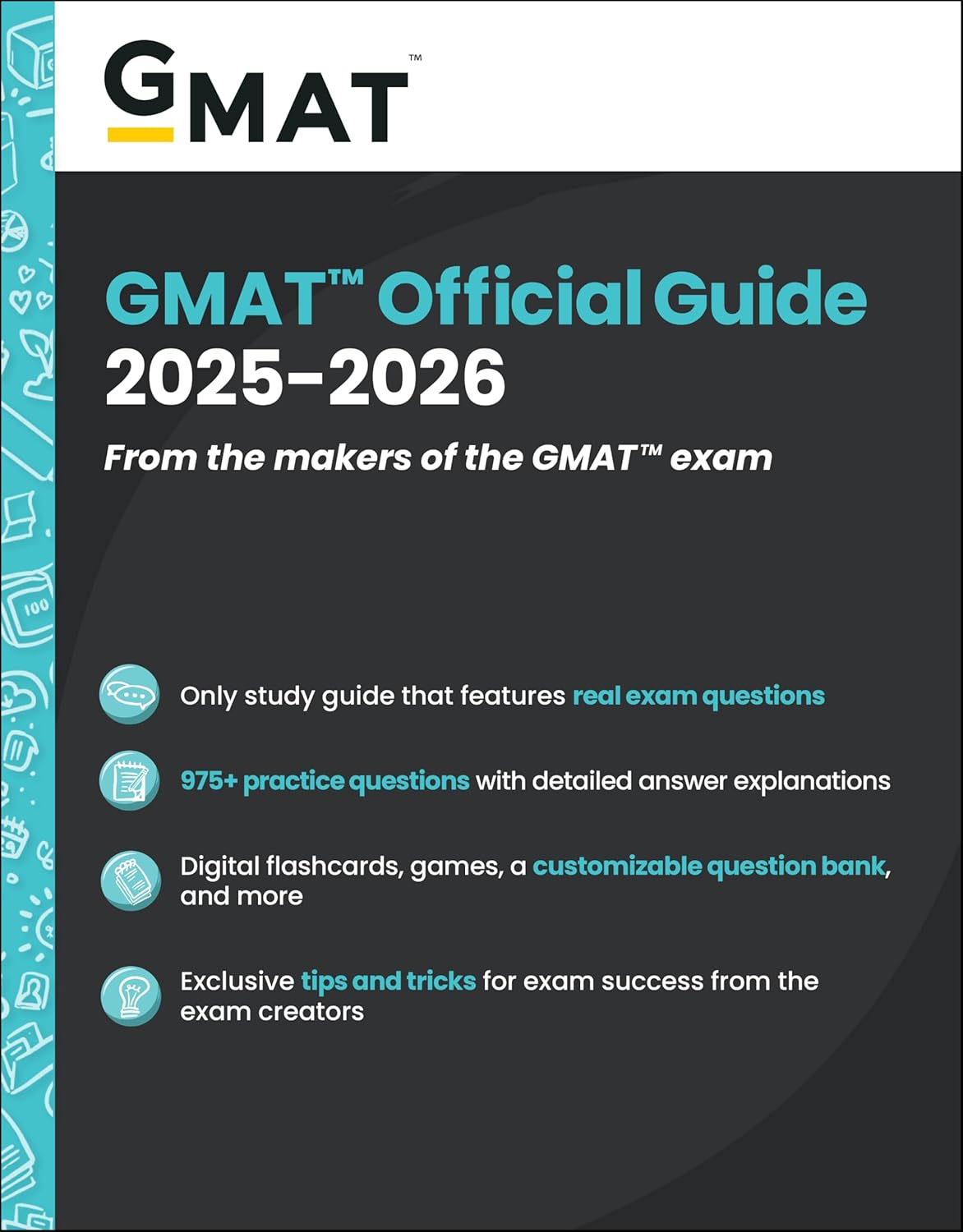
Even if your target program doesn’t require the GMAT, submitting an optional strong score can set your application apart. Kaplan’s comprehensive prep guide includes 6 full-length practice tests.
📦 View on AmazonBest Online Master’s Degrees in Business Disciplines
For many professionals, a specialized master’s degree offers a better return on investment than a general MBA. If you know you want to deepen your expertise in a specific discipline — finance, accounting, data analytics, supply chain, or marketing — a targeted master’s program is often faster, more affordable, and more valued by employers in that field than a general management degree. The programs below represent the strongest options in each major specialization area.
Online MS in Finance
Boston College’s online MS in Finance is one of the most rigorous quantitative finance programs available in an online format, with a curriculum explicitly aligned with CFA Institute standards. For professionals preparing for the CFA exam while building a graduate credential, this program creates significant efficiency. Strong Boston-area alumni network with particular depth in financial services and investment management.
Online MS in Accounting
The iMSA from University of Illinois is the accounting equivalent of the iMBA — an AACSB-accredited, Coursera-delivered master’s degree in accountancy at a fraction of the typical cost. The curriculum covers financial accounting, managerial accounting, auditing, tax, and financial reporting in depth. For professionals pursuing the CPA designation, understanding the core accounting equation and related financial reporting principles is foundational — and the iMSA builds on these fundamentals rigorously across the full curriculum. The program’s CPA exam alignment makes it particularly valuable for students targeting public accounting careers at major firms.
Online MS in Business Analytics / Data Analytics
Georgia Tech’s MSBA is one of the most technically sophisticated business analytics programs available online, benefiting from the school’s deep integration with one of the country’s premier engineering schools. The curriculum spans machine learning, statistical modeling, data visualization, and optimization — all applied to business decision contexts. Georgia Tech’s brand is exceptionally strong in technology companies, management consulting firms with analytics practices, and financial services firms building quantitative capabilities.
Online MS in Supply Chain Management
Michigan State University’s supply chain management program is ranked first in the nation year after year — a distinction that translates directly into employer recognition and recruiting relationships with the world’s leading logistics, manufacturing, and retail companies. The online MS in Supply Chain Management delivers that same curriculum and faculty quality in a format designed for working supply chain professionals. Post-pandemic supply chain volatility has made this specialization one of the most in-demand across industries.
A specialized master’s (MS Finance, MS Accounting, MSBA) signals deep technical expertise in a specific domain and is often valued more highly than a general MBA by employers in that field. An MBA signals broad general management capability and is better suited for those who want to move across functions or industries. If you’re certain about your target field and already have meaningful experience in it, a specialized master’s often delivers higher ROI in less time and at lower cost than a general MBA.
Most Valuable Online Business Degree Specializations in 2026
One of the most consequential decisions in choosing an online business degree is the selection of a concentration or specialization. The right concentration can meaningfully differentiate your credentials in a competitive job market, signal genuine domain expertise to employers, and align your academic experience with the specific career outcomes you are targeting. Here is an analysis of the most valuable specializations in 2026 and what to look for in programs offering them.
| Specialization | Best For | Avg. Post-Grad Salary | Job Growth (5-Year) | Key Certifications |
|---|---|---|---|---|
| Business Analytics / Data Science | Tech, Consulting, Finance | $110K–$155K | +28% | Tableau, Python, SQL |
| Finance | Banking, Investment, Corp. Finance | $100K–$150K | +16% | CFA, CFP, Series 65 |
| Accounting | Public Accounting, Audit, Tax | $75K–$120K | +10% | CPA, CMA, CIA |
| Supply Chain Management | Logistics, Ops, Manufacturing | $90K–$135K | +22% | CSCP, CPIM, PMP |
| Healthcare Management | Hospital Admin, Health Systems | $90K–$140K | +18% | FACHE, CPHQ |
| Entrepreneurship | Startups, Venture, Innovation | Variable (high upside) | N/A | PMI-ACP, Lean Six Sigma |
| Marketing / Digital Marketing | Brand, Growth, E-Commerce | $75K–$120K | +14% | Google Analytics, HubSpot |
| Real Estate | Property, Development, REITs | $85K–$160K | +12% | CCIM, CRE, CPM |
The Rise of Business Analytics as a Concentration
Business analytics has become the single most in-demand specialization in online business education, driven by the explosive growth in data-driven decision-making across every industry. The combination of statistical competence, business acumen, and communication skills that a strong analytics program develops is almost universally valued by employers — from tech giants to consulting firms to healthcare systems. Graduates with a business analytics specialization routinely command premium salaries over those with general business degrees, and the skill gap in this area remains significant enough that demand substantially outpaces supply.
Accounting and Finance: The Evergreen Credentials
Accounting and finance specializations have always been among the most employable business credentials, and that has not changed in 2026. What has changed is the nature of the work: accounting is increasingly data-driven, with professionals expected to use automation tools, data analytics platforms, and cloud-based financial systems. A strong online accounting program should address not just the traditional curriculum but also these emerging competencies. For those interested in the foundational principles that underpin both the CPA exam and real-world financial reporting, resources like our guide on double-entry bookkeeping for modern businesses illustrate how classical accounting principles translate into contemporary practice.

Strong writing is the most transferable business skill there is. Whether you’re crafting MBA application essays or workplace communications, this timeless guide will sharpen your thinking and your prose.
📦 View on AmazonFull Comparison: Best Accredited Online Business Degrees (2026)
The table below provides a side-by-side comparison of the top accredited online business programs reviewed in this guide. All data is approximate and reflects publicly available information as of 2026. Always verify directly with the program for the most current figures.
| Program | Degree | AACSB | GMAT | Total Cost | Duration | Format | Avg. Post-Grad Salary |
|---|---|---|---|---|---|---|---|
| Kelley Direct (Indiana) | Online MBA | ✅ | Optional | ~$75K | 2 years | Online | $125K+ |
| MBA@UNC (Kenan-Flagler) | Online MBA | ✅ | Optional | ~$90K | 18–36 mo | Online | $120K+ |
| McCombs Online MBA (UT Austin) | Online MBA | ✅ | Optional | ~$60K | 20 months | Online | $115K+ |
| iMBA (U of Illinois) | Online MBA | ✅ | Not Required | ~$22K | 3 years | Online | $100K+ |
| Tepper Online Hybrid (CMU) | Online MBA | ✅ | Waiver Avail. | ~$120K | 32 months | Hybrid | $130K+ |
| Marshall OMBA (USC) | Online MBA | ✅ | Optional | ~$110K | 21 months | Online | $120K+ |
| Kelley Online BBA (Indiana) | Online BBA | ✅ | N/A | ~$38K | 3–4 years | Online | $65K+ |
| UF Warrington Online BBA | Online BBA | ✅ | N/A | ~$25K (in-state) | 3–4 years | Online | $60K+ |
| W. P. Carey Online BBA (ASU) | Online BBA | ✅ | N/A | ~$45K | 3–4 years | Online | $62K+ |
| iMSA (U of Illinois) | MS Accountancy | ✅ | Not Required | ~$22K | 2 years | Online | $75K+ |
| GT Scheller MSBA (Georgia Tech) | MS Business Analytics | ✅ | Required | ~$35K | 12–24 mo | Online | $110K+ |
| MSU Broad MS SCM | MS Supply Chain | ✅ | Required | ~$40K | 12–20 mo | Online | $90K+ |
Note: Salary figures are approximate medians at graduation. Costs shown are estimates and subject to change. Verify directly with each institution for current figures.
How to Choose the Right Accredited Online Business Degree: A Step-by-Step Guide
With hundreds of accredited options across degree levels and specializations, the challenge for most prospective students is not finding a program — it is selecting the right one from a genuinely large field of credible choices. The following framework provides a structured process for narrowing the field systematically and making a decision you’ll be confident in years later.
-
Start With AACSB Accreditation — Non-Negotiable
Before evaluating anything else, verify AACSB accreditation at aacsb.edu. Remove any program from your list that does not hold it. This single filter will eliminate the majority of programs that could waste your time and money, and it will leave you with a field of genuinely quality options. This step takes five minutes and saves years of regret.
-
Define Your Career Goal With Precision
What specific role or industry do you want to be in five years from now? The more precisely you can answer this, the more accurately you can evaluate whether a specific program’s curriculum, career support, and alumni network actually serve that goal. “I want to be a VP of Finance at a healthcare system” is a useful answer. “I want a better career” is not. Your goal drives every subsequent decision: degree level, specialization, school reputation in that industry, and format.
-
Research the Career Support for Online Students Specifically
Do not accept generic career service claims. Call or email the career center and ask specifically: How many employers recruit from your online program? What was the median salary of your online graduates at graduation last year? How many one-on-one coaching hours are available to online students? Do you hold virtual career fairs specifically for online students? The answers will vary dramatically and are highly predictive of your actual career outcomes.
-
Model the Full Financial Cost and ROI
Calculate total cost including tuition, fees, technology, and any travel costs for residency programs. Then model your expected salary premium after graduation and calculate your payback period. For most quality programs, the payback period ranges from 2–5 years — but this varies significantly by program cost, career goal, and individual circumstances. Smart financial planning before and during your degree can dramatically improve the net financial outcome of your investment.
-
Evaluate the Curriculum for Your Specialization
Look beyond the list of course titles — find the actual syllabi, the faculty who teach core courses, and any capstone or applied project requirements. A strong program will have faculty who are actively engaged in research or industry practice in the areas they teach. Weak programs rely heavily on adjunct instructors without academic credentials. Look for programs where the faculty who teach on-campus also teach in the online format — this is a reliable quality signal.
-
Talk to Current Students and Recent Alumni
LinkedIn is your best tool here. Search for online students or recent graduates of your target programs, reach out with a specific question about their experience, and listen carefully to what they say about career outcomes, faculty quality, and the responsiveness of career services. Real student experiences are more informative than any marketing material the school produces.
-
Assess the Format Fit for Your Life
Fully asynchronous (watch lectures on your schedule) vs. synchronous live virtual sessions vs. hybrid with residency weekends — these represent meaningfully different experiences, and the right format for you depends on your learning style, professional schedule, and how much you value peer interaction. Many students underestimate how important community and peer learning are to the MBA experience until they’re six months into a program and realize they miss it.
Before you commit to any online business program, find 10 recent graduates on LinkedIn and look at where they work now and what roles they hold. If you consistently see graduates in the companies and roles you aspire to, that program’s alumni network is actively creating the career outcomes you want. If you see graduates scattered across industries with no discernible pattern, the program may lack the focused employer relationships that translate into real career advancement.
Career Outcomes and ROI: What an Accredited Online Business Degree Actually Delivers
Every business school will tell you their program is worth the investment. The question is whether the data supports the claim. Here is an honest, data-driven look at what accredited online business degrees actually deliver in terms of career outcomes — and where the variance in outcomes is largest.
Salary Outcomes by Program and Level
The salary premium from an online business degree varies significantly by degree level, school reputation, specialization, and the candidate’s prior experience. The clearest pattern in the data is that program selectivity — the admissions standard the school maintains — is strongly correlated with career outcomes. The more selective the program, the more accomplished the cohort, and the more actively employers recruit from it. This creates a self-reinforcing quality dynamic that rewards candidates who invest in genuinely rigorous programs.
At the MBA level, graduates from the top online programs — Kelley Direct, MBA@UNC, McCombs Online — report median base salaries at graduation in the $110,000–$130,000 range, with total compensation (including signing bonuses) often 15–20% higher. These figures are not dramatically different from those reported by residential programs at comparable schools. The career service investment these schools have made for online students has largely closed the outcomes gap that existed a decade ago.
Industries With the Strongest Demand for Online Business Graduates
| Industry | Most Valued Degree | Median Salary | Online Grad Recognition |
|---|---|---|---|
| Technology | MBA, MSBA, MS Finance | $140K–$200K | Very High (AACSB) |
| Financial Services | MBA, MS Finance, MS Accounting | $120K–$180K | High (Selective Programs) |
| Healthcare | MBA (Healthcare), MHA | $100K–$145K | High |
| Management Consulting | MBA (Top Programs) | $150K–$200K | Moderate (Tier-1 Programs) |
| Supply Chain / Logistics | MS SCM, MBA | $90K–$135K | Very High |
| Entrepreneurship / Startups | MBA, Various | Variable | High (Network Driven) |
Building Wealth Post-Graduation: Making the Degree Work Financially
Earning an accredited online business degree is a significant financial investment — and how you deploy the subsequent salary increase has a larger long-term impact on your financial outcomes than the salary increase itself. The most financially successful graduates of online business programs are those who resist lifestyle inflation in the years immediately after graduation and instead direct a meaningful portion of their salary premium into wealth-building activities: maximizing tax-advantaged retirement accounts, building an emergency fund, and investing in diversified market instruments.
For new graduates evaluating where to put their increased income, understanding the landscape of the best investment strategies for 2026 is a practical priority. The fundamentals of diversification and long-term compounding apply regardless of the specific vehicles you choose. For those building toward longer-term financial goals, exploring comprehensive wealth management strategies that scale with your career and income growth can provide a framework that compounds over the decades following your degree completion.
To calculate your personal MBA ROI: (Expected post-MBA annual salary increase) × (Career years remaining) − (Total program cost + Foregone salary during enrollment if applicable) = Net lifetime financial return. For a $40K salary increase over a 25-year career, a $75K program cost with no foregone salary represents a net return of approximately $925,000 before investment effects. Add compound investment returns on the incremental income and the number becomes significantly larger — which is why early enrollment and a long career runway dramatically improve MBA financial returns.

Keeping your test options open is smart strategy. If a waiver isn’t available at your dream school, these are the most authentic GMAT practice questions available — straight from the test makers.
📦 View on AmazonFinancial Aid, Scholarships, and Employer Funding for Online Business Degrees
The cost of an accredited online business degree ranges from approximately $22,000 for the most affordable programs (University of Illinois iMBA, iMSA) to well over $100,000 for elite-brand programs like USC Marshall, CMU Tepper, or Cornell’s online MBA. Between those extremes lies a vast landscape of programs in the $40,000–$80,000 range that offer genuine quality at meaningful value. The good news is that multiple funding mechanisms exist to reduce the out-of-pocket burden — and the online format itself creates advantages over residential programs that are often overlooked.
Federal Financial Aid
Online students at regionally accredited institutions are eligible for federal financial aid programs, including federal student loans (Direct Unsubsidized Loans and Graduate PLUS Loans) and, in some cases, federal work-study programs. To access federal aid, complete the FAFSA (Free Application for Federal Student Aid) as early as possible in the academic year, since some aid is first-come, first-served. Federal loan interest rates are fixed and typically lower than private loans, making them the preferred borrowing vehicle for most students.
Institutional Scholarships
Many AACSB-accredited programs offer merit-based scholarships for online students, though the availability and amount vary significantly. Scholarships are typically awarded based on academic achievement, professional experience, and in some cases, demographic background. The key to maximizing scholarship opportunities is early application — Round 1 applicants at programs that offer rolling admissions almost always receive better scholarship consideration than later applicants, as the scholarship budget is typically awarded on a first-come basis.
Some programs offer specific fellowships for students from underrepresented backgrounds, military veterans, social impact professionals, and women in business. Research these targeted opportunities carefully at each school on your list — they can substantially reduce the net cost of attendance.
Employer Tuition Assistance: The Most Underused Funding Source
Perhaps the most consistently underutilized source of business degree funding is employer tuition assistance. Many large employers — including Fortune 500 companies, major consulting firms, healthcare systems, and government agencies — offer formal tuition reimbursement programs that cover partial or full tuition for accredited degree programs. The IRS allows employers to provide up to $5,250 per year in tax-free educational assistance, which over a three-year online MBA program represents over $15,000 in tax-free funding.
The conversation with your employer about tuition support is also an opportunity to signal your commitment to the organization and your long-term career development plans. Many companies view tuition support as a retention tool and are more willing to fund continuing education than employees assume. Approach the conversation with a clear case for how the degree will directly benefit your team and organization — not just your personal career.
The Online Format Cost Advantage
One financial advantage of online business programs that is rarely discussed explicitly is the ability to continue working full-time during your degree. A residential MBA student at a top program foregoes two years of income — often $100,000 or more depending on their pre-MBA salary. An online student earns that income throughout the program, which represents a massive financial advantage even when the online program carries higher tuition than the residential alternative. The total financial comparison between residential and online MBA programs almost always favors online when foregone salary is properly accounted for.
Many prospective students don’t realize that tuition at some online programs — particularly at the MBA level — is negotiable, especially for candidates with strong credentials who have received competing offers from comparable programs. If you have been admitted to multiple programs, sharing that fact with your preferred school’s admissions office sometimes unlocks scholarship funding that wasn’t initially offered. It doesn’t always work, but it costs nothing to try and occasionally yields significant savings.
Pros, Cons, and Who Should Enroll in an Online Business Degree
An accredited online business degree is not the right choice for everyone — even though it is genuinely the right choice for a large and growing number of ambitious professionals. Understanding both the advantages and the real limitations of online business education helps you make a decision that serves your actual circumstances and goals, rather than an idealized version of them.
✅ Advantages
- Continue earning your full salary throughout the program — eliminates the massive income opportunity cost of residential programs
- Dramatically lower total cost compared to full-time residential programs at comparable schools, especially accounting for foregone income
- Geographic flexibility — access world-class programs without relocating, a critical consideration for professionals with family commitments or established careers
- Immediate application of coursework to your current professional role — you can implement what you learn the following week
- At top AACSB programs, employer recognition is equivalent to residential graduates — the degree says the same thing on your resume
- Flexible scheduling accommodates the reality of demanding professional lives, international travel, and caregiving responsibilities
- Access to GMAT-free pathways at many top programs, eliminating an expensive and time-consuming testing requirement
- Diverse cohorts with students from varied geographies and industries create richer perspective-sharing than geographically limited residential programs
❌ Real Considerations
- In-person community building and peer bonding — a significant part of the residential MBA value — is more difficult to replicate online, though the best programs work hard at it
- On-campus recruiting events, spontaneous networking opportunities, and employer site visits are largely absent from the online experience
- Career-switching candidates who need a strong recruiting pipeline to break into new industries may find online programs less effective than residential alternatives for that specific goal
- Self-discipline requirements are genuinely high — balancing a demanding career with graduate coursework requires exceptional time management that not everyone can sustain
- Some employers — particularly in traditional industries like investment banking or management consulting at the MBB level — still maintain preferences for certain residential programs
- The social and cultural immersion of living in a university community is simply not replicable in an online format, and this matters to some students
Who Is Best Suited for an Online Business Degree?
The candidates who get the most from accredited online business programs share certain characteristics. They are self-motivated professionals who are already excelling in their careers and seeking to formalize and expand their capabilities — not individuals looking for a degree to compensate for a weak professional track record. They have a clear career goal that the degree serves, and they can articulate specifically why this degree, from this program, advances that goal. They have the discipline to manage demanding professional and academic schedules simultaneously, and they are proactive about building relationships and engaging with career services rather than expecting outcomes to happen passively.
They are also, typically, professionals who cannot or do not want to leave their current role — either because they have family and community roots they don’t want to disrupt, because they are in roles with significant financial and career momentum, or because the economics of foregone salary make the residential option genuinely difficult to justify.
When You Might Prefer a Residential Program Instead
If your primary goal is a dramatic industry pivot — say, from government service to investment banking, or from medicine to venture capital — a residential program at a top school with a strong on-campus recruiting infrastructure may serve you better. The connections built during a full-time residential program, the access to on-campus employer events, and the intensity of the shared experience create a different kind of career catalyst that the online format does not replicate as effectively for those who need to break into an entirely new industry from scratch.
Frequently Asked Questions About Accredited Online Business Degrees
Yes — at AACSB-accredited programs from recognized universities, online business degrees carry the same credential value as residential degrees from the same institution. Employers evaluate the school’s reputation and accreditation, not the delivery format. Graduates from programs like Kelley Direct (Indiana), MBA@UNC, and McCombs Online are recruited by Fortune 500 companies, consulting firms, and financial institutions at competitive salaries that are comparable to residential program graduates. The key filter is always AACSB accreditation — without it, an online degree from any institution carries significantly less employer recognition.
AACSB (Association to Advance Collegiate Schools of Business) accreditation is the gold standard. Less than 5% of business schools worldwide hold AACSB accreditation, making it an extraordinarily selective quality signal. You can verify any program’s current accreditation status at aacsb.edu — do not rely solely on a school’s own claims. EQUIS and AMBA are respected for programs with strong international components. Regional accreditation alone (HLC, SACSCOC, etc.) is necessary but insufficient for a business program — it doesn’t certify business curriculum quality specifically.
Cost varies significantly by degree level and school. Online BBA programs at state universities typically run $15,000–$60,000 in total, with public university in-state tuition often much lower. Online MBA programs range from approximately $22,000 (University of Illinois iMBA) to over $120,000 at elite-brand programs like CMU Tepper or USC Marshall. Specialized master’s programs (MS Finance, MS Accounting, MSBA) generally run $20,000–$50,000. When evaluating cost, always compare the full financial picture including foregone income — online programs carry a major advantage here since most students continue working full-time.
Yes — many of the best accredited online business programs do not require the GMAT. This includes the Indiana Kelley Direct MBA (#1 online MBA), MBA@UNC, UT McCombs Online MBA, and the University of Illinois iMBA. At the undergraduate level, GMAT/GRE is not required for BBA programs. For graduate programs that still require standardized testing, the GRE is typically accepted as an alternative. For a comprehensive analysis of MBA programs that offer GMAT waivers across all formats, our guide on top MBA programs without a GMAT covers the full landscape in detail.
Completion time depends on degree level and whether you study part-time or full-time. An online BBA takes 3–4 years full-time or 4–6 years part-time. An online MBA typically takes 18–36 months depending on the program’s pace and whether it offers accelerated options. Specialized master’s programs (MS Finance, MSBA, MS SCM) are often faster, typically 12–24 months. The University of Illinois iMBA is designed as a 3-year part-time program, while UT McCombs Online MBA targets a 20-month completion for most students.
An accredited online business degree opens career pathways across virtually every industry and function. Common outcomes include management roles in finance, operations, marketing, and human resources; strategic planning and consulting; entrepreneurship and startup leadership; supply chain and operations management; financial analysis and investment management; healthcare administration; and technology product management. Specific career options depend heavily on the degree level (BBA vs. MBA vs. MS), the concentration chosen, prior work experience, and the career support available through the school’s alumni network and career services.
An online BBA (Bachelor of Business Administration) is an undergraduate credential that requires no prior degree and typically takes 3–4 years to complete. It covers business fundamentals across all disciplines and is the standard entry-level business credential. An online MBA (Master of Business Administration) is a graduate degree requiring an undergraduate degree and typically 3–7 years of professional work experience. The MBA is a career accelerator for mid-career professionals, opens doors to senior management, and tends to produce significantly higher salary outcomes than a BBA. The choice between them depends on where you are in your career, not which sounds more impressive.
Quality of career services for online students varies dramatically. The best programs — Kelley Direct, MBA@UNC, McCombs Online — provide dedicated career coaches, virtual recruiting events, one-on-one coaching hours, and active employer connections for online students. Others offer minimal support. Before enrolling, ask the career center specifically: What was the median salary of your online (not residential) graduates at graduation? How many employers actively recruit from the online program? How many one-on-one coaching hours are available to online students? The answers reveal far more than any marketing material.
AACSB-accredited online business degrees from recognized U.S. institutions are generally well-regarded internationally, particularly in English-speaking countries (UK, Canada, Australia), the Middle East, and significant parts of Asia and Latin America. Programs with triple accreditation (AACSB + EQUIS + AMBA) carry the strongest international recognition. In some countries, foreign credential evaluation may be required for regulated professions. If international mobility is a priority, prioritize AACSB-accredited programs and look for schools with established international alumni networks in your target regions.
Verify AACSB accreditation independently at aacsb.edu/accreditation/accredited-schools — this database is updated in real time and is the authoritative source. For regional accreditation, check the U.S. Department of Education database at ope.ed.gov/accreditation. Never rely solely on a school’s own website claims — schools can make misleading statements about accreditation status, particularly around programs that are “pursuing” accreditation or are “accreditation-eligible.” Independent verification takes five minutes and protects you from one of the most costly mistakes in educational decision-making.
Yes. Most U.S. accredited online business programs accept international students. Requirements typically include an undergraduate degree from a recognized institution, English language proficiency documentation (TOEFL or IELTS for non-native English speakers), and transcripts that may require independent evaluation. Visa requirements vary — fully online programs typically do not provide F-1 visa sponsorship, which is an important consideration for international students who want to study while based in the U.S. Always check the school’s international student admissions page for program-specific requirements.
The most common and valuable specializations in online business degrees include business analytics and data science, finance, accounting, supply chain management, marketing (including digital marketing), healthcare management, entrepreneurship, real estate, international business, human resources management, and technology management. The specific options depend on the school and degree level. Business analytics is currently the fastest-growing and highest-demand specialization, followed by finance and supply chain management. Programs offered at schools with strong disciplinary reputations in a specific area — like Michigan State in supply chain or Georgia Tech in analytics — provide the most employer-recognized credentials in those fields.
Ready to Choose Your Accredited Online Business Degree?
The landscape of accredited online business education in 2026 is richer, more rigorous, and more employer-recognized than at any point in history. The programs, frameworks, and insights in this guide give you everything you need to make a decision that genuinely serves your career goals and financial future.
Start with AACSB accreditation as your non-negotiable baseline. Define your career goal with precision. Research career outcomes for online students specifically. Model the full financial picture. And then commit — with confidence — to a program that can deliver the professional transformation you are investing in.
Explore the Full MBA Program Guide →