
Financial Planning Tips: The Blueprint for Wealth in 2026
If you fail to plan, you plan to fail. It’s an old cliché, but in the volatile economic landscape of 2026, it has never been more true. Inflation has stabilized, but the cost of living remains high. Interest rates have created a divide between savers and debtors.
Financial planning isn’t just about picking stocks; it’s about building a fortress around your wealth so you can weather any storm. Whether you are just starting your career or nearing retirement, these foundational tips will help you take control of your financial destiny.
Foundation 1: The 50/30/20 Budget
You cannot invest money you don’t have. The first step to financial freedom is cash flow management. We recommend the 50/30/20 Rule because it is simple and scalable.
How It Works:
- 50% Needs: Rent/Mortgage, Groceries, Utilities, Insurance. These are non-negotiable.
- 30% Wants: Dining out, Netflix, Travel, Hobbies. This is what makes life enjoyable.
- 20% Savings/Debt: 401(k) contributions, IRA, Paying off credit cards. This is your future.
If your “Needs” exceed 50%, you are “house poor” or living above your means. You need to either increase income or slash fixed costs immediately.
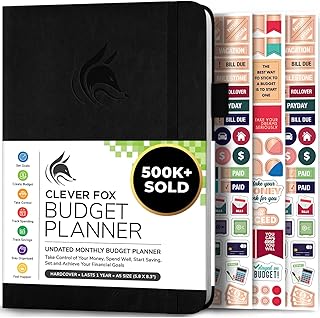
Sometimes pen and paper work best. This undated planner helps you track every dollar, set goals, and visualize your progress month-by-month.
Check Price on AmazonFoundation 2: The Bulletproof Emergency Fund
Before you buy a single stock, you need a safety net. An emergency fund prevents you from selling investments at a loss or racking up high-interest debt when life happens (car repairs, medical bills, job loss).
How Much Do You Need?
- Single/Stable Job: 3 months of essential expenses.
- Family/Freelancer: 6 months of essential expenses.
Keep this money in a High-Yield Savings Account (HYSA). Do not invest it. Its job isn’t to make you rich; its job is to keep you safe.
Foundation 3: Investing for Growth
Once your debt is managed and your safety net is full, you must put your money to work. Leaving cash in a checking account is a guaranteed loss due to inflation.
For a deep dive on specific asset classes, read our guide on where to invest money for maximum returns.
Asset Allocation
Diversification is the only “free lunch” in investing. A healthy portfolio might look like this:
- Stocks (60-80%): For long-term growth. See our analysis of best investments for 2026.
- Bonds (10-30%): For stability and income.
- Alternatives (5-10%): Gold, Real Estate, or Crypto for non-correlated returns.
If you have a higher net worth, you should also explore advanced wealth management strategies like tax-loss harvesting and private equity.
Foundation 4: Tax Efficiency
It’s not about what you make; it’s about what you keep. Tax drag can eat up 30% of your investment returns over time.
Foundation 5: Retirement Planning
The earlier you start, the less you have to save. Compound interest is the eighth wonder of the world.
If your employer offers a 401(k) match, take it. That is an immediate 100% return on your money. After the match, max out your Roth IRA. For a comprehensive roadmap on how to structure your golden years, check our full retirement strategy guide.
Foundation 6: Debt Payoff Strategies That Actually Work
Debt is the anchor that keeps most households from building real wealth. Before you can meaningfully invest, you need a deliberate plan for eliminating high-cost balances. The good news is that decades of behavioral finance research have produced two clear, competing methods for tackling debt, and understanding the difference will help you choose the one that actually gets finished rather than the one that just looks good on paper.
The Debt Avalanche Method
The avalanche method is the mathematically optimal way to pay off debt. You list every balance from the highest interest rate to the lowest, make minimum payments on everything, and throw every spare dollar at the account with the highest rate. Once that balance hits zero, you roll the payment into the next-highest rate account, creating a snowball of increasing payments. Because you attack the most expensive debt first, you pay the least amount of interest overall and get out of debt faster in dollar terms.
The tradeoff is psychological. If your highest-rate card also happens to have your largest balance, it can take months before you see a account disappear entirely, and that lack of visible progress causes many people to lose motivation and quit.
The Debt Snowball Method
Popularized by personal finance personalities, the snowball method ignores interest rate entirely and instead orders debts from smallest balance to largest. You pay minimums on everything except the smallest balance, which you attack aggressively. When it’s paid off, you take that entire payment and apply it to the next-smallest balance. This produces quick wins early on, which research on behavioral economics suggests keeps people engaged with the process far longer than the avalanche method does, even though it usually costs more in total interest.
Which Method Should You Choose?
- Choose Avalanche if: You are disciplined, motivated by numbers, and want to minimize total interest paid.
- Choose Snowball if: You have struggled to stick with debt payoff plans before and need quick emotional wins to stay engaged.
- Hybrid Approach: Some people combine both — knock out one or two very small balances first for motivation, then switch to attacking the highest interest rate for the rest.
Debt Consolidation and Balance Transfers
If you’re carrying multiple high-interest credit cards, a balance transfer card with a 0% introductory APR period can buy you 12 to 21 months of interest-free breathing room to pay down principal aggressively. Just be aware of transfer fees, typically 3-5% of the balance moved, and make sure you have a realistic plan to pay off the balance before the promotional rate expires and reverts to a much higher standard rate.
A personal consolidation loan is another option, particularly useful when you want a fixed payment and a fixed payoff date instead of juggling several revolving balances. Just be cautious: consolidating debt without changing the spending habits that created it often leads to the original cards being run back up again, leaving you worse off than when you started.
Negotiating With Creditors
Many people don’t realize that creditors will sometimes lower your interest rate or settle a balance for less than you owe, especially if you’ve fallen behind and can demonstrate genuine hardship. A simple phone call asking for a rate reduction, especially if you have a history of on-time payments, costs nothing and occasionally works. For accounts already in collections, settlement offers of 40-60 cents on the dollar are not unusual, though settling debt can have tax and credit implications that are worth understanding before you agree to anything.
When to Consider Credit Counseling
If your debt feels genuinely unmanageable despite your best efforts at budgeting, a nonprofit credit counseling agency can be a useful next step before considering bankruptcy. A certified counselor can review your full financial picture and, if appropriate, set up a debt management plan that consolidates unsecured debts into a single monthly payment, often at a reduced interest rate negotiated directly with your creditors. Unlike for-profit debt settlement companies, which frequently charge high fees and can damage your credit further while you wait for settlements, nonprofit credit counseling agencies are generally lower-cost and more transparent about the tradeoffs involved.
Avoiding the Minimum Payment Trap
Credit card minimum payments are deliberately structured to be small, often just 1-3% of the balance, which means paying only the minimum on a high-interest card can stretch repayment out for decades and multiply the total interest paid many times over. Even modestly increasing your payment above the minimum dramatically shortens the payoff timeline and reduces total interest, which is why any extra income — a bonus, a tax refund, or a side income stream — is almost always better directed at debt above 7-8% interest than left sitting in a low-yield savings account.
Foundation 7: Building and Protecting Your Credit Score
Your credit score is one of the most consequential three-digit numbers in your financial life. It determines the interest rate on your mortgage, your auto loan, and sometimes even your insurance premiums and job prospects. A difference of 100 points on a credit score can mean tens of thousands of dollars in extra interest paid over the life of a mortgage, so treating your score as a strategic asset rather than an afterthought pays real dividends.
What Actually Makes Up Your Score
- Payment History (35%): The single biggest factor. Even one 30-day-late payment can knock 60-100 points off an otherwise strong score.
- Credit Utilization (30%): How much of your available revolving credit you’re using. Experts generally recommend staying under 30%, and under 10% for an excellent score.
- Length of Credit History (15%): Older accounts help your score, which is why closing your oldest credit card is rarely a good idea even if you stop using it.
- Credit Mix (10%): A blend of revolving credit (cards) and installment loans (auto, mortgage, student loans) is viewed favorably.
- New Credit Inquiries (10%): Applying for several new accounts in a short window signals risk to lenders and temporarily dings your score.
Practical Steps to Raise Your Score
Set every bill to autopay, even if it’s just the minimum, so a payment is never missed due to forgetfulness. Ask your card issuer for a credit limit increase periodically — as long as you don’t spend more, a higher limit automatically lowers your utilization ratio. Consider becoming an authorized user on a family member’s long-standing, well-managed credit card, which can import years of positive history onto your own report. Finally, check your credit report from all three bureaus at least once a year for errors; inaccurate late payments or accounts that aren’t yours are more common than most people realize and can be disputed for removal.
Credit Monitoring and Freezes
Free credit monitoring services will alert you the moment a new account is opened in your name, which is often the first sign of identity theft. If you’re not actively applying for credit, consider placing a security freeze on your reports with all three bureaus. It’s free, reversible, and prevents anyone — including you — from opening new credit in your name until you lift it, which is one of the strongest protections available against fraud.
Foundation 8: Insurance Planning — Protecting What You’ve Built
All the budgeting and investing in the world can be wiped out by a single uninsured catastrophe. Insurance is the unglamorous but essential piece of financial planning that transfers catastrophic risk away from your household balance sheet and onto an insurer’s, in exchange for a predictable premium.
Life Insurance
If anyone depends on your income — a spouse, children, or aging parents — you likely need life insurance. For most households, term life insurance is the more efficient choice over permanent policies like whole life, because it provides a large death benefit for a relatively small premium during the years your family is most financially vulnerable. A common rule of thumb is coverage equal to 10-12 times your annual income, though a more precise number should account for outstanding debts, future education costs for children, and how many years of income replacement your family would realistically need.
Health Insurance
Medical debt remains one of the leading causes of bankruptcy. When comparing health plans, don’t just look at the monthly premium — factor in the deductible, out-of-pocket maximum, and whether your preferred doctors are in-network. If you’re generally healthy and eligible, a High-Deductible Health Plan paired with a Health Savings Account can be a powerful financial planning tool, since HSA contributions are tax-deductible, grow tax-free, and can be withdrawn tax-free for qualified medical expenses — a triple tax advantage no other account offers.
Disability Insurance
Disability insurance is the most overlooked coverage in most financial plans, despite the fact that a person is statistically far more likely to become disabled during their working years than to die during them. Many employers offer some baseline short-term and long-term disability coverage, but it often replaces only 50-60% of your salary. Supplementing with an individual policy can close that gap and protect your ability to keep funding every other goal in this guide.
Homeowners, Renters, and Umbrella Policies
Renters insurance is inexpensive, often under $20 a month, yet a surprising number of renters skip it and remain fully exposed to fire, theft, or liability claims. Homeowners should periodically review their dwelling coverage to make sure it reflects current rebuilding costs, not just the purchase price of the home. For households with significant assets, an umbrella liability policy adds an extra layer of protection — typically $1-2 million in additional coverage — for a modest annual premium, shielding your savings and investments from lawsuits that exceed your standard policy limits.
Long-Term Care Considerations
Long-term care — the kind of extended assistance many people eventually need later in life for daily activities — is expensive and generally not covered by standard health insurance or Medicare beyond a limited period. Some households address this risk with a dedicated long-term care insurance policy, while others self-insure by earmarking a portion of their investment portfolio specifically for this purpose. Either way, the earlier this is planned for, the lower the premiums and the more options are available, since long-term care coverage becomes more expensive and harder to qualify for as health issues accumulate with age.
Foundation 9: Homeownership and Real Estate Planning
For most households, a home is the single largest purchase they will ever make and often the biggest component of their net worth. Approaching it as a financial decision, not just an emotional one, protects you from becoming house poor.
How Much House Can You Actually Afford?
Lenders will often approve you for more than you should comfortably spend. A safer guideline than the maximum the bank offers is keeping your total housing costs — principal, interest, taxes, insurance, and any HOA fees — under 28% of your gross monthly income. Remember to budget separately for maintenance, which typically runs 1-2% of the home’s value annually, and for the reality that older homes and bigger yards mean higher ongoing costs.
Renting vs. Buying
Buying isn’t automatically superior to renting; the right answer depends heavily on how long you plan to stay in the home. Closing costs and real estate commissions mean it typically takes several years of ownership before the math tips in favor of buying over renting the equivalent home and investing the difference. If you expect to relocate within three to five years for a job or lifestyle change, renting frequently comes out ahead once you account for transaction costs.
Mortgage Strategy
- 15-Year vs. 30-Year: A 15-year mortgage carries a lower interest rate and builds equity far faster, but the higher required payment reduces flexibility. Many financial planners recommend a 30-year mortgage for the lower required payment, with the option to make extra principal payments when cash flow allows.
- Points and Rate Buydowns: Paying discount points upfront to lower your interest rate only makes sense if you plan to stay in the home long enough to recoup the upfront cost through lower monthly payments.
- Refinancing: Refinancing generally makes sense when you can lower your rate enough to recoup closing costs within two to three years, or when you want to shorten your loan term.
Real Estate as an Investment
Beyond a primary residence, rental property can generate both cash flow and long-term appreciation, but it comes with real work — tenant screening, maintenance, vacancy risk, and illiquidity that stocks and bonds don’t carry. If direct ownership sounds like more hassle than you want, Real Estate Investment Trusts offer exposure to real estate returns through a normal brokerage account, with the liquidity of a publicly traded stock.
Don’t Overlook Property Tax Appeals
Property tax assessments don’t always keep pace accurately with actual market conditions, and many homeowners are unknowingly paying tax on an inflated assessed value. Most counties have a formal appeal process, and gathering comparable sale prices for similar homes in your area is often enough evidence to successfully lower your assessment. It costs nothing but a bit of paperwork and can meaningfully reduce one of the largest recurring costs of homeownership for years afterward.
Foundation 10: Estate Planning Basics Everyone Needs
Estate planning isn’t just for the ultra-wealthy. If you have a child, a bank account, or an opinion about who should raise your kids if something happens to you, you already need the basics in place.
The Core Documents
- A Will: Directs how your assets are distributed and, critically for parents, names a guardian for minor children. Without one, a court decides both.
- Beneficiary Designations: Retirement accounts, life insurance policies, and many bank accounts pass directly to named beneficiaries, overriding whatever your will says. Review these after every major life event — marriage, divorce, or a new child.
- Power of Attorney: Authorizes someone you trust to manage your financial affairs if you become incapacitated and unable to do so yourself.
- Healthcare Directive: Documents your medical wishes and designates who can make healthcare decisions on your behalf if you cannot communicate them.
Do You Need a Trust?
A revocable living trust allows assets to pass to heirs without going through probate, which can be slow and, in some states, expensive and public. Trusts are especially useful for blended families, business owners, or anyone who owns property in more than one state, since each additional state can otherwise trigger a separate probate process.
Foundation 11: Saving for Your Children’s Education
College costs continue to outpace general inflation, making an early, dedicated savings strategy far more effective than trying to catch up later with loans.
529 Education Savings Plans
A 529 plan is the primary vehicle for education savings, offering tax-free growth and tax-free withdrawals when the funds are used for qualified education expenses, including tuition, room and board, and even some K-12 costs depending on your state. Many states also offer a state income tax deduction or credit for contributions, which effectively gives you an immediate return before the money is even invested.
Balancing College Savings With Retirement
A common mistake is over-funding a child’s education at the expense of your own retirement. Your child can borrow for school; you cannot borrow for retirement. A sustainable approach funds retirement accounts first, directs any employer match, and then allocates additional savings toward education goals, potentially supplemented later by scholarships, financial aid, or student loans that your child repays themselves.
Alternatives Worth Knowing
- Custodial Accounts (UTMA/UGMA): More flexible than a 529 since funds can be used for anything, but they become the child’s legal property at the age of majority and can reduce financial aid eligibility more than a 529 does.
- Coverdell ESA: Similar tax treatment to a 529 with more flexible investment options, but with much lower annual contribution limits.
- Roth IRA as a Backup: Contributions (not earnings) can be withdrawn penalty-free for qualified education expenses, making a Roth a flexible dual-purpose account for some families.
Foundation 12: Building Multiple Income Streams
Relying entirely on a single paycheck concentrates your financial risk in one employer, one industry, and one set of economic conditions. Diversifying your income the same way you diversify your investment portfolio adds resilience and accelerates every other goal in this guide.
Active vs. Passive Income
Active income streams — freelancing, consulting, a side business, or a part-time gig — trade your time directly for money and typically require ongoing effort to sustain. Passive income streams, such as dividend-paying investments, rental income, or royalties from creative work, require significant upfront effort or capital but continue generating income with minimal ongoing time investment once established.
Getting Started Without Overextending
The best side income idea is usually one that leverages a skill you already have, since it requires less of a learning curve and can be monetized faster. Start small enough that a slow month doesn’t create financial strain, and be deliberate about where the extra income goes — funneling it directly toward debt payoff, an emergency fund, or additional investments rather than lifestyle inflation is what actually accelerates your financial timeline.
Common Side Income Sources
- Freelance or consulting work in your existing professional skill set.
- Dividend growth investing in a taxable brokerage account for gradually increasing passive cash flow.
- Renting out an unused room, parking space, or storage area in your home.
- Selling digital products or content that can be created once and sold repeatedly.
Foundation 13: Financial Planning By Life Stage
The “right” financial move depends heavily on where you are in life. A strategy that makes sense in your twenties can be actively harmful in your fifties, and vice versa.
Your 20s: The Foundation Decade
This decade is about building habits more than accumulating large sums. Prioritize starting a retirement account even with small contributions, since compound growth over 40 years dramatically favors an early start over a larger contribution made later. Build your emergency fund, establish credit responsibly, and avoid lifestyle inflation as your income grows.
Your 30s: Acceleration
Income typically rises meaningfully in this decade, often alongside major expenses like a home purchase or children. This is the decade to increase retirement contributions toward the 15-20% of income range, secure adequate life and disability insurance if you now have dependents, and begin dedicated education savings if you have children.
Your 40s: Peak Earning, Peak Responsibility
Many people in their 40s are simultaneously supporting children and aging parents — the so-called “sandwich generation.” This is a critical decade to max out retirement accounts where possible, stress-test your estate planning documents, and resist the temptation to dip into retirement savings for competing short-term priorities.
Your 50s and Beyond: The Home Stretch
Catch-up contributions become available for retirement accounts in your 50s, offering a meaningful opportunity to close any gaps. This decade should include a serious look at your retirement income plan, a review of when to claim Social Security, and a gradual shift in asset allocation toward capital preservation as retirement approaches, without abandoning growth entirely given that retirement itself can last three decades or more.
Foundation 14: Common Financial Mistakes to Avoid
Avoiding a handful of predictable, well-documented mistakes often matters more than finding the perfect investment or strategy.
- Lifestyle Inflation: Increasing spending in lockstep with every raise, leaving your savings rate flat no matter how much you earn.
- Timing the Market: Trying to jump in and out of investments based on predictions rather than staying invested through cycles, which historically costs investors far more than it gains them.
- Ignoring Fees: A seemingly small 1% annual fee difference on an investment account can consume a significant portion of total returns over several decades.
- No Emergency Fund: Being forced to use high-interest debt for predictable emergencies that a modest cash cushion would have covered.
- Co-signing Loans Casually: Underestimating that a co-signer is fully liable for a loan if the primary borrower stops paying.
- Delaying Estate Documents: Assuming these only matter for older or wealthier people, when in reality anyone with dependents needs them immediately.
- Cashing Out a 401(k) When Changing Jobs: Triggering taxes and penalties instead of rolling the balance into a new employer plan or an IRA.
Foundation 15: Financial Tools and Apps to Simplify Planning
Good tools won’t fix a bad plan, but the right ones remove friction from following a good one, which is often the difference between a plan that sticks and one that gets abandoned after a few weeks.
Budgeting and Tracking Apps
Automated budgeting apps that link to your accounts and categorize spending remove the manual work that causes most people to abandon a budget within the first month. For those who prefer full control and a tactile process, a written planner like the one featured above still outperforms software for many people, since physically writing numbers down improves recall and accountability.
Investment and Retirement Calculators
Retirement calculators that project your savings forward using your current contribution rate and expected returns are invaluable for catching a shortfall a decade before it becomes a crisis rather than a year before. Rebalancing tools built into most modern brokerage platforms can also automatically bring your portfolio back to its target allocation, removing the emotional decision-making from the process entirely.
Credit Monitoring Services
Free credit monitoring, often bundled with a bank account or credit card, gives you real-time alerts on changes to your credit file and simplifies the annual check for errors described earlier in this guide.
Spreadsheets vs. Automated Apps
There’s a real tradeoff between the flexibility of a self-built spreadsheet and the convenience of an automated app. A spreadsheet gives you complete control over categories and formulas and costs nothing, but requires manual upkeep that many people eventually abandon. An automated app trades some of that customization for convenience, pulling transactions in automatically so the budget stays current without weekly data entry. Many people find the most durable system is a hybrid: an automated app for day-to-day tracking, paired with an annual deep-dive spreadsheet review of net worth, savings rate, and progress toward major goals.
Foundation 16: The Psychology of Money
Personal finance is, despite the name, more personal than it is mathematical. Two people with identical incomes and identical knowledge of compound interest can end up in wildly different financial positions because of how they think about and relate to money.
Money Scripts and Upbringing
Most adults carry unconscious beliefs about money formed in childhood — whether money is scarce, whether talking about it is shameful, or whether spending equals love. Recognizing your own money scripts is often the first step toward changing unproductive financial behavior, since you can’t consciously override a pattern you’ve never identified.
Avoiding Emotional Decision-Making
Fear during a market downturn and overconfidence during a boom are two sides of the same behavioral coin, and both lead to buying high and selling low. Automating contributions and rebalancing removes the moment-to-moment decision from your hands, which is precisely why automation consistently outperforms manual, emotion-driven investing over long periods.
Aligning Spending With Values
Guilt-free spending is achievable once your savings and debt-payoff goals are automated first. Money spent intentionally on things that genuinely align with your values produces far more satisfaction than money spent reflexively, which is why a values-based review of your discretionary spending is often more useful than another round of generic budget cuts.
Recovering From Past Financial Setbacks
A bankruptcy, a foreclosure, or years of high-interest debt can leave a lasting psychological imprint long after the numbers themselves have recovered. It’s common for people who have been through a serious financial setback to swing toward excessive caution — avoiding all debt even when it would be strategically useful, or hoarding cash well beyond what an emergency fund requires. Recognizing this pattern for what it is, rather than treating it as simply “being careful,” allows you to make forward-looking decisions based on your current numbers rather than being permanently anchored to a difficult period in the past.
Foundation 17: Managing Money as a Couple
Money is consistently cited as one of the leading sources of conflict in relationships, not usually because couples lack income, but because they lack a shared system and shared communication around it. Getting on the same page financially is as much a relationship exercise as it is a spreadsheet exercise.
Joint, Separate, or Hybrid Accounts
There’s no universally correct answer to whether couples should combine finances entirely, keep everything separate, or use a hybrid approach. A common hybrid model uses a joint account for shared expenses like rent, groceries, and bills, funded proportionally by each partner’s income, while each person keeps a separate account for individual discretionary spending. This structure tends to reduce friction because neither partner has to justify every personal purchase to the other, while shared obligations are still handled transparently and fairly.
Having the Money Conversation Early
Discussing debt, spending habits, credit scores, and financial goals before major commitments like moving in together or marriage prevents unpleasant surprises later. A useful exercise is for each partner to independently write down their top three financial goals and their biggest financial fear, then compare notes — differences in risk tolerance and priorities are far easier to navigate when they’re identified early rather than discovered during a crisis.
Regular Money Meetings
Couples who schedule a brief, recurring check-in — monthly is common — to review spending, progress toward goals, and any upcoming large expenses tend to avoid the drift where small unspoken resentments about money build up over time. Keeping the tone collaborative rather than accusatory, and framing the meeting around shared goals rather than individual blame, keeps these conversations productive rather than something both partners dread.
Foundation 18: Financial Planning for the Self-Employed and Freelancers
Self-employment removes the built-in guardrails that traditional employment provides — automatic tax withholding, employer-sponsored retirement matching, and predictable paychecks — which means freelancers and business owners need a more deliberate financial system to stay on track.
Managing Irregular Income
The single biggest adjustment for newly self-employed workers is decoupling monthly spending from monthly income. A practical approach is to pay yourself a consistent “salary” from a business account into a personal account, based on your average income over the trailing six to twelve months, and let any months of above-average income build a buffer in the business account for the leaner months rather than immediately increasing personal spending.
Setting Aside Taxes
Because taxes aren’t automatically withheld from self-employment income, setting aside a dedicated percentage — commonly 25-30% depending on your tax bracket and state — into a separate savings account with every payment received prevents a painful surprise at tax time. Quarterly estimated tax payments are typically required for anyone expecting to owe a meaningful amount, and missing them can trigger underpayment penalties even if the full balance is eventually paid.
Retirement Accounts for the Self-Employed
- SEP IRA: Simple to set up and administer, with contribution limits far higher than a traditional or Roth IRA, making it popular with solo freelancers and small business owners.
- Solo 401(k): Allows contributions both as the “employee” and the “employer,” often permitting even higher total contributions than a SEP IRA for business owners with no employees other than a spouse.
- SIMPLE IRA: Geared toward small businesses with a handful of employees, requiring the employer to make matching or non-elective contributions.
Building Your Own Safety Net
Without employer-sponsored disability or unemployment protections, self-employed workers should generally hold a larger emergency fund than the standard three-to-six-month guideline — many financial planners recommend six to twelve months of expenses given the added income volatility. An individual disability insurance policy is also worth prioritizing sooner rather than later, since your ability to earn is your most valuable financial asset when you have no employer safety net behind you.
Foundation 19: Protecting Your Wealth Against Inflation
Inflation is a quiet tax that erodes the purchasing power of cash sitting idle, and a financial plan that doesn’t account for it will fall short of its goals even if every account balance looks like it’s growing.
Why Cash Isn’t Safe Long-Term
Money kept in a standard checking account, or even a low-yield savings account, loses real value every year that inflation outpaces the interest rate paid. This is precisely why an emergency fund belongs in a High-Yield Savings Account rather than a standard one, and why money earmarked for goals more than a few years away generally belongs in investments with growth potential rather than sitting in cash.
Assets That Historically Help Offset Inflation
- Equities: Company earnings and, by extension, stock prices have historically grown faster than inflation over long time horizons, making stocks one of the most effective long-term inflation hedges.
- Real Estate: Property values and rental income both tend to rise alongside inflation, and a fixed-rate mortgage becomes relatively cheaper to repay in real terms as inflation erodes the value of the fixed debt.
- Treasury Inflation-Protected Securities: These government bonds adjust their principal value directly with inflation, offering a more direct and lower-volatility hedge than stocks or real estate, though typically with lower long-term returns.
- Commodities and Gold: Often used as a smaller diversifying allocation, since these assets have historically held value during periods of high or unexpected inflation, though they don’t generate income the way stocks or bonds do.
Adjusting Your Plan for a High-Inflation Environment
During periods of elevated inflation, prioritizing debt with a fixed low interest rate over aggressive early payoff can actually make sense, since inflation effectively shrinks the real cost of that fixed debt over time. Meanwhile, variable-rate debt becomes more dangerous during inflationary periods, since central banks typically raise interest rates to combat inflation, which pushes variable rates higher along with it. Revisiting your budget more frequently during high-inflation periods — rather than relying on a plan set a year or two earlier — helps ensure your “needs” category hasn’t quietly grown beyond the 50% target described earlier in this guide.
Foundation 20: Tax-Smart Charitable Giving
Giving to causes you care about doesn’t have to be purely a matter of the heart with no financial strategy involved. A handful of well-known techniques let you give more effectively while also reducing your tax bill, meaning the same generosity can go further for both you and the organizations you support.
Donating Appreciated Securities Instead of Cash
Rather than selling a stock that has grown significantly and donating the after-tax cash proceeds, donating the shares directly to a qualified charity lets you avoid capital gains tax entirely while still deducting the full fair market value, assuming you itemize deductions. This single technique is one of the most underused tools in personal finance, since most donors default to cash simply out of habit rather than realizing the tax advantage available with appreciated shares held longer than a year.
Donor-Advised Funds
A donor-advised fund lets you contribute a lump sum in a single high-income year, take the tax deduction immediately, and then distribute the money to specific charities over the following years at your own pace. This is particularly useful for “bunching” several years of planned giving into one tax year to clear the itemization threshold, then taking the standard deduction in the following years, maximizing the total tax benefit of the same total donation amount.
Qualified Charitable Distributions
For those over the age required to take minimum distributions from a retirement account, directing that distribution straight to a qualified charity — rather than taking it as taxable income first and donating afterward — excludes the distribution from taxable income entirely. This can be significantly more valuable than a standard itemized deduction, particularly for retirees who no longer have enough other deductions to itemize.
Frequently Asked Questions
It depends on the interest rate. If your debt (credit cards) is above 7%, pay it off immediately—that is a guaranteed 7%+ return. If it is low interest (student loans/mortgage < 5%), you are mathematically better off investing the difference.
Less is more. Checking daily leads to emotional decisions. Check quarterly to rebalance, or annually to review your strategy. Set up automatic contributions and let the market do the work.
If you have a simple situation (W2 income, standard 401k), you can likely DIY. If you own a business, have complex estate needs, or have a net worth over $500k, a fiduciary advisor can easily pay for themselves in tax savings alone.
Most lenders reserve their best conventional mortgage rates for borrowers with scores of 740 or higher. Scores between 620 and 740 will still qualify for a mortgage but typically at a higher rate, and scores below 620 often require specialized loan programs.
A common starting point is 10-12 times your annual income, adjusted for outstanding debts, future education costs, and how many years your dependents would need income replacement. An online needs-based calculator can refine this further.
It depends primarily on how long you plan to stay in the home. Because closing costs and commissions are front-loaded, buying generally only outperforms renting after several years of ownership. If your timeline is under three to five years, renting is often the more financially efficient choice.
Yes, especially if you have minor children. A will’s most important function for young families isn’t dividing assets — it’s naming a guardian. Without one, a court makes that decision instead of you.
Retirement should generally come first. Your child has access to loans, scholarships, and financial aid for college; there is no equivalent borrowing option for retirement. Fund retirement accounts and any employer match first, then direct additional savings toward education.
Most financial planners recommend six to twelve months of essential expenses for self-employed workers and freelancers, larger than the standard three-to-six-month guideline for traditionally employed households, since self-employment income tends to be less predictable and there’s no employer-provided safety net.
Often yes, if the stock has appreciated and you’ve held it over a year. Donating the shares directly avoids capital gains tax entirely while still allowing a deduction for the full market value, which typically leaves both you and the charity better off than donating the after-tax cash proceeds of a sale.