Financial Planning Tips: The Blueprint for Wealth in 2026
If you fail to plan, you plan to fail. It’s an old cliché, but in the volatile economic landscape of 2026, it has never been more true. Inflation has stabilized, but the cost of living remains high. Interest rates have created a divide between savers and debtors.
Financial planning isn’t just about picking stocks; it’s about building a fortress around your wealth so you can weather any storm. Whether you are just starting your career or nearing retirement, these foundational tips will help you take control of your financial destiny.
Foundation 1: The 50/30/20 Budget
You cannot invest money you don’t have. The first step to financial freedom is cash flow management. We recommend the 50/30/20 Rule because it is simple and scalable.
How It Works:
- 50% Needs: Rent/Mortgage, Groceries, Utilities, Insurance. These are non-negotiable.
- 30% Wants: Dining out, Netflix, Travel, Hobbies. This is what makes life enjoyable.
- 20% Savings/Debt: 401(k) contributions, IRA, Paying off credit cards. This is your future.
If your “Needs” exceed 50%, you are “house poor” or living above your means. You need to either increase income or slash fixed costs immediately.
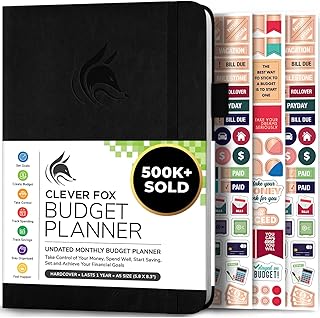
Sometimes pen and paper work best. This undated planner helps you track every dollar, set goals, and visualize your progress month-by-month.
Check Price on AmazonFoundation 2: The Bulletproof Emergency Fund
Before you buy a single stock, you need a safety net. An emergency fund prevents you from selling investments at a loss or racking up high-interest debt when life happens (car repairs, medical bills, job loss).
How Much Do You Need?
- Single/Stable Job: 3 months of essential expenses.
- Family/Freelancer: 6 months of essential expenses.
Keep this money in a High-Yield Savings Account (HYSA). Do not invest it. Its job isn’t to make you rich; its job is to keep you safe.
Foundation 3: Investing for Growth
Once your debt is managed and your safety net is full, you must put your money to work. Leaving cash in a checking account is a guaranteed loss due to inflation.
For a deep dive on specific asset classes, read our guide on where to invest money for maximum returns.
Asset Allocation
Diversification is the only “free lunch” in investing. A healthy portfolio might look like this:
- Stocks (60-80%): For long-term growth. See our analysis of best investments for 2026.
- Bonds (10-30%): For stability and income.
- Alternatives (5-10%): Gold, Real Estate, or Crypto for non-correlated returns.
If you have a higher net worth, you should also explore advanced wealth management strategies like tax-loss harvesting and private equity.
Foundation 4: Tax Efficiency
It’s not about what you make; it’s about what you keep. Tax drag can eat up 30% of your investment returns over time.
Foundation 5: Retirement Planning
The earlier you start, the less you have to save. Compound interest is the eighth wonder of the world.
If your employer offers a 401(k) match, take it. That is an immediate 100% return on your money. After the match, max out your Roth IRA. For a comprehensive roadmap on how to structure your golden years, check our full retirement strategy guide.
Frequently Asked Questions
It depends on the interest rate. If your debt (credit cards) is above 7%, pay it off immediately—that is a guaranteed 7%+ return. If it is low interest (student loans/mortgage < 5%), you are mathematically better off investing the difference.
Less is more. Checking daily leads to emotional decisions. Check quarterly to rebalance, or annually to review your strategy. Set up automatic contributions and let the market do the work.
If you have a simple situation (W2 income, standard 401k), you can likely DIY. If you own a business, have complex estate needs, or have a net worth over $500k, a fiduciary advisor can easily pay for themselves in tax savings alone.