
Top MBA Programs Without a GMAT — The Complete 2026 Playbook

More than 60% of top MBA programs now offer GMAT waiver options — and the trend is accelerating.
Why the GMAT Is Quietly Becoming Optional at America’s Best Business Schools
For decades, a high GMAT score was the gatekeeper to elite business education. It determined who even got a seat at the admissions table. Today, that gate is swinging open — and not just at second-tier programs desperate to fill seats. Harvard, Wharton, MIT Sloan, Kellogg, Yale SOM, and dozens of other genuinely elite schools now offer GMAT-waiver options or fully test-optional pathways. This is not a compromise in quality. It is a deliberate, research-backed evolution in how schools identify exceptional business leaders.
The shift began accelerating in the early 2020s, driven by three forces that proved difficult to resist: the COVID-19 pandemic (which temporarily closed testing centers globally), a growing body of research questioning the GMAT’s predictive validity for long-term career success, and competitive pressure as top schools watched talented candidates choose programs that didn’t demand months of test preparation on top of demanding careers.
The result is a dramatically expanded landscape for ambitious professionals. If you have a strong academic record, meaningful work experience, professional certifications, or simply a compelling story to tell — you may no longer need a GMAT score to earn admission to a program that will genuinely transform your career. This guide covers everything you need to know to navigate that landscape intelligently, from understanding waiver eligibility to identifying the specific programs worth your time and application fee.
We’ll also cover what replacing the GMAT actually looks like in practice — which schools have the most generous waiver policies, what admissions committees look for in GMAT-waiver applications, and how to position your candidacy to be as competitive as possible when you’re walking in without a standardized test score. Whether you’re targeting the top of the MBA rankings or looking for a strong regional program with outstanding ROI, this is the definitive resource for your search in 2026.

If you’re applying without a GMAT score, your essays need to be exceptional. This book shows exactly what HBS-admitted essays look like — invaluable for crafting your own story.
📦 View on AmazonWhat Exactly Is a GMAT Waiver — and How Does It Work?
A GMAT waiver is a formal exemption granted by a business school that allows a specific applicant to submit their MBA application without a GMAT (or GRE) score. It is not a loophole or a consolation prize — it is a structured admissions policy that reflects the school’s judgment that, for qualifying candidates, standardized test scores add little predictive value beyond what is already evident from other application materials.
It is important to distinguish between three related but distinct concepts that are often confused in the MBA applicant community:
- GMAT Waiver (Application-Based): The applicant requests a waiver before or during the application process. The school evaluates the request against specific criteria and grants or denies it. Used by programs like Kellogg, Darden, and Fuqua.
- Test-Optional Policy: The school allows all applicants to decide for themselves whether to submit a score. No separate waiver request is needed — you simply apply without submitting a score, and your application is evaluated on its full merits. Used by HBS and an increasing number of programs.
- No GMAT Required (Fully Test-Free): Some programs, particularly Executive MBA and many online programs, do not consider standardized test scores at any point in the admissions process. These are the most accessible for non-traditional candidates.
Understanding which type of policy a school uses matters enormously for your application strategy. At a test-optional school, choosing not to submit a score is not stigmatized — the admissions committee is explicitly trained to evaluate your application holistically. At a waiver-based school, your waiver request itself is part of the application, and the strength of your case for the waiver can influence how the broader application is perceived.
The History of MBA Test Waivers
GMAT waivers are not new — Executive MBA programs at elite schools have offered them for decades to senior executives whose professional track records made standardized testing redundant. What changed dramatically between 2020 and 2026 was the expansion of waiver availability to full-time MBA programs, the increase in the number of schools offering them, and the loosening of eligibility criteria to include a broader range of candidates beyond C-suite executives.
The pandemic was the inflection point. When testing centers closed globally in March 2020, schools that had never offered waivers were forced to adopt them overnight. Many found, to their own surprise, that the quality of their admitted cohorts did not decline — and in some cases improved, because they were suddenly able to admit compelling candidates who had previously been filtered out by middling GMAT scores that didn’t reflect their actual business aptitude.
Most GMAT-waiver discussions focus on eliminating standardized testing entirely. However, many schools that accept a waiver also accept the GRE as an alternative to the GMAT. If you’re a strong verbal reasoner and weaker in math, a GRE score may actually be a strategic advantage. This article focuses on eliminating the test requirement altogether, but the GRE option is always worth considering.
Who Qualifies for a GMAT Waiver? The Real Criteria Schools Use
The specific criteria for GMAT waivers vary significantly from school to school, but a consistent set of factors emerges across the landscape of programs that offer them. Understanding these factors not only helps you determine if you qualify — it helps you build the strongest possible case in your waiver request or test-optional application.
Academic Record
Your undergraduate GPA is the single most important factor in most GMAT waiver decisions, and for good reason — it provides a sustained, multi-year demonstration of your ability to perform academically under pressure. Schools typically look for a minimum cumulative GPA of 3.0 on a 4.0 scale, but in practice, competitive GMAT waiver candidates tend to have GPAs of 3.2 or higher.
Crucially, quantitative performance within your academic record matters more than overall GPA at many programs. If you graduated with a 3.1 overall but earned A grades in calculus, statistics, economics, and accounting, that signal often carries more weight for waiver eligibility than a 3.3 GPA in a non-quantitative major. Some schools explicitly state that they look for evidence of quantitative competence specifically — which aligns with the GMAT’s primary purpose of screening for analytical aptitude.
A graduate degree of any kind — a master’s, JD, MD, or PhD — from an accredited institution is often treated as automatic evidence of academic capability, and many schools grant waivers nearly automatically to applicants with advanced degrees from strong programs.
Professional Work Experience
For most programs, a minimum of three to five years of substantive professional experience is the baseline for GMAT waiver consideration. But quantity of experience is secondary to quality. What admissions committees are looking for is evidence of progressive responsibility, demonstrated leadership impact, and the ability to operate effectively in complex environments — the same things a good GMAT score is supposed to predict.
Candidates who have managed teams, driven measurable business results, led projects across functions, or built something from scratch in an entrepreneurial context are compelling waiver candidates regardless of where they went to school or what their undergraduate GPA was. Similarly, military veterans — especially officers — are frequently granted waivers because their leadership track record is extensive and well-documented.
Professional Certifications
Holding a rigorous professional certification is one of the strongest possible signals of quantitative and analytical competence, and many schools explicitly recognize specific certifications as qualifying factors for a GMAT waiver:
- CPA (Certified Public Accountant): The CPA exam is widely recognized as one of the most rigorous professional examinations in any field. A CPA holder has already demonstrated strong analytical and quantitative skills. Understanding the golden rules of accounting is just the foundation — CPA holders have mastered a far more demanding curriculum.
- CFA (Chartered Financial Analyst): The CFA program is even more analytically demanding than the GMAT in several respects. Many schools treat a CFA Level 1 pass (or higher) as automatic GMAT waiver eligibility.
- PMP (Project Management Professional): Recognized by many schools as evidence of professional competence and organizational leadership capability.
- PE (Professional Engineer): An engineering license signals strong quantitative reasoning and is frequently cited as waiver-qualifying.
Prior Graduate or Advanced Degree
A strong graduate degree in any field — law, medicine, engineering, the sciences, or another business discipline — is typically sufficient to waive the GMAT at most programs that offer waivers. The reasoning is straightforward: you have already demonstrated graduate-level academic performance, which is what the GMAT is designed to predict.
Even if you meet general criteria, each school has specific requirements. Some schools require you to apply for a waiver before submitting your full application; others evaluate it as part of the application itself. Read each program’s waiver policy documentation carefully, as submitting a waiver request that doesn’t meet their stated criteria can actually hurt your application by signaling a lack of attention to detail.
Top-Ranked MBA Programs That Accept Applications Without a GMAT
Let’s be direct: the schools below are not settling for GMAT-free applicants because they can’t attract test-takers. They offer waivers because they have determined — through data and experience — that the GMAT is one signal among many, and that for well-credentialed candidates, it is often a redundant one. These are genuinely elite programs. Earning admission without a GMAT score from any of them is a real achievement.
For a broader overview of the best MBA programs in the country and what makes each one distinctive, our comprehensive guide to the best MBA programs in the U.S. for 2026 provides deep-dive profiles of every major school.
Harvard Business School’s test-optional policy is arguably the most significant development in MBA admissions in recent memory. HBS does not require the GMAT or GRE and has not done so since 2020 for qualifying candidates. This is not a quiet side-door — it is a stated institutional philosophy. HBS evaluates candidates on the full arc of their professional and academic story. The school is specifically looking for “habitual leaders” — people who have consistently stepped up and made things better in every organization they’ve been part of.
To apply without a test score to HBS, your academic record, work experience, and essays need to be genuinely exceptional. There is no stated minimum GPA or minimum work experience for the waiver — the school evaluates holistically. In practice, test-optional HBS admits tend to have either a very strong academic record (3.5+ GPA from a rigorous institution), a distinctive professional trajectory (entrepreneur, military leader, physician-turned-executive), or a combination of professional certifications and work experience that speaks directly to quantitative capability.
The famous HBS open essay — “What else would you like us to know about you?” — becomes even more important in a GMAT-free application. It is your primary vehicle for conveying the dimensions of your story that don’t appear in your résumé or your other essays. Use it with intention.
Wharton, the quantitative powerhouse of the business school world, offers GMAT waivers under a specific set of circumstances. Given the school’s heavy emphasis on analytics, data-driven decision-making, and finance, Wharton’s waiver policy is more targeted than HBS’s. The school is looking for quantitative signals elsewhere in your application — typically a CPA, CFA, strong quantitative academic performance, or an advanced degree with significant mathematical content (an engineering degree, a master’s in economics, or similar).
Wharton’s test-optional pathway is best suited for candidates who have a clear, demonstrable quantitative track record but who face barriers to test-taking (significant time constraints, a disability, or a previous test attempt that did not reflect their true capability). The school is transparent about the fact that a strong GMAT or GRE score remains a meaningful differentiator in the Wharton applicant pool, so the waiver pathway should be pursued strategically rather than as a default.
MIT Sloan is known for rigorous quantitative standards, but the school’s waiver policy acknowledges that for candidates with strong STEM backgrounds, engineering credentials, or technology-focused careers, a GMAT score is frequently redundant. Sloan’s admissions team looks for evidence of analytical thinking in everything from how you’ve solved business problems to the structure and clarity of your application essays. The school’s distinctive Cover Letter application format (instead of traditional essays) gives GMAT-free applicants an unusual opportunity to convey their analytical mindset through writing itself.
MIT Sloan applicants who pursue the no-GMAT pathway are typically strongest when they have an engineering or hard-science undergraduate background, have worked in a technology or analytically intensive role, or hold a graduate degree in a rigorous discipline. The school’s connection to MIT’s broader ecosystem makes it particularly compelling for professionals in fintech, AI, supply chain, and technology management.
Kellogg has one of the most clearly defined waiver policies among elite MBA programs. The school explicitly states that candidates may apply without a GMAT or GRE score if they have: (a) five or more years of post-undergraduate work experience, AND (b) a strong academic record demonstrating quantitative competence. Kellogg’s collaborative, team-oriented culture means that admissions officers are specifically looking for evidence of interpersonal leadership and the ability to work effectively with diverse teams — qualities that a GMAT score simply cannot measure.
For Kellogg applicants pursuing the waiver pathway, the video interview component takes on additional importance. Kellogg’s video interview — which involves answering impromptu questions on camera without preparation — is the school’s primary tool for assessing communication skills and cultural fit. A compelling, warm, and self-aware video interview performance can meaningfully compensate for the absence of a standardized test score in the eyes of an admissions officer.
Yale SOM’s test-optional policy is one of the most progressive among top-10 business schools. The school’s mission — to educate leaders for business and society — explicitly positions it as a place where conventional professional credentials are not the only pathway to admission. Yale SOM actively seeks candidates from non-traditional backgrounds: social entrepreneurs, public sector leaders, military veterans, healthcare professionals, and government officials who bring a diverse perspective to the classroom.
For GMAT-free applicants to Yale SOM, the most important element of the application is the essay. Yale SOM’s essay prompts are designed to elicit genuine reflection on leadership, values, and purpose. The school’s integrated curriculum — which examines business problems through the lenses of multiple stakeholders including employees, customers, investors, and society — rewards candidates who can think across disciplines and who are genuinely motivated by more than financial return. If that describes you, Yale SOM’s test-optional pathway is worth pursuing seriously.
Duke Fuqua offers GMAT waivers to candidates who meet specific criteria, with a strong emphasis on professional experience and demonstrated leadership. Fuqua is particularly generous with waivers for candidates with healthcare, social impact, and technology backgrounds — areas in which the school has built particularly strong programs. The school’s “Team Fuqua” culture means that admissions officers are specifically looking for candidates who will actively contribute to and strengthen the community, and that evaluation requires more than a standardized test score.
Fuqua’s GMAT waiver process is one of the most streamlined at an elite program — applicants submit a waiver request form as part of the broader application, and the school responds quickly. The school explicitly states that waiver decisions are made holistically and that no single factor (such as years of experience) is automatically qualifying. What matters is the overall picture: does this candidate’s background give us confidence that they will succeed academically and contribute meaningfully to the Fuqua community?
The Darden School at UVA is one of the most case-method-intensive MBA programs in the country — students read and discuss three to five cases per day, every day. This pedagogical intensity requires strong analytical and communication skills, which Darden traditionally assessed in part through GMAT scores. The school now offers waivers to candidates who demonstrate those skills through other means: a strong academic record, professional achievements that demonstrate analytical rigor, or prior coursework in quantitative disciplines.
Darden’s distinctive, close-knit residential culture (the school requires students to live near campus during the program) means that fit and community contribution are weighted heavily in admissions decisions. GMAT-waiver applicants at Darden are evaluated heavily on the likelihood that they will thrive in and contribute to its uniquely intense collaborative learning environment.

Even if you’re applying for a waiver, having a backup GMAT plan is smart. If your waiver is denied, this is the go-to resource for quickly closing the gap on quantitative reasoning.
📦 View on AmazonHighly Ranked Tier-2 Programs With Accessible GMAT Waiver Policies
Beyond the M7 and near-M7 schools covered above, a large number of genuinely excellent MBA programs offer GMAT waivers with criteria that are more accessible to a wider range of candidates. These schools are consistently ranked in the top 25–50 nationally, are AACSB-accredited, and produce graduates with strong career outcomes. For many candidates, they represent a better fit — and better value — than a long-shot application to an M7 school.
Carnegie Mellon’s Tepper School is particularly strong in technology management, operations, and analytics. Its GMAT waiver policy is well-documented and accessible to candidates with strong quantitative backgrounds — exactly the kind of candidates Tepper is built for. Engineers, data scientists, software developers, and technology managers who have demonstrated analytical excellence in their professional roles are strong waiver candidates at Tepper.
WashU Olin is one of the more accessible GMAT-waiver programs at a highly regarded institution, with a fully test-optional policy for qualified applicants. The school has a strong reputation in finance and entrepreneurship and an unusually tight-knit, collaborative culture. For candidates with strong undergraduate records (particularly from rigorous programs), Olin’s test-optional pathway is very viable.
Notre Dame’s Mendoza College is consistently ranked among the top 30 programs nationally and has a particularly strong reputation for ethical leadership and values-driven business education. The school’s GMAT waiver policy is accessible for candidates with five or more years of experience and a strong academic record. Mendoza’s intimate size and strong alumni network make it an outstanding choice for candidates who prioritize community and values alignment alongside career outcomes.
Penn State’s Smeal College is among the most accessible top-50 programs for GMAT waivers and has a particularly strong reputation in supply chain management, one of the most in-demand MBA specializations in a post-pandemic economy. Candidates with backgrounds in logistics, manufacturing, operations, and technology are particularly strong fits.
Northeastern’s MBA program is distinctive for its emphasis on experiential learning and co-op placements, which integrate real professional experience into the degree program itself. The school has a fully test-optional policy and is particularly strong for candidates interested in technology, entrepreneurship, and the Boston/New England business ecosystem.
Online MBA Programs Without a GMAT Requirement
The online MBA landscape has undergone a remarkable quality transformation in the past five years. Programs that were once viewed as clearly inferior alternatives to residential degrees now offer rigorous, AACSB-accredited curricula taught by world-class faculty with dedicated career support. For working professionals who cannot afford to leave their careers for two years, a strong online MBA from a reputable school — without the burden of GMAT preparation — represents an extraordinarily compelling option.
The key quality filter remains the same regardless of delivery format: AACSB accreditation. A non-AACSB online MBA, however inexpensive and convenient, is unlikely to be valued by employers or taken seriously in competitive career markets. Focus exclusively on AACSB-accredited programs, and you will find a rich landscape of genuinely strong options without the GMAT requirement.
Indiana University’s Kelley Direct online MBA is consistently ranked as the best online MBA program in the country by U.S. News, Forbes, and multiple other publications. Kelley does not require a GMAT for most applicants and evaluates candidates primarily on professional experience, undergraduate GPA, and essays. The program’s curriculum is substantively identical to the highly regarded residential Kelley MBA, and graduates receive the same degree with the same brand recognition. Career outcomes for Kelley Direct graduates are strong, with significant alumni network support from one of the largest and most loyal MBA alumni communities in the country.
UNC Kenan-Flagler’s online MBA was among the first top-tier programs to launch a high-quality online degree, and it remains one of the most respected. The program does not require a GMAT and instead evaluates applicants on professional achievement, leadership potential, and academic background. UNC’s program is particularly strong in the areas of finance, marketing, and leadership development, and its live virtual class format ensures that online students receive the same interactive instruction as residential counterparts.
UT Austin’s McCombs School of Business offers a strong online MBA program with no GMAT requirement. The program is particularly strong for candidates interested in technology, energy, and entrepreneurship — industries where Austin has become a major national hub. McCombs’ online MBA is backed by the full weight of the UT Austin brand, which carries significant regional and national recognition with employers.
The University of Illinois iMBA, delivered through Coursera, is one of the most remarkable developments in MBA education in the past decade. The program is fully AACSB-accredited, requires no GMAT, and costs approximately $22,000 in total — a fraction of the cost of any residential program. The curriculum is rigorous and genuinely respected. For candidates who are primarily seeking the knowledge and credentials of an MBA without the career-switching power of a residential program’s recruiting pipeline, the iMBA offers extraordinary value.
Before applying to any online MBA without a GMAT, verify: (1) AACSB accreditation, (2) whether the career center actively supports online students, (3) whether the school lists online-specific salary and employment outcomes, and (4) whether employers you’re targeting actively recruit from that program. These four checks are more predictive of your outcome than any ranking.
Keep your options open. If you decide to take the GMAT after all — or if your waiver request is denied — Kaplan’s comprehensive prep guide with 6 practice tests is the smart fallback.
📦 View on AmazonExecutive MBA Programs Without the GMAT — The Most Accessible Path
If there is one segment of the MBA landscape where the GMAT waiver is effectively the default — not the exception — it is the Executive MBA. EMBA programs are designed for senior professionals with typically 10 or more years of experience, and these candidates have already built careers that speak far more powerfully than any standardized test score could. The overwhelming majority of EMBA programs at accredited schools, including those at truly elite institutions, do not require the GMAT. Some haven’t required it in decades.
For professionals with significant career capital who are not looking to pivot industries but rather to formalize their leadership credentials, earn a recognized degree, and build a peer network at the senior level, an EMBA at a strong school — without the GMAT — represents a genuinely compelling value proposition. Unlike the full-time MBA, the EMBA does not require you to leave your job or your salary, and employers frequently sponsor EMBA candidates because the degree has an immediate and direct benefit to the organization.
Leading EMBA Programs With No GMAT Requirement
Kellogg’s EMBA is consistently ranked among the top five Executive MBA programs in the world. The program requires no GMAT and instead evaluates candidates on their professional track record, organizational leadership, and the quality of their employer’s support for the program. Kellogg EMBA students typically hold Director, VP, or C-suite titles and use the program to strengthen their general management capabilities while building a powerful peer network of senior leaders.
Wharton’s EMBA — offered on both the East and West coasts — requires no standardized testing. Admission is based entirely on the strength of your professional record, leadership accomplishments, and the quality of your application essays and interview. Wharton’s EMBA carries the full weight of the Wharton brand and alumni network, which is one of the largest and most financially influential business school networks in the world.
Columbia’s EMBA program in New York City is particularly compelling for professionals in finance, media, technology, and real estate who want to deepen their expertise while remaining embedded in the New York business ecosystem. The Friday/Saturday class format allows students to maintain their full professional roles. No GMAT is required, and the school evaluates candidates on the full scope of their professional achievement and career trajectory.
Before self-funding an EMBA, always check whether your employer offers tuition reimbursement or direct sponsorship for Executive MBA programs. Many large corporations, professional services firms, and healthcare systems have formal EMBA sponsorship programs that cover partial or full tuition. This is especially common for candidates who are already in leadership tracks within their organizations. The sponsorship conversation is also an opportunity to formally signal your long-term commitment to the organization — a valuable side benefit beyond the financial one.
Complete Comparison: Top MBA Programs Without GMAT (2026)
The following table provides a comprehensive, side-by-side comparison of the leading MBA programs that offer GMAT-free admission pathways. Use it as a quick-reference tool when building your school list. All statistics are approximate and subject to change — always verify with the school’s official admissions page.
| School | Waiver Type | Min. Exp. | Avg. GPA | Acceptance Rate | Post-MBA Salary | Format |
|---|---|---|---|---|---|---|
| Harvard Business School | Test-Optional | None stated | 3.7 | ~10% | $175,000+ | Full-Time |
| Wharton (UPenn) | Waiver Request | 4–5 yrs | 3.6 | ~14% | $175,000 | Full-Time |
| MIT Sloan | Waiver Request | 4–5 yrs | 3.67 | ~13% | $175,000 | Full-Time |
| Kellogg (Northwestern) | Waiver Request | 5 yrs | 3.7 | ~20% | $170,000 | Full-Time |
| Yale SOM | Test-Optional | 3–5 yrs | 3.6 | ~12% | $165,000 | Full-Time |
| Duke Fuqua | Waiver Request | 4 yrs | 3.4 | ~22% | $160,000 | Full-Time |
| Darden (UVA) | Waiver Request | 4 yrs | 3.4 | ~24% | $155,000 | Full-Time |
| Kelley (Indiana) — Online | No GMAT | 3 yrs | 3.3 | ~50% | $125,000 | Online |
| MBA@UNC (Kenan-Flagler) | No GMAT | 2 yrs | 3.2 | ~55% | $120,000 | Online |
| Texas McCombs — Online | No GMAT | 3 yrs | 3.2 | ~45% | $115,000 | Online |
| iMBA (U of Illinois) | No GMAT | 2 yrs | 3.0 | ~65% | $100,000 | Online |
| Kellogg EMBA | No GMAT | 10+ yrs | N/A | ~35% | $180,000+ | EMBA |
| Wharton EMBA | No GMAT | 10+ yrs | N/A | ~30% | $185,000+ | EMBA |
Note: Acceptance rate for GMAT-waiver applicants may differ from overall program acceptance rate. Salary figures represent median base compensation at graduation.
How to Apply to an MBA Program Without a GMAT: A Step-by-Step Guide
Applying to an MBA program without a GMAT score requires a more deliberate application strategy than a standard GMAT-based application. The absence of a standardized test score means that every other element of your application must work harder — your essays must be sharper, your recommendations more specific, your résumé more clearly focused on impact, and your interview (where required) more compelling. Here is a concrete, step-by-step approach.
-
Audit Your Credentials Against Each School’s Waiver Criteria
Before anything else, visit the admissions page for each school on your target list and read their specific GMAT waiver or test-optional policy in full. Create a simple spreadsheet tracking: minimum GPA requirement, minimum work experience, qualifying certifications, and the waiver request process. This audit will immediately reveal which schools are realistic targets and which require strengthening your candidacy first.
-
Build Your Quantitative Narrative
The GMAT’s primary purpose is to signal quantitative aptitude. Without it, you need to make that signal through other means. Identify the strongest quantitative elements of your academic and professional history: courses where you earned high grades (calculus, statistics, economics, accounting), professional roles involving data analysis, financial modeling, or technical problem-solving, and any certifications (CPA, CFA, PMP, PE) that demonstrate rigorous analytical competence. Understanding foundational concepts like the accounting equation or financial planning fundamentals can help you speak confidently in your essays and interviews about your analytical readiness for the program.
-
Write Your GMAT Waiver Request (Where Required)
For schools that require a formal waiver request, treat this document with the same seriousness as your primary application essays. Clearly explain: why you are requesting a waiver (not just that you don’t want to take the test — that is not a reason), what specific credentials or experiences demonstrate your readiness for the program’s academic rigor, and how your profile fits the program’s stated waiver criteria. Keep it concise (typically one page), factual, and confident in tone. Do not apologize for not having a GMAT score — make the case affirmatively for why your background speaks adequately to the skills the GMAT measures.
-
Strengthen Your Application Essays
In a GMAT-waiver application, your essays carry more weight than in a standard application. Every essay needs to work on two levels simultaneously: answering the prompt compellingly, and reinforcing your analytical and leadership credibility. Use specific, concrete examples with measurable outcomes. Show decision-making under uncertainty. Reference financial and business concepts naturally — this signals comfort with the material the GMAT is supposed to assess. Good effective writing principles — clarity, conciseness, concreteness, correctness, and completeness — apply directly to MBA essay quality.
-
Choose Recommenders Who Can Speak to Your Analytical Competence
For a GMAT-waiver application specifically, at least one of your recommenders should be someone who has directly observed your analytical and quantitative work: a manager who saw you build financial models, a client who benefited from your data-driven recommendations, or a professor who can speak to your performance in quantitative coursework. The recommendation letter is one of the few places in the application where a credible third party can directly attest to the skills the GMAT is supposed to measure.
-
Prepare an Exceptional Interview Performance
For most programs, the admissions interview is the final step before a decision — and for GMAT-waiver applicants, it often carries extra weight. Use the interview as an opportunity to demonstrate the analytical and communication skills that your application has made a case for. Prepare specific stories using the STAR method (Situation, Task, Action, Result). Practice speaking about business problems, financial tradeoffs, and strategic decisions with precision and confidence.
-
Apply in Round 1
This is universally good advice for MBA applicants, but it is especially important for GMAT-waiver candidates. Round 1 applications receive the most thorough review, scholarship funds are fully available, and admissions officers have the most flexibility in their decisions. A compelling GMAT-waiver application submitted in Round 1 will receive a better reception than the same application submitted in Round 2, when the applicant pool is larger and competition is more intense.

When your GMAT score isn’t in the picture, the quality of your writing becomes your most powerful differentiator. This timeless book on clear, precise nonfiction writing will sharpen your essays significantly.
📦 View on AmazonThe Honest Pros and Cons of Pursuing an MBA Without a GMAT
The GMAT-waiver pathway is genuinely right for many candidates, but it is not the right choice for everyone. Understanding both sides of this decision with clear eyes is essential to making the choice that maximizes your long-term outcomes.
✅ Advantages
- Saves 200–400+ hours of GMAT preparation time that can be invested in strengthening other parts of your application
- Eliminates the stress and financial cost of test preparation and multiple test attempts
- Allows candidates who are poor standardized test-takers — but exceptional business professionals — to compete on their actual merits
- Reflects the real-world reality that GMAT scores have limited correlation with long-term leadership and career success
- Opens access to genuinely elite programs that have adopted test-optional policies based on sound institutional reasoning
- Particularly beneficial for non-native English speakers and candidates from non-traditional educational backgrounds who may face structural disadvantages in standardized testing
- Levels the playing field for candidates who lacked access to expensive GMAT prep resources earlier in their careers
❌ Considerations
- At some programs — particularly those with strong quantitative cultures like Wharton, MIT Sloan, and Booth — a waiver may be harder to obtain without very specific credentials
- Not all schools offer waivers; if your target school list includes programs that don’t, you may face the GMAT regardless
- For career switchers entering highly analytical fields (quantitative finance, trading, PE), a strong GMAT score can still be a meaningful differentiator in the recruiting process itself — not just the admissions process
- Some applicants who could have earned a strong GMAT score may inadvertently underinvest in their applications by relying too heavily on the waiver pathway
- Certain scholarships and fellowship programs explicitly factor in GMAT scores, so a waiver can occasionally reduce financial aid options
When You Should Still Consider Taking the GMAT
Despite the expanding availability of GMAT waivers, there are specific circumstances in which investing the time and effort to achieve a strong GMAT score remains a strategically sound decision:
- Your target schools don’t offer waivers: Some programs — including Chicago Booth, Columbia Business School, and certain top-20 programs — have not adopted waiver policies or have very restrictive ones. If any of these are your primary targets, a strong GMAT score is the most direct path to admission.
- Your GPA is below 3.0: If your undergraduate GPA is below the typical waiver threshold, a strong GMAT score is one of the most effective ways to signal quantitative competence and counterbalance a weak academic record. A 700+ GMAT from a 2.8 GPA candidate tells a more coherent story than a 2.8 GPA without any quantitative signal.
- You’re targeting investment banking or quantitative finance recruiting: Certain Wall Street firms — particularly in structured finance, quantitative trading, and private equity — informally factor GMAT scores into recruiting decisions for MBA associate hires. If your post-MBA goal involves these sectors, a strong score can provide a recruiting advantage beyond just the admissions process.
- You believe you can score above the school’s median: If you have genuine reason to believe you can score 740+ on the GMAT, a score at or above the school’s median actually strengthens your application meaningfully. In this case, the opportunity cost of preparation may be worth it.
Post-MBA Career Strategy and Financial Planning for Graduates
Earning your MBA — whether with or without a GMAT score — is the beginning of a financial and professional transformation, not the end of a process. What you do in the months and years immediately following graduation determines whether the significant investment you made pays off generously or merely adequately. This section covers the most important financial and career considerations for new MBA graduates.
Building Wealth Post-MBA: Starting From a Strong Position
Most graduates of top MBA programs enter their first post-degree role with a meaningful salary increase relative to their pre-MBA earnings. The temptation — entirely human — is to upgrade your lifestyle commensurately. The candidates who build genuinely significant wealth in the decade after their MBA resist this temptation aggressively and instead deploy a substantial portion of their increased income into investments early, taking full advantage of the compounding effect that makes early investment dramatically more powerful than late investment.
Understanding the best investment strategies for 2026 is a practical priority for new MBA graduates. The fundamentals — diversification, tax-efficiency, and long-term time horizon — have not changed, but the specific vehicles (index funds vs. active management, tax-advantaged accounts, real assets) evolve continuously with market conditions and regulatory changes. For a comprehensive overview of where to invest your money at different stages of your career, our dedicated resource covers the full spectrum of options from basic to sophisticated.
The Role of Financial Planning in the MBA ROI Calculation
The return on investment from an MBA is not just the salary premium you earn in year one — it is the accumulated lifetime premium over your entire career, compounded by the investment decisions you make along the way. Modeling this carefully before you commit to a program and after you graduate is one of the highest-value exercises any MBA candidate can undertake.
Key variables in your personal MBA ROI model include: your expected salary increase (expressed both in absolute terms and as a percentage premium over your trajectory without the degree), the total cost of the program (tuition + living expenses + foregone salary during enrollment), your expected career trajectory post-MBA (do you plan to stay in the same industry or pivot?), and your planned investment allocation of the salary premium. Effective financial planning from day one of your post-MBA career creates a compounding advantage that most graduates fail to fully exploit.
Career Sectors and Starting Points for MBA Graduates
| Career Sector | Typical Post-MBA Role | Starting Total Comp | Key Programs |
|---|---|---|---|
| Management Consulting | Associate (MBB, Tier 2) | $190K – $225K | HBS, Kellogg, Wharton, Booth |
| Investment Banking | Associate | $200K – $250K | Wharton, Columbia, Booth, Stern |
| Technology | Product Manager / Strategy | $175K – $250K | Stanford, MIT Sloan, Kellogg |
| Private Equity | Associate | $250K – $350K+ | HBS, Wharton, Booth |
| Healthcare Management | Strategy / Operations Lead | $140K – $185K | Wharton, Kellogg, Yale SOM, Fuqua |
| Corporate Strategy | Strategy Manager | $150K – $185K | All programs |
| Entrepreneurship | Founder / Early-Stage Exec | Variable (high upside) | Stanford GSB, HBS, MIT Sloan |
| Social Impact / Nonprofit | Director / Executive Director | $85K – $130K | Yale SOM, Fuqua, Kellogg |
Managing Student Loans and Building Toward Financial Independence
For most MBA graduates, the degree comes with substantial student loan debt. Managing this debt intelligently — balancing aggressive repayment with simultaneous investment in wealth-building assets — is one of the most important financial decisions you’ll make in your post-MBA years. The mathematical reality of interest rates and compound returns means that the optimal strategy is almost always a blend: make minimum payments on lower-interest loans while maximizing contributions to tax-advantaged investment accounts, and use bonus income to make accelerated payments on higher-interest debt.
Thinking about retirement planning early — particularly in your thirties, when many MBA graduates are entering their peak earning years — has an outsized impact on long-term wealth accumulation. Exploring what a wealth management strategy looks like at different net worth levels can help you build a framework that scales with your career and income growth.
Accreditation and Quality: How to Verify Any No-GMAT MBA Program
The single most important quality indicator for any MBA program — and doubly important for no-GMAT programs, where the admissions bar may be lower — is accreditation. Accreditation is the educational establishment’s mechanism for certifying that a program meets rigorous, independently audited standards for curriculum quality, faculty credentials, student outcomes, and institutional resources. Without it, a business degree carries little weight with employers and zero transferability to further graduate education.
The Three Major Business School Accreditors
| Accreditor | Abbreviation | Scope | Prestige Level |
|---|---|---|---|
| Association to Advance Collegiate Schools of Business | AACSB | Global, primarily US | ⭐⭐⭐ Gold Standard |
| European Quality Improvement System | EQUIS | Primarily European | ⭐⭐⭐ High Prestige |
| Association of MBAs | AMBA | Global | ⭐⭐ Respected |
| Regional Accreditors (HLC, SACSCOC, etc.) | Various | US Only | ⭐ Minimum Baseline |
Only about 5% of the world’s business schools hold AACSB accreditation. This is an extraordinarily selective credential that requires a rigorous multi-year self-study and peer review process, continuous improvement documentation, and re-accreditation every five years. The AACSB logo on a school’s website is a meaningful quality signal — its absence, for any program you are considering, should be a significant red flag.
Other Quality Signals to Evaluate
- Published Employment Reports: Accredited schools are required to publish detailed employment outcome reports including median salary, employment rate at graduation, percentage in each industry, and company names of top employers. If a school does not publish this data clearly and prominently, treat it as a quality concern.
- Faculty Credentials: The overwhelming majority of faculty at quality programs should hold terminal degrees (PhD or DBA) in their field. Look for schools where faculty are publishing research in peer-reviewed journals — this is a marker of genuine academic engagement rather than credential-farming.
- Alumni Network Size and Engagement: A school’s alumni network is a long-term career asset. Look for schools with active alumni chapters in your target geography and industry, strong alumni engagement metrics (event attendance, mentorship programs, giving rates), and a culture of alumni helping current students.
- Employer Recruiting Relationships: Perhaps the most practical quality indicator: do the specific companies you want to work for recruit from this program? Call or email the school’s career center and ask directly which companies actively recruit from their program — not which companies “have hired graduates,” but which companies maintain active recruiting relationships with dedicated on-campus processes.
You can verify any school’s AACSB accreditation status in under 60 seconds at aacsb.edu/accreditation/accredited-schools. This database is updated in real time and is the authoritative source. Do not rely on a school’s own website claims — verify independently. A school can claim to be “accreditation-eligible” or “pursuing accreditation” without holding it, and these claims carry no meaningful quality assurance.

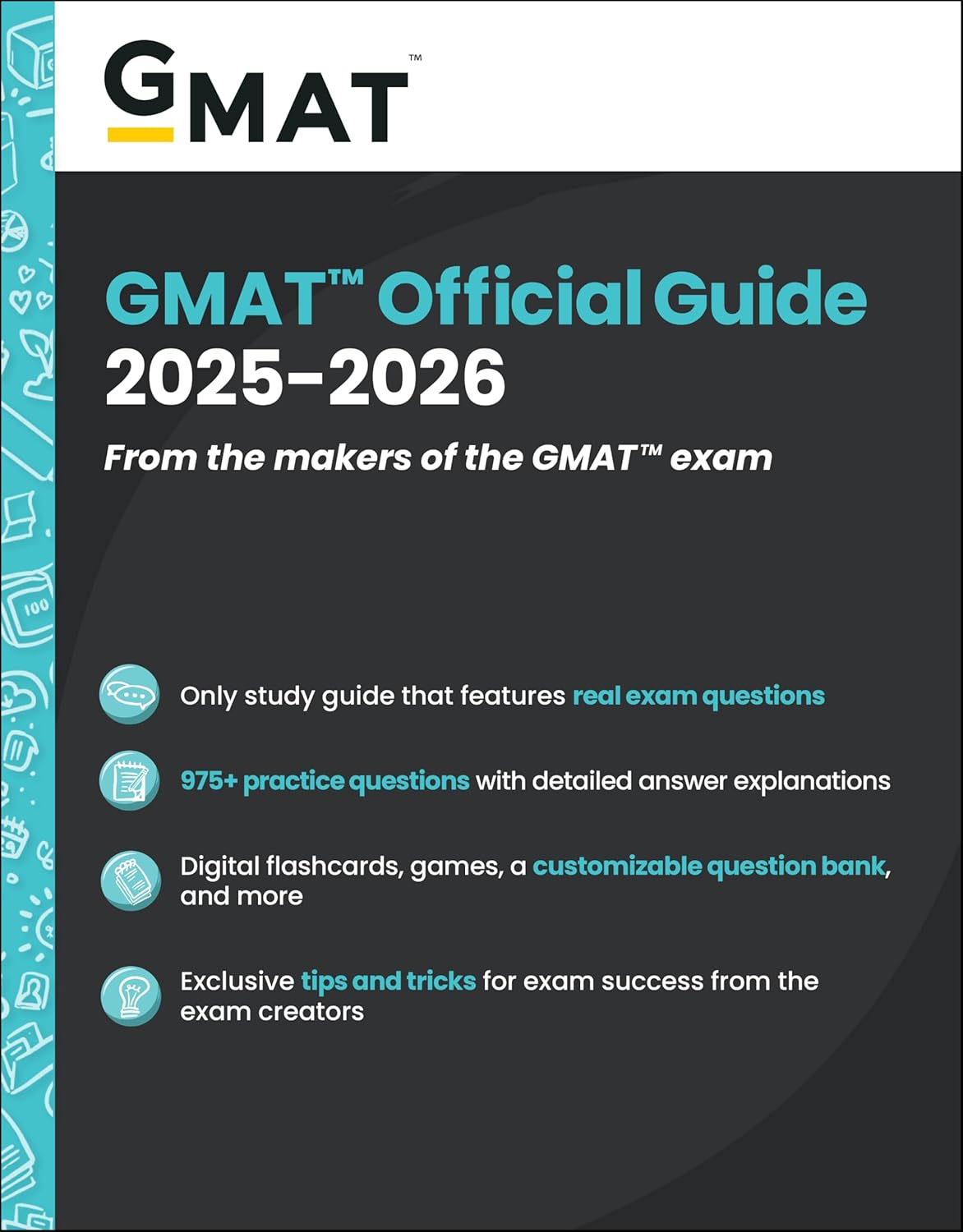
Planning to hedge your bets? Keep the official GMAT guide handy. If your first-choice school doesn’t offer a waiver, you’ll want the most authentic practice questions available — straight from the test makers themselves.
📦 View on AmazonFrequently Asked Questions About MBA Programs Without GMAT
Yes — and at genuinely top programs. Harvard Business School, MIT Sloan, Kellogg, Yale SOM, and many other elite schools now offer GMAT-waiver options or fully test-optional pathways. The waiver landscape has expanded dramatically since 2020, and all seven M7 schools now have some form of GMAT-free pathway for qualified candidates. Eligibility is typically based on work experience, undergraduate GPA, professional certifications, and the overall strength of your application.
All seven M7 schools — Harvard, Wharton, MIT Sloan, Kellogg, Booth, Columbia, and Stanford GSB — have some form of GMAT-waiver or test-optional policy. Beyond the M7, Yale SOM, Darden (UVA), Fuqua (Duke), Tepper (CMU), Mendoza (Notre Dame), WashU Olin, and many other strong programs offer waivers. The specific criteria vary significantly, so always read each school’s official admissions page.
Most programs look for a minimum cumulative undergraduate GPA of 3.0–3.2 on a 4.0 scale for GMAT waiver consideration. However, a GPA in the 3.0–3.2 range typically needs to be supported by strong quantitative coursework performance or a compelling professional track record. Competitive waiver candidates at elite programs tend to have GPAs of 3.3 or higher. An advanced degree of any kind often overrides GPA concerns.
The degree itself is identical regardless of whether you submitted a GMAT score during the admissions process. Employers and graduate programs evaluate the school’s accreditation, reputation, and curriculum — not how you were admitted. At AACSB-accredited programs, a no-GMAT MBA from Harvard carries exactly the same weight as an MBA from Harvard that required a GMAT. The only context in which the GMAT might matter post-admission is in recruiting processes at certain Wall Street firms that occasionally ask for test scores as part of an analytical screening — a practice that, while uncommon, does still occur at some firms.
Requirements vary by school and program type. Full-time MBA programs typically look for 3–5 years of post-undergraduate experience for GMAT waiver consideration, with 5 years being the most common threshold. Executive MBA programs, which rarely require the GMAT regardless, typically serve candidates with 10–15 years of experience. Online MBA programs often have more accessible thresholds, with some accepting applicants with as little as 2 years of experience without a GMAT requirement.
Harvard Business School has a test-optional policy — it accepts the GMAT and GRE but does not require either for any applicant. HBS was one of the most high-profile schools to formalize this policy, and it has stated explicitly that it evaluates candidates holistically without requiring a standardized test score. In practice, many admitted HBS students do submit GMAT or GRE scores, but the school’s official position is that a compelling application can succeed without one.
Many online MBA programs without a GMAT requirement are highly credible, provided they hold AACSB accreditation. The Indiana University Kelley Direct online MBA — ranked #1 online MBA by U.S. News — does not require the GMAT. Neither do the University of North Carolina’s MBA@UNC, Carnegie Mellon’s online hybrid MBA, or the University of Illinois iMBA, all of which are AACSB-accredited. The key filter is always AACSB accreditation, not delivery format or GMAT requirement.
Yes. GMAT waiver policies apply equally to domestic and international students. However, international students whose primary language is not English will typically still need to submit a TOEFL or IELTS score to demonstrate English language proficiency, even if they are exempt from the GMAT. Some schools waive the TOEFL requirement for candidates who have completed at least two years of undergraduate or graduate education taught exclusively in English.
Depending on the program’s waiver policy, acceptable alternatives typically include some combination of: a strong undergraduate GPA (especially in quantitative subjects), performance records in graduate-level coursework, professional certifications such as CPA, CFA, PMP, or PE license, transcripts from a previous graduate or professional degree, evidence of advanced quantitative work in a professional setting (financial modeling, data analysis, engineering), and a compelling professional track record of leadership and business impact.
Yes — virtually all MBA programs that accept the GMAT also accept the GRE as an equally valid alternative. The GRE is particularly well-suited for candidates with strong verbal reasoning skills who may struggle with the GMAT’s quantitative-heavy format. Neither test is officially considered superior by most admissions committees, and the choice should be driven entirely by where your strengths lie. The ETS ScoreSelect feature allows GRE test-takers to choose which scores to send, which can be a strategic advantage for candidates who take the test multiple times.
AACSB (Association to Advance Collegiate Schools of Business) accreditation is the gold standard. Only approximately 5% of business schools worldwide hold AACSB accreditation. For U.S. programs, AACSB is the only accreditor that major employers and graduate schools universally recognize. EQUIS and AMBA are respected for international programs. Regional accreditation (HLC, SACSCOC, etc.) is the minimum baseline for a U.S. institution but is not specific to business programs and does not carry the same weight with MBA employers.
A GMAT waiver requires the applicant to formally request an exemption, which the school evaluates against specific criteria before granting. The request is typically submitted as part of or before the full application, and approval is not guaranteed. A test-optional policy, by contrast, allows all applicants to choose whether to submit a standardized test score — no request is needed, and there is no separate approval step. Schools with test-optional policies include Harvard Business School and Yale SOM. Both pathways result in admission without a GMAT, but the process differs significantly.
Ready to Begin Your MBA Journey Without the GMAT?
The path to a genuinely elite MBA education no longer runs exclusively through a Pearson testing center. If you have the professional track record, academic credentials, and personal story that top programs are looking for, the GMAT is not what stands between you and your next chapter.
Start by auditing your credentials against the specific waiver criteria of your target schools, build your quantitative narrative, and invest the time you would have spent on GMAT prep into crafting the most compelling application essays and the strongest possible recommendations. Your story — not your test score — is what will get you admitted.
Explore the Full MBA Program Guide →