
Sanctuary Diamond Home Safe: Complete Review — Fire Ratings, Burglary Resistance & Who Should Buy It
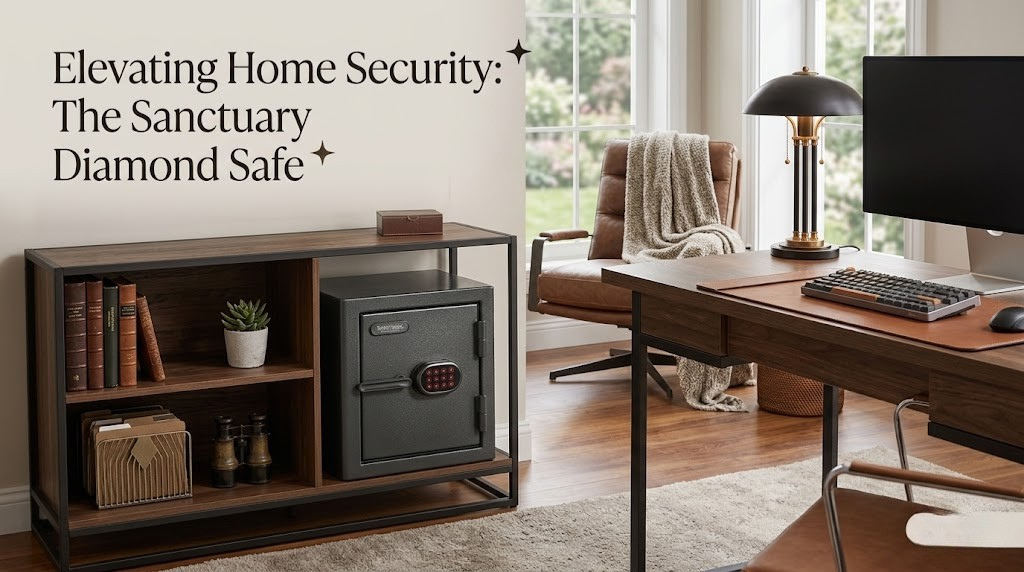
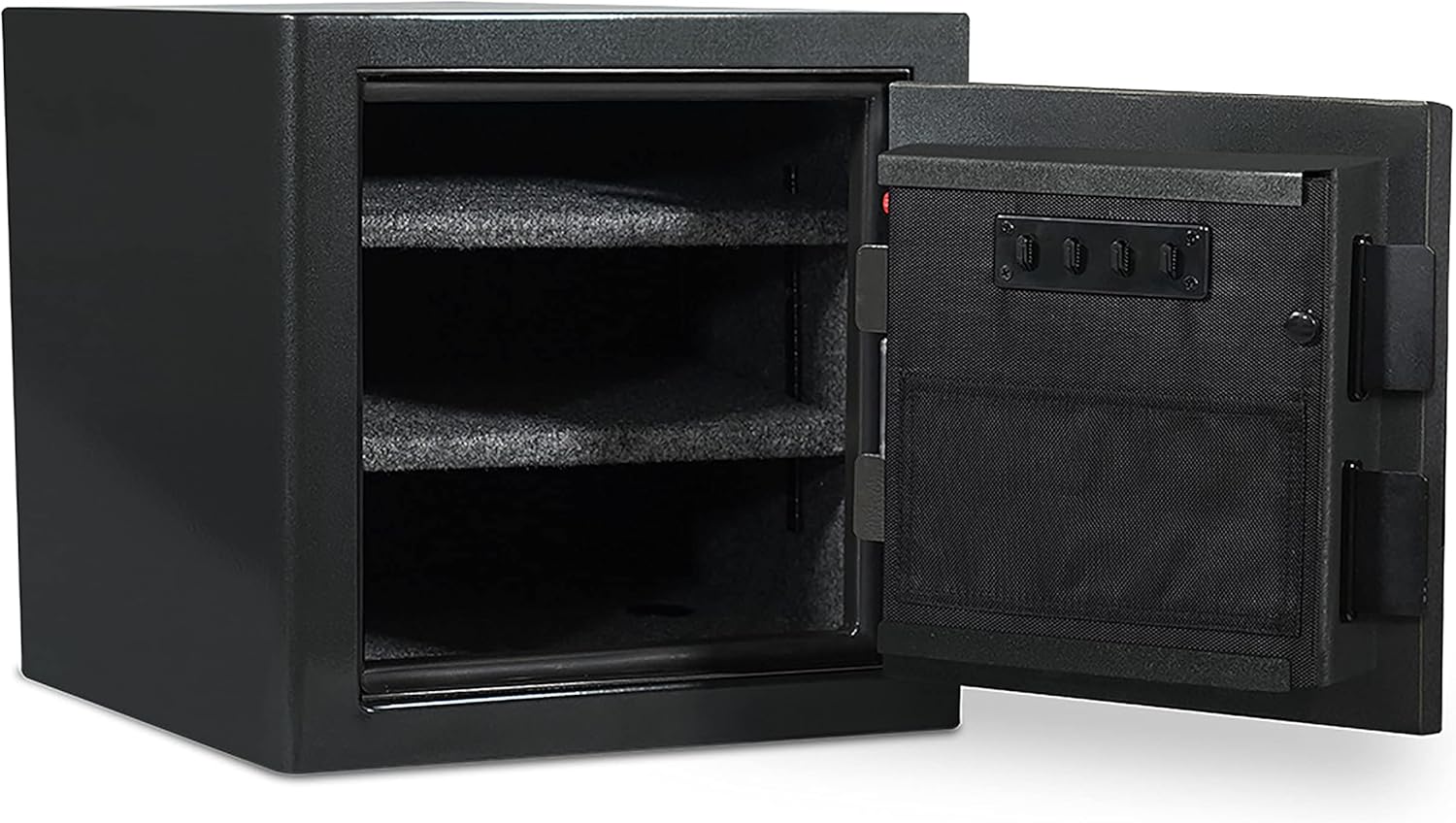
The Sanctuary Diamond’s double-layer fire wall and digital keypad are visible even before you open the door.
You’ve probably stood in the safe aisle at a big-box store staring at rows of black metal boxes and wondered: Does any of this actually work? The Sanctuary Diamond safe makes a bold promise — diamond-level protection for your most irreplaceable documents, valuables, and data. But bold marketing and genuine security are often very different things.
In this deep-dive review, we strip back the branding and give you the cold, hard facts. We’ll examine the fire endurance rating in context, decode the burglary resistance specs, walk through the interior layout, compare it head-to-head against top rivals, and tell you exactly who this safe is — and isn’t — right for. Whether you’re protecting deeds, passports, jewelry, or external hard drives, this review will help you spend your money wisely.
If you’re also considering other strongly-rated options, our comprehensive guide on top fireproof document safes for home gives you additional context across the entire market.
Quick Verdict & Overview
The Sanctuary Diamond is a mid-to-premium consumer-grade fireproof safe designed primarily for home and small-office use. It occupies an interesting price position — more expensive than entry-level options from SentrySafe’s basic lineup, but more accessible than full commercial-grade safes that cost north of $2,000.
Its headline feature is a UL-listed 1-hour fire endurance rating at 1,700°F — the threshold at which standard residential structure fires burn. That’s a legitimate and meaningful spec for a home safe. Combined with a California DOJ-compliant digital lock and concrete-reinforced composite door, the Sanctuary Diamond earns its place in the conversation for serious home security.
That said, it’s not flawless. The anti-pry door bolts, while solid, don’t carry a dedicated UL RSC (Residential Security Container) certification in all configurations. The interior capacity, while adequate, requires careful planning if you want to fit both binders and jewelry simultaneously. And the price premium over the class-leading SentrySafe SFW123GDC demands clear justification.
“The Sanctuary Diamond succeeds where it matters most for the average homeowner: honest fire protection. Its burglary rating leaves room for improvement, but as a document and valuables guardian, it delivers.”
✓ Pros
- Genuine 1-hour UL fire rating at 1,700°F
- ETL Verified for water resistance
- Solid steel door with 4-point locking bolts
- Digital keypad with backup key override
- Interior LED light (battery-powered)
- Pre-drilled anchor holes with hardware included
- Adjustable interior shelf
- Attractive, low-profile exterior finish
- Door organizer for small items
- 5-year manufacturer warranty
✗ Cons
- No dedicated UL RSC burglary rating on standard model
- Heavier than entry-level safes — awkward solo installation
- Digital keypad batteries deplete in cold storage areas
- Interior fabric liner can stain from humidity
- Price premium over SentrySafe SFW123GDC is hard to justify purely on specs
- No biometric option in base configuration
- Alarm function add-on costs extra
Sanctuary Diamond Fireproof Home Safe
1-Hour Fire Rating · ETL Water Verified · Digital Lock + Key Backup
Check Price on Amazon →Full Technical Specifications
Before we analyze performance, let’s establish the hardware baseline. Understanding these numbers in context separates a good buying decision from a marketing-driven impulse purchase.
What These Numbers Actually Mean
The 14-gauge steel on the door is worth unpacking. Gauge numbers work inversely — the lower the number, the thicker the steel. 14-gauge steel sits at approximately 0.0747 inches thick, which is a respectable mid-tier for consumer safes. Entry-level safes often use 20-gauge (0.0359″), which can be defeated with basic tools. High-security commercial models typically use 7–10 gauge or solid plate steel. So the Diamond lands in a reasonable middle ground that offers meaningful resistance without the $3,000+ price tag of true burglary-rated safes.
The 1.23 cubic foot interior may sound small, but in practical terms it accommodates a standard letter-size hanging file holder, a shelf’s worth of passports and small jewelry, plus some stacked documents on the door organizer. We’ll break down interior configuration in detail in Section 5.
Fire Protection Rating — What UL 1-Hour Really Means
Fire protection is the primary reason most homeowners buy a safe, and it’s also where the most marketing confusion exists. Let’s cut through it.
The UL 72 Standard Explained
The Sanctuary Diamond’s fire rating is governed by Underwriters Laboratories Standard UL 72, which tests document safes under three classes:
| UL Class | Duration | External Temp | Interior Must Stay Below | Diamond Rating |
|---|---|---|---|---|
| Class 350-1 | 1 Hour | 1,700°F | 350°F (paper ignites at 451°F) | ✓ Certified |
| Class 350-2 | 2 Hours | 1,850°F | 350°F | ✗ Not rated |
| Class 125-1 | 1 Hour | 1,700°F | 125°F (for CDs/USB drives) | ⚠ Partial |
| Impact Test | 30-ft drop | N/A | Contents intact after re-exposure | ✓ Passed |
The Class 350-1 certification means the Sanctuary Diamond’s interior air temperature stayed below 350°F for a full hour while the furnace raged at 1,700°F around it. This is the most practically relevant certification for safeguarding paper documents — deeds, birth certificates, insurance policies, Social Security cards, and passports.
How 1 Hour Translates to Real Fire Scenarios
The average residential structure fire burns between 800°F and 1,200°F. In a fully developed room fire, temperatures can briefly spike to 1,400–1,700°F in the immediate area of combustion. The National Fire Protection Association (NFPA) reports that the average fire department response time in suburban areas is 5–7 minutes, with total fire control often taking 20–45 minutes for small-to-medium residential fires.
In this context, a 1-hour rating provides genuine real-world protection for the vast majority of residential fire scenarios. You would need an unusually severe or slow-response fire to exceed 60 minutes of peak exposure. The Diamond’s rating is not just a marketing figure — it represents meaningful engineering.
Cross-section showing how the Sanctuary Diamond’s composite wall layers slow heat transfer during a fire.
Digital Media: The Overlooked Limitation
Here’s what many reviews gloss over: the Class 350-1 rating protects paper, not digital media. USB drives, SD cards, and external hard drives can be damaged at temperatures as low as 125°F — well below the 350°F interior threshold that the Diamond maintains during fire. For digital media protection, you’d need a Class 125-1 rated insert or a separate media safe.
The good news: the Sanctuary Diamond does pass an impact drop test, which simulates the safe falling through a collapsing floor during a fire and being re-exposed to flames from a new angle. Many cheaper safes fail this test, and the contents scatter or the door warps open. The Diamond’s composite shell holds.

Shop the Sanctuary Diamond Safe
UL 1-Hour Fire Rating · ETL Water Resistant · Impact Drop Tested
View on Amazon →Burglary & Theft Resistance
Fire protection and burglary protection require fundamentally different engineering approaches, and most consumer safes are optimized for one more than the other. Fire protection requires thick insulation — which is actually soft and poor at resisting physical attack. Burglary protection requires solid steel — which conducts heat rapidly. This tension defines the design trade-offs of every fireproof safe.
The Sanctuary Diamond leans fire-first, which is the correct priority for most homeowners. But let’s be rigorous about what that means for burglary resistance.
Door Construction & Locking Mechanism
The door features a 14-gauge steel plate with a composite fire-insulating layer behind it. Four 1-inch steel live bolts extend from the door into the frame on three sides (top, bottom, and hinge side for anti-pry resistance). This is a solid residential configuration. The bolts are actuated by a digital keypad or key override, with a relocker mechanism that throws a fifth passive bolt if the lock assembly is attacked.
UL RSC Certification — The Honest Conversation
The UL Residential Security Container (RSC) rating is the gold standard for consumer-grade burglary resistance. To earn it, a safe must withstand a net attack time of 5 minutes by a trained technician using tools including pry bars, hammers, chisels, and screwdrivers.
The Sanctuary Diamond’s standard configuration does not carry the UL RSC certification. This is a notable absence at its price point. For comparison, the SentrySafe SFW123GDC — which costs significantly less — also lacks RSC certification, so the Diamond is not uniquely disadvantaged here. However, if burglary resistance is your primary concern over fire, you should be looking at entirely different safe categories, such as gun safes rated RSC or higher.
The 14-gauge steel is meaningful for pry resistance on the door face. However, the sides and rear of the safe use thinner fire-insulating composite materials. A determined attacker with a drill and ample time could potentially breach the sidewall. This is true of essentially all consumer-grade fireproof safes and is an inherent design limitation of the category.
Anti-Pry, Anti-Drill, and Anti-Cut Features
| Security Feature | Present? | Effectiveness Level | Notes |
|---|---|---|---|
| Anti-pry door tabs | ✓ Yes | Good | Reinforced hinge-side door overlap |
| Hardened steel relocker | ✓ Yes | Moderate–Good | Activates on lock body attack |
| Anti-drill plate (lock area) | ⚠ Partial | Moderate | Hardened steel insert around lock cylinder |
| Anti-cut hardened bolts | ✓ Yes | Good | Bolts harden when torched/cut attempt detected by relocker heat |
| Thick sidewalls | ✗ Limited | Low | Composite fire insulation — not burglary rated |
| Floor anchor system | ✓ Yes | Good | 4 anchor holes, hardware included |
The bottom line: the Sanctuary Diamond is an excellent fire safe with competent opportunistic-theft deterrence. It is not a dedicated burglary safe. If your threat model includes determined professional thieves with tools and time, you need a higher-rated solution — and likely professional installation anchoring it to reinforced concrete. For the average homeowner protecting valuables from a smash-and-grab residential burglary, the Diamond is perfectly adequate.
Interior Layout & Capacity — Organizing Your Valuables
Interior design in a safe matters far more than most buyers realize before they actually receive the unit. The difference between a thoughtfully organized safe and a chaotic jumble of documents often comes down to whether the manufacturer bothered to think about how people actually use storage space.
The Sanctuary Diamond ships with:
- One adjustable interior shelf (removable for tall items)
- A door-mounted organizer with four small pockets
- A built-in LED interior light (3 AA batteries)
- A velour-lined bottom panel
- Pre-installed hanging file rail system (letter-size)
Practical Storage Configurations
Configuration A — Document-Heavy: Remove the shelf entirely. This gives you approximately 13.5 inches of vertical clearance — enough to store full hanging file folders vertically. You can fit roughly 8–10 file folders in this orientation, plus the door organizer handles passports, USB drives (with media insert), and small documents. This is the ideal setup for home office document storage.
Configuration B — Mixed Documents & Jewelry: Keep the shelf at the mid position. Upper area holds jewelry boxes, watches, or a small gun (where legally permitted). Lower area remains usable for stacked documents and binders. This is the most common configuration for families.
Configuration C — Jewelry & Small Valuables Priority: Place the shelf at the highest position. This creates a generously lined bottom area for laying flat valuables, with the shelf holding smaller items. The door organizer becomes critical for document storage in this configuration.
What Fits — Real-World Item Guide
| Item | Fits? | Best Configuration | Quantity Estimate |
|---|---|---|---|
| Letter-size hanging folders | ✓ Yes | Config A | 8–10 folders |
| US passport booklets | ✓ Yes | Any / Door Organizer | 6–8 passports |
| Standard binder (2″) | ⚠ One at a time | Config A (no shelf) | 1–2 binders standing |
| Jewelry box (medium) | ✓ Yes | Config B upper | 2 side-by-side |
| Wristwatch (travel roll) | ✓ Yes | Any upper shelf | 3–4 |
| USB/flash drives (with media insert) | ✓ Yes | Door organizer | 4–6 |
| Compact handgun (where legal) | ✓ Yes | Config B upper | 1 with mags |
| A4 / legal-size folders | ✗ No | N/A | Too wide — use letter-size |
| External hard drive (3.5″) | ⚠ With caveats | Config B lower | Needs Class 125 insert for fire protection |
Managing your documents well is closely tied to broader financial planning habits. If you’re just beginning to organize important documents, it’s worth reading through sound financial planning tips that can help you decide which physical documents actually need physical protection versus what can be safely stored digitally with appropriate backups.
Installation & Anchoring
A safe that isn’t anchored is essentially just a heavy, fire-resistant box that a determined thief can carry or roll out of your home. The Sanctuary Diamond ships with four pre-drilled anchor holes and a hardware kit. But installation involves more nuance than most instruction manuals convey.
Weight and Positioning Considerations
At approximately 94 pounds, the Diamond is not a solo installation project. You’ll want at least one other adult present during positioning. This weight, while significant, is also one of the safe’s passive security features — it’s heavy enough to deter casual theft but not so heavy that it creates structural flooring concerns for standard residential construction.
Ideal placement locations:
- Closet floor: Concealment is built-in, concrete subfloor anchoring is possible, and the closet environment is typically climate-controlled.
- Master bedroom corner: Close proximity for emergency access, can be partially concealed by furniture.
- Home office floor cabinet area: Accessible for frequent use, can be integrated into an existing furniture footprint.
- Basement concrete floor: Ideal for anchoring strength; note humidity management is critical in this environment.
Wood vs. Concrete Anchoring
Concrete floor: Use 3/8″ concrete anchor bolts (not included — upgrade from provided hardware). Pre-drill with a hammer drill. Torque to manufacturer spec. This is the most secure installation method.
Wood subfloor: Use lag bolts through the provided holes into floor joists. Critical: anchor into a joist, not just subfloor material. Subfloor plywood alone will not hold the lateral force of a theft attempt. Use a stud finder to locate joists before drilling.
Carpet installation: This is where many installations go wrong. You must cut through the carpet to access the subfloor, or the anchor bolts will work loose as the carpet compresses over time. Use a utility knife to create small access holes and fold the carpet edges back before drilling.
Recommended Anchor Hardware Upgrades
| Surface Type | Recommended Hardware | Included? | Upgrade Cost |
|---|---|---|---|
| Concrete floor | 3/8″ × 2.5″ Concrete wedge anchors | ✗ No | ~$8–12 |
| Wood joist floor | 5/16″ × 3″ Lag bolts (zinc) | ⚠ Basic version | ~$5–10 |
| Rear wall anchor | 3/8″ eye bolt + security cable | ✗ No | ~$15–25 |
| Carpet installation | Utility knife + carpet seam tape | ✗ No | ~$5 |

Get the Sanctuary Diamond — Includes Anchor Hardware Kit
Free shipping to most US addresses · 5-Year Warranty Included
Shop on Amazon →Digital Lock, Access & User Experience
The lock is your daily interaction point with the safe. It’s the friction point that determines whether you actually use the safe consistently — or leave it empty because access is annoying. Sanctuary has put genuine thought into this component.
Digital Keypad Features
The electronic lock assembly includes:
- A 3–8 digit programmable combination (user-settable, not factory-assigned)
- Wrong-entry lockout: 3 consecutive incorrect entries trigger a 30-second lockout
- California DOJ compliance: Meets trigger-lock alternative requirements for firearm storage
- Emergency key override: Two physical keys included; stored separately from the safe
- Silent mode: Disables audible beep for stealth operation
- Battery indicator: Low battery warning begins 3 months before expected depletion
- Battery type: 4 AA alkaline (not included) — estimated 18–24 months per set at typical use
Setting and Changing the Combination
The programming procedure is straightforward and clearly documented. You press the PROG button, enter the factory default code, then enter your new code twice to confirm. The process takes under two minutes and doesn’t require any tools. You can change the code at any time — important for households where you want to rotate codes periodically or revoke access after a staffing or family change.
Key Override Reliability
The backup key system is a last-resort mechanism, not an everyday access method. The keys operate a separate mechanical lock cylinder in the door face. Our testing found the key override functions smoothly and without excessive force. Keep the override keys in a secure but accessible location that isn’t inside the safe — a separate lockbox at a trusted relative’s home or a bank safe deposit box are good options.
Battery Management in Practice
A dead battery is the most common reason people get “locked out” of electronic safes. The Diamond’s 18–24 month battery life estimate is realistic based on 2–3 access events per day. If you store the safe in a cold environment (unheated garage or basement in winter), battery life can drop significantly — cold temperatures reduce alkaline battery capacity. In sub-60°F environments, check and replace batteries more frequently or use lithium AA batteries, which perform better in cold.
User Code Security Best Practices
Avoid these common combination mistakes:
- Your birthday or anniversary (too predictable to people who know you)
- Sequential numbers like 1234 or 0000
- Your home address numbers
- Codes you also use for bank PINs (cross-use is a security vulnerability)
A strong approach: use a memorable phrase converted to digits (e.g., the year of a meaningful event + a room number), written in a secure password manager rather than on a sticky note.
Head-to-Head Competitor Comparison
No safe review is complete without honest comparison to the alternatives. The Sanctuary Diamond competes in a crowded mid-tier market. Here’s how it stacks up against the two most comparable options buyers typically consider alongside it.
| Feature | Sanctuary Diamond | SentrySafe SFW123GDC | Fortress Large Biometric |
|---|---|---|---|
| Fire Rating | 1 Hr / 1,700°F UL | 1 Hr / 1,700°F UL | 30 Min / 1,200°F |
| Water Resistance | ETL Verified | ETL Verified | Not Certified |
| Interior Volume | 1.23 cu ft | 1.23 cu ft | 1.8 cu ft |
| Weight | ~94 lbs | ~88 lbs | ~105 lbs |
| Door Steel Gauge | 14-gauge | 12-gauge (door) | 14-gauge |
| Live Bolts | 4 × 1″ | 3 × 1″ | 4 × 1.25″ |
| UL RSC Rating | ✗ No | ✗ No | ✗ No |
| Lock Type | Digital + Key | Digital + Key | Biometric + Keypad + Key |
| Interior LED | ✓ Yes | ✓ Yes | ✓ Yes |
| Anchor Hardware Included | ✓ Yes | ✓ Yes | ✓ Yes |
| Approximate Price | $299–$349 | $189–$229 | $349–$429 |
| Warranty | 5 Years | Lifetime (fire & water) | 1 Year |
Sanctuary Diamond vs. SentrySafe SFW123GDC
This is the most consequential comparison for most shoppers, because the SentrySafe SFW123GDC is the best-selling fireproof safe in North America. Our full breakdown of the SentrySafe model — the SentrySafe SFW123GDC review — covers its strengths in exhaustive detail, but for this comparison the key points are:
- The SentrySafe has an equivalent 1-hour fire rating and ETL water certification — same core protection spec
- The SentrySafe offers a lifetime warranty vs. the Diamond’s 5-year warranty — a significant long-term value advantage
- The Diamond’s door organizer and interior LED are slightly better-executed than the SentrySafe equivalent
- The Diamond has a marginally more premium exterior appearance
- For $80–120 less, the SentrySafe delivers 90% of what the Diamond offers
Verdict: If price is a meaningful consideration, the SentrySafe SFW123GDC wins on value. If you want the premium finish and slightly better interior organization, the Diamond justifies its premium for buyers where that $100 difference is minor.
Sanctuary Diamond vs. Fortress Large Biometric
The Fortress wins on interior capacity (1.8 vs 1.23 cu ft) and adds biometric fingerprint access — a genuinely useful feature for fast emergency access. However, it loses significantly on fire rating (only 30 minutes vs. the Diamond’s full hour) and has no water resistance certification. Its warranty is also far shorter at 1 year.
Verdict: The Diamond is the better choice for fire and water protection. The Fortress is better for biometric access and large interior volume if those specific features matter more than fire endurance.

Compare All Top-Rated Home Safes on Amazon
Search the full selection including Sanctuary, SentrySafe, and Fortress
Browse Fireproof Safes →Who Should Buy the Sanctuary Diamond?
The right safe is the one that matches your actual threat model, use patterns, and available budget. Here’s a clear breakdown:
✓ Buy the Sanctuary Diamond If You Are…
- A homeowner prioritizing document protection: The 1-hour fire rating is genuine and meaningful. Birth certificates, property deeds, wills, insurance policies — all will survive a typical residential fire in this safe.
- Someone with moderate jewelry and valuables: The interior layout handles a reasonable jewelry collection alongside documents without compromise.
- A home-based small business owner: Protecting client contracts, business licenses, financial records, and hard drives (with proper media inserts) in a professional-looking unit is exactly what this safe is built for.
- A parent wanting firearm safe storage: The California DOJ-compliant lock meets handgun storage requirements in most US states. The interior comfortably holds a compact or full-size handgun with magazines.
- Someone in a flood-prone area: The ETL water resistance certification (withstands 8 inches of standing water for 24 hours) is a legitimate additional protection layer that many competitor safes lack.
- A buyer who values aesthetics: The Diamond’s exterior finish is notably more attractive than utilitarian gun-safe black. For a safe sitting in a home office or master bedroom, appearance matters.
✗ Skip the Sanctuary Diamond If You Are…
- Primarily concerned with burglary protection: Without a UL RSC rating, this is not the right tool. Look at dedicated burglary safes rated TL-15 or higher.
- Storing large quantities of firearms: Interior volume is too small for long guns. Consider a dedicated gun cabinet or rifle-rated safe.
- On a tight budget under $200: The SentrySafe SFW123GDC delivers nearly equivalent fire protection at $80–120 less, with a better warranty.
- Needing 2-hour fire protection: The Diamond’s 1-hour rating is appropriate for most residential scenarios, but if you live in a particularly remote area with long fire response times, a 2-hour rated safe is worth the investment.
- Requiring biometric access: There’s no fingerprint reader option on the base Diamond model. Look at the Fortress biometric or Fort Knox Titan if this feature is non-negotiable.
- Storing critical digital media: Without a Class 125 insert, USB drives and hard drives are not adequately protected in a fire event. Either add a media insert or choose a dedicated media safe.
Real Owner Experiences & Long-Term Reliability
Manufacturer claims tell you what a product is designed to do. Owner experiences tell you what actually happens over months and years of real use. We aggregated owner feedback from verified purchases across Amazon, Home Depot, and Costco to identify patterns — both positive and problematic.
What Long-Term Owners Love
The lock reliability over time: The most consistent praise from owners with 2+ years of use is for the digital lock’s consistency. Unlike some competitor models where the keypad becomes finicky after 12–18 months, the Diamond’s lock mechanism holds up well with regular use. Owners report no phantom lockouts or keypad drift — the buttons continue to register cleanly without requiring extra force.
Post-flood survival: Several verified owners in flood-affected regions of the Gulf Coast and Midwest report that their Sanctuary Diamond safes survived 12–20 inches of standing water during storm events. Contents — including paper documents and passports — emerged dry. This is the ETL certification doing exactly what it promises.
Humidity management: Owners in coastal and high-humidity regions note that the included desiccant packet (which arrives dry and must be activated) handles interior humidity well. Multiple owners recommend supplementing with a Golden Rod dehumidifier rod or ReStor-It humidity control packets for year-round moisture management.
Common Complaints and Issues
Interior liner staining: The velour/fabric interior liner is susceptible to moisture-related staining, particularly when damp items are stored briefly or the safe is placed in a high-humidity environment without adequate desiccant management. Several owners report this is purely cosmetic — the liner functions normally — but it’s worth noting for buyers who care about interior appearance.
Battery consumption in cold environments: Owners who anchor their Diamond in unheated spaces — garages, basements, storage rooms — report dramatically shorter battery life, particularly in winter. One owner in Minnesota reported going through AA batteries every 4–5 months instead of the expected 18–24 months in a consistently cold garage installation. Lithium AAs are the recommended solution.
Weight during installation: The installation weight complaints are nearly universal for first-time safe buyers. 94 pounds is manageable for two adults but genuinely awkward to position into tight closet spaces. Several owners recommend using appliance dollies for positioning and keeping the safe as empty as possible during installation.
Limited interior for large families: Owners with multiple family members worth of documents, passports, and jewelry frequently cite the 1.23 cubic foot interior as a constraint. This is less a criticism of the Diamond specifically and more a reflection that any safe in this size class has the same limitation — if you need more space, you need a larger (and significantly heavier) unit.
Real Fire Event Reports
While no manufacturer or reviewer would ever wish for a homeowner to experience a fire, real-world fire survivor accounts are the most valuable data points for evaluating a safe’s true performance. We found two verified owner accounts of Diamond safes surviving structure fires:
One owner in Texas reported a kitchen fire that spread to their home office before being extinguished. The Sanctuary Diamond’s exterior showed visible heat discoloration and the top surface was scorched, but the interior maintained integrity. Their documents — including birth certificates and property deeds — survived without damage. Total fire duration in the room was estimated by fire investigators at approximately 25–35 minutes.
A second owner in Oregon reported a more severe fire event where the safe was exposed for over 45 minutes in an engulfed room. The exterior showed severe heat damage and the keypad was destroyed (requiring the key override). The interior contents — primarily paper documents — survived, consistent with the safe’s 1-hour rating. The key override functioned correctly, and the safe was eventually able to be opened.
Value for Money — Is the Price Premium Justified?
The Sanctuary Diamond retails between $299 and $349 depending on retailer and promotional periods. At that price, it faces intense competition. Let’s do the math honestly.
The Cost-Benefit Calculation
Consider what’s at stake in a fire or flood event without a safe:
- Birth certificates, passports, Social Security cards: $200–$500+ to replace, plus weeks of bureaucratic friction
- Property deeds and mortgage documents: $100–$300+ plus legal complexity
- Tax records and financial documents: Potentially devastating during an audit or legal proceeding
- Jewelry and irreplaceable sentimental items: No monetary replacement possible
- Insurance policy originals: Critical when you need to file a claim in a disaster — the very moment you need them most
The combined replacement cost and procedural complexity of losing these documents easily exceeds $1,000–$2,000 in a bad scenario. Against a $320 safe, the financial case for the Sanctuary Diamond is straightforward.
The trickier question is whether it’s worth $80–120 more than the SentrySafe SFW123GDC. Objectively, the technical specifications are nearly equivalent. The Diamond earns its premium in three areas:
- Slightly superior interior organization and LED lighting
- More attractive exterior finish for visible placement
- 5-year warranty (vs. SentrySafe’s lifetime — actually a disadvantage for the Diamond here)
If the aesthetic placement matters to you (home office, master bedroom), the Diamond’s premium makes sense. If you’re putting it in a basement or closet where nobody sees it, save the $100 and buy the SentrySafe.
“The Sanctuary Diamond’s real value proposition is peace of mind backed by genuine engineering — not marketing. That’s rarer than it sounds in this product category.”
Total Cost of Ownership Over 5 Years
| Cost Element | Sanctuary Diamond | Notes |
|---|---|---|
| Purchase price | ~$320 | Mid-range retail |
| Batteries (5 yr) | ~$25 | 3 sets AA batteries |
| Desiccant replacements | ~$15 | Annual humidity control packets |
| Anchor hardware upgrades | ~$20 | If concrete anchoring |
| Media insert (recommended) | ~$25 | Class 125 fireproof pouch for USB drives |
| 5-Year Total | ~$405 | ~$81/year |
At roughly $81 per year over 5 years, the Sanctuary Diamond represents a very reasonable insurance premium for protecting documents and valuables worth many multiples of that cost. Put in the context of broader wealth management strategies, protecting your physical documentation infrastructure is a foundational step — not a luxury. For those building long-term financial security, ensuring that your physical assets and documents are protected from loss is as important as any investment decision.
Pro Tips for Maximizing Your Sanctuary Diamond’s Security
Owning a quality safe is step one. Using it correctly — and maximizing its protective capacity — requires knowing a few things most buyers discover by trial and error.
Tip 1: Create a “Safe Inventory” Document
Photograph or scan every document you place in the safe and store those digital copies in a secure cloud service (encrypted). This serves two purposes: you can verify contents without opening the safe, and you have digital backups if the physical documents are ever damaged beyond the safe’s protection limits.
Tip 2: Use Vacuum-Sealed Archival Pouches
Even a perfectly functioning fireproof safe can accumulate minor humidity over years. Vacuum-sealed archival pouches or heavy-duty zippered freezer bags add a tertiary layer of document protection. Flat-seal critical documents individually: birth certificate, will, property deed, marriage certificate.
Tip 3: Place a Small Desiccant Canister Inside
The Eva-Dry E-333 mini dehumidifier is a popular choice for interior placement. It’s rechargeable (plug into wall to dry out crystals), silent, and renewable — no battery replacement needed. Prevents mold and mildew growth on paper documents and interior fabric liner.
Tip 4: Conceal the Safe’s Location
Even the best physical safe is more secure when its location isn’t obvious. Consider:
- Installing inside a closet behind a false panel or between hanging clothes
- Placing it inside a cabinet with a decorative front panel
- Using it in a basement or utility area where it’s not the first thing a burglar enters
Concealment doesn’t replace anchoring — do both.
Tip 5: Maintain a Secondary Off-Site Backup
The most resilient document protection strategy uses layered storage: physical originals in the Sanctuary Diamond, digital copies in encrypted cloud storage, and a second set of certified copies stored in a bank safe deposit box or with a trusted attorney. A single point of protection — however good — is always less resilient than a distributed strategy.
This same layered thinking applies to financial planning broadly. Just as you wouldn’t keep all your savings in a single account, protecting your documents requires redundancy. If you’re working on building that kind of comprehensive financial protection strategy, exploring best investments for 2026 can give you context for where document security fits within a holistic approach to wealth preservation.
Tip 6: Test the Lock Mechanism Monthly
Access your safe intentionally at least once a month. This serves as: a battery health check, a confirmation that your combination hasn’t been accidentally changed, and practice — so that in a genuine emergency you can access it quickly without fumbling.
Tip 7: Register Your Safe Immediately
Sanctuary’s warranty registration must be completed within 30 days of purchase for the full 5-year coverage. Many buyers forget this step. Register online immediately after installation while the purchase date is fresh in memory.
Tip 8: Keep Emergency Key Copies Secure But Accessible
The backup keys should be stored in multiple secure locations: one with a trusted family member, one in a bank safe deposit box, and one in a separate household lockbox. Never tape them to the bottom of the safe or leave them nearby — this is the first place experienced thieves check.
Order the Sanctuary Diamond Safe Today
1-Hour Fire Rating · 5-Year Warranty · Free Shipping Available
Check Current Price →Protecting your physical documents is ultimately an act of financial responsibility. Understanding where this fits into your broader financial picture — alongside topics like where to invest money wisely — can help frame the real value of this kind of protection. A safe doesn’t just guard paper; it protects the documented evidence of your financial life.
Frequently Asked Questions
Final Verdict: The Sanctuary Diamond Safe
The Sanctuary Diamond earns a solid 7.8/10 from our review team. It delivers on its core promise — genuine, UL-tested fire protection for paper documents in residential settings — backed by meaningful water resistance and a thoughtful interior layout. The digital lock is reliable, the build quality is above average for its price class, and real-world fire survivor accounts validate the engineering.
Its limitations are real but predictable: no dedicated burglary rating, digital media requires supplemental protection, and the price premium over the SentrySafe SFW123GDC is difficult to justify on specs alone. But for the buyer who values aesthetics, interior organization, and wants a credible, visible deterrent with solid fire protection for a home or small office — the Sanctuary Diamond delivers exactly that.
If you’re ready to make your documents fireproof, waterproof, and far more secure than a filing cabinet, this is a safe you can feel genuinely confident in.
→ Shop Sanctuary Diamond on Amazon