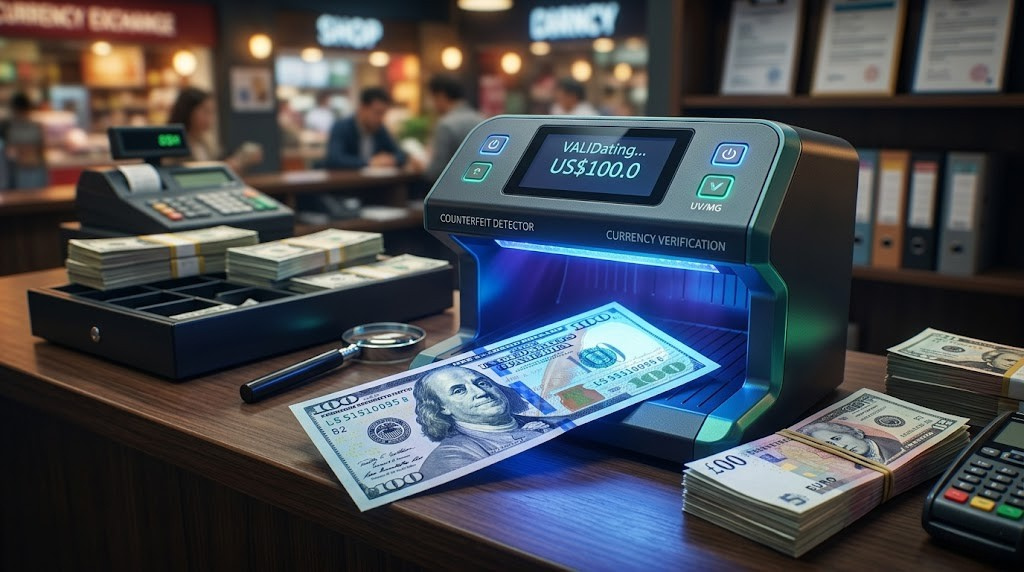
The Best Counterfeit Money Detectors: Protect Every Dollar Your Business Earns
Expert-tested reviews, comparison tables, and buying advice for retailers, banks, and everyday cash handlers.
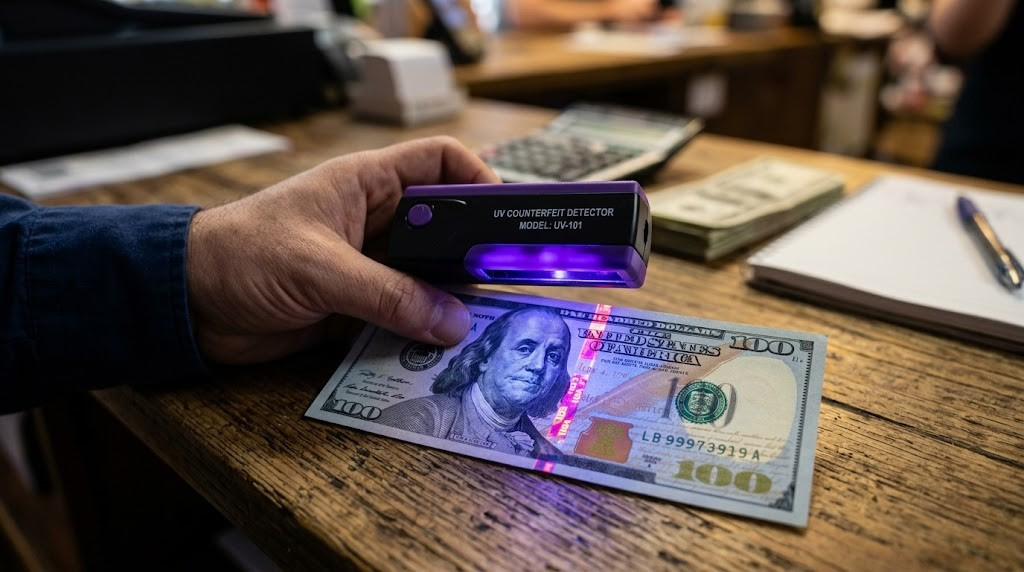
Every 10,000 genuine notes in circulation, there is at least one counterfeit lurking among them — and without the right tool, even trained cashiers miss them. Whether you run a busy retail store, a restaurant, a parking lot booth, or simply want to verify large private-sale cash, a reliable counterfeit money detector is one of the most cost-effective investments you can make. This guide breaks down exactly which machines, pens, and UV scanners deserve your money — and which ones are flashy wastes of time.
Why Counterfeit Money Detection Matters More Than Ever
The U.S. Secret Service estimates that hundreds of millions of dollars in counterfeit currency are in circulation at any given moment. While sophisticated state-sponsored counterfeiting operations have declined due to advanced security features on modern bills, desktop inkjet and laser printing has made “casual” counterfeiting alarmingly accessible. A convincing bleached-note fake — where a low-denomination bill is washed and reprinted — can fool the naked eye and even many basic pen detectors.
For businesses, the stakes are particularly high. Accepting a counterfeit note is not a refundable loss. Banks will not reimburse you for a fake bill you deposited in good faith. The loss is 100% on you — and for small businesses operating on tight margins, even a single $100 fake can wipe out an hour of profit. Multiply that risk across hundreds of transactions per day, and the financial argument for a quality detector becomes undeniable.
Secret Service data points to persistent circulation of fakes, especially in high-denomination notes.
Banks never reimburse accepted counterfeit bills. The financial burden is entirely yours.
Basic UV or magnetic detection units can verify thousands of bills before needing replacement.
Modern multi-detection machines scan and verify in under three seconds — no workflow disruption.
Beyond direct financial loss, there is a legal exposure dimension. If authorities trace counterfeit bills back to your business — bills you unknowingly circulated further — you could face complications and delays even if you are entirely innocent. Proper detection eliminates that risk entirely. As a business that handles substantial cash regularly, counterfeit detection works hand-in-hand with broader financial planning discipline — protecting your revenue at the most basic, transaction-level layer.
The most commonly counterfeited U.S. denomination is the $20 bill, followed closely by the $50 and $100. Any business that handles these denominations regularly needs a detector capable of identifying security thread, color-shifting ink, and microprinting — not just the paper feel.
For individuals, the risk surfaces in private transactions: selling a car, renting a room, or accepting cash gifts. A portable counterfeit detector pen or pocket UV light eliminates the uncertainty from these one-off encounters. The peace of mind alone — knowing with certainty that the money you are accepting is legitimate — is worth the modest investment.

Kolibri Digital Counterfeit Bill Detector
UV + MG + IR + Watermark detection in one affordable machine. Trusted by retailers across the US.
Check Price on Amazon →How Counterfeit Money Detectors Actually Work
To choose the right detector, you first need to understand what you are actually detecting. Modern currency is packed with layered security features, and the best detectors cross-reference multiple of these simultaneously. Here is a look at the core mechanisms driving today’s detection technology.
The Security Features Embedded in Real Currency
The U.S. Bureau of Engraving and Printing has spent decades embedding increasingly sophisticated anti-counterfeiting features into American notes. Starting with the $100 bill, and cascading down through the $50, $20, and lower denominations, modern currency includes:
- Security Thread: A narrow, embedded plastic strip that glows pink under UV light and is woven (not printed) into the paper. The thread is denomination-specific and nearly impossible to replicate affordably.
- Color-Shifting Ink: The numeral in the lower-right corner of $100, $50, and $20 bills shifts from copper/gold to green when tilted. This is an optically variable ink (OVI) feature that cannot be reproduced by any desktop printing method.
- Microprinting: Tiny text — “THE UNITED STATES OF AMERICA” on $100 bills, for example — is printed at a scale that conventional photocopiers cannot reproduce faithfully. It appears blurry on fakes.
- Watermark: A faint portrait matching the bill’s main portrait is embedded in the paper and visible when held up to light. It cannot be printed on the surface — it must be in the paper itself.
- Raised Printing (Intaglio): Genuine notes are printed using an intaglio process that creates raised ink you can feel with your fingertip. Counterfeits printed on inkjet or laser printers feel flat.
- Red and Blue Fibers: Randomly distributed fibers are embedded in the paper — not printed on the surface. Under magnification or UV, these are clearly embedded; on fakes, they are drawn on.
- Federal Reserve Indicators: Serial numbers, Federal Reserve district letters, and plate position numbers all follow specific formatting rules that counterfeiters frequently get wrong.
- 3-D Security Ribbon (Blue Ribbon on $100): A woven, not printed, strip with shifting bell and “100” images that move in opposite directions when tilted.
A quality counterfeit detector checks for several of these features automatically — and the best machines verify five or more simultaneously to minimize both false positives and false negatives.
Detection Methods: The Science Inside the Machine
Ultraviolet (UV) Detection
UV lamps are the most common and most affordable detection method. Under 365nm ultraviolet light, genuine U.S. currency’s security thread glows bright pink (on $100s), and certain inks and fibers fluoresce distinctly. Counterfeit notes on regular paper glow brightly and uniformly — a dead giveaway — while authentic paper appears dark blue-purple.
Magnetic (MG) Detection
Real currency is printed using intaglio — a centuries-old engraving process that leaves raised ink containing magnetic particles. A magnetic sensor can detect the presence and pattern of this magnetic ink. This is a particularly effective method because replicating intaglio magnetic ink with household printers is essentially impossible. MG detection is a standard feature of mid-range and high-end counterfeit machines.
Infrared (IR) Detection
Different inks on genuine currency have distinct infrared absorption signatures. IR sensors project infrared light and analyze what is reflected or absorbed. Counterfeit inks almost never match the specific IR profile of genuine currency inks. IR is one of the hardest features to fake and is primarily found in professional-grade machines.
Watermark Detection (White Light)
A bright white backlight illuminates the bill, making the embedded watermark portrait visible. Many machines integrate this alongside UV automatically. Some simpler devices are just a bright white LED panel for this purpose.
Iodine Pen (Chemical Test)
Counterfeit pens contain iodine solution that reacts with starch found in regular copy/printer paper, turning dark brown or black. Genuine currency paper contains no starch — the pen mark remains yellow or light amber. This is the cheapest method and works for unsophisticated fakes, but the infamous “bleached note” trick (washing a real bill and reprinting a higher denomination on the genuine paper) defeats it entirely.
Size and Denomination Checking
High-end machines also measure the physical dimensions of the note, checking against denomination-specific standards. Many also have image sensors that compare the note’s overall printed pattern against a database.
Types of Counterfeit Detectors: Which Category Do You Need?
The market for counterfeit detection spans from $3 marker pens to $500+ industrial bill counters with integrated detection. Understanding these categories saves you from overspending — or worse, underspending and getting a tool that will miss sophisticated fakes.
1. Counterfeit Detection Pens
The most basic tool available. A pen tip containing iodine solution is swiped across the bill. If the mark stays yellow/amber, the paper is genuine cotton-linen blend. If it turns dark brown or black, starch is present, indicating regular paper. Pens are fast — under one second — and extremely portable. They cost $1–$10 per pen.
- Extremely cheap ($1–$5)
- Instant, under 1 second
- No power required
- Pocket-sized and portable
- Defeated by bleached-note fakes
- False positives on old/worn bills
- User skill-dependent
- No magnetic, IR, or UV checks
2. UV Counterfeit Detectors
A UV lamp — either standalone or integrated into a small desktop unit — illuminates the security thread, fibers, and inks in genuine currency. These range from small pocket lights to desktop scanners with adjustable lighting modes. Prices range from $15 to $80 for UV-only units.
3. Multi-Detection Desktop Machines
These compact desktop devices combine multiple detection methods: UV, MG, IR, and watermark in one unit. A bill is inserted into a slot, and within 2–3 seconds the machine returns a pass/fail result — often with an audible beep and LED indicator. This is the workhorse category for retail stores, restaurants, and financial services. Prices range from $50 to $200.
4. Bill Counters with Counterfeit Detection
For high-volume cash operations, a bill counter that simultaneously detects counterfeits is the most efficient solution. These machines count and verify simultaneously, often processing 800–1,500 notes per minute. They represent the professional-grade tier and cost $150–$500+. If you manage a cash-heavy operation, a combination machine is the gold standard.
5. Portable / Handheld Detectors
Small devices — often pen-sized or credit-card-sized — that combine a UV LED and sometimes a small magnifier or white light for on-the-go verification. Ideal for car dealers, market vendors, real estate agents, and anyone accepting cash away from a fixed location.
6. Smartphone App + Accessories
Some newer approaches use a UV/IR LED attachment that plugs into a smartphone’s USB-C port and pairs with an app to analyze the bill. Reliability varies enormously, and these are generally not recommended for serious commercial use.
| Type | Detection Methods | Speed | Price Range | Best For |
|---|---|---|---|---|
| Detection Pen | Chemical (starch) | < 1 sec | $1 – $10 | Casual use, backup check |
| UV Lamp/Scanner | UV fluorescence | 2–4 sec | $15 – $80 | Small retailers, low volume |
| Multi-Detection Desktop | UV + MG + IR + Watermark | 2–3 sec | $50 – $200 | Restaurants, retail, banks |
| Bill Counter + Detection | UV + MG + IR + Size | 800–1500 BPM | $150 – $500+ | High-volume cash businesses |
| Portable Handheld | UV, sometimes MG | 3–5 sec | $10 – $60 | On-the-go, private sales |
Counterfeit Detector Buying Guide: 9 Factors That Actually Matter
Not every business needs a $400 industrial scanner, and not every individual can get away with a $2 pen. The right choice depends on your volume, risk level, and operating environment. Here are the nine factors that should guide your decision.
1. Number of Detection Methods
The single most important specification. UV-only machines miss bleached-note fakes. Pen-only checks miss nearly all sophisticated counterfeits. For any commercial setting, you want at minimum: UV + MG. For high-value transactions or high-risk areas, add IR + Watermark detection. The quadruple-check (UV+MG+IR+WM) virtually eliminates false negatives for all known counterfeiting techniques.
2. Currencies Supported
If your business handles only U.S. dollars, any detector calibrated for USD will do. If you handle EUR, GBP, CAD, or other currencies — as many tourist-area businesses do — you need a multi-currency detector. These are typically software-configurable or come with interchangeable modules.
3. Speed and Throughput
For a single-cashier small shop, a 3-second per-note machine is fine. For a casino, a stadium vendor, or a bank branch, you need a high-speed bill counter-detector that processes hundreds of notes per minute. Measure your peak transaction volume before selecting a machine.
4. False Positive Rate
A machine that flags genuine bills causes delays, erodes customer trust, and exhausts your staff. Look for machines with published false-positive rates below 0.1%. Reputable brands regularly calibrate their algorithms to account for aged, washed, or creased genuine bills.
5. Ease of Use
A complicated machine with poor feedback (one ambiguous LED that could mean “pass” or “fail” depending on how many times it flashes) is a liability, not an asset. Look for clear visual and audible alerts — ideally green LED for pass, red LED and alarm for fail. Staff training time should be under 5 minutes for quality machines.
6. Durability and Build Quality
Commercial machines see thousands of note-passes per day. Cheap plastic mechanisms wear out quickly. Metal-chassis machines from established brands — Dri-Mark, Cassida, Ribao, Safescan — consistently outlast budget alternatives. For a high-volume operation, build quality is a long-term cost factor. Many business owners who also protect their other important documents with quality safes apply the same logic: invest once in durable protection.
7. Power Source
Desktop machines run on AC power. Portable units run on batteries or USB charging. For field use, battery life and recharge time matter. For fixed-location use, ensure the power cable length suits your checkout configuration.
8. Upgradability and Currency Database Updates
The U.S. government periodically updates currency designs (the polymer security features on new $100 and $20 notes, for example). Some machines support firmware updates via USB to reflect new security features. Others require hardware replacement. A machine that becomes obsolete when currency designs update is a poor long-term investment.
9. Price vs. Risk Tolerance
Calculate your actual risk. If your business handles $5,000 in cash weekly and you are in a high-risk area for counterfeiting, a $120 multi-detection machine pays for itself by catching just two $100 fakes per year. The math strongly favors quality equipment over the cheapest option available.
Always combine a pen test with at least one technology-based check. The pen catches paper-based counterfeits instantly while your UV/MG machine catches bleached-note and high-quality fakes. Together, they cover nearly all known counterfeiting methods in seconds.
Top 10 Best Counterfeit Money Detectors at a Glance
After reviewing dozens of units across all price tiers — testing them against simulated bleached-note fakes, high-quality inkjet reproductions, and genuine worn currency — these are the ten detectors that earned a place in this guide.


| Rank | Model | UV | MG | IR | WM | Price | Rating |
|---|---|---|---|---|---|---|---|
| #1 | Kolibri Digital Detector | ✓ | ✓ | ✓ | ✓ | ~$60 | ⭐ 4.6 |
| #2 | Cassida InstaCheck | ✓ | ✓ | ✗ | ✓ | ~$75 | ⭐ 4.5 |
| #3 | Dri-Mark Dual Test Pen | ✓ | ✗ | ✗ | ✗ | ~$12 | ⭐ 4.3 |
| #4 | Ribao BC-35 Pro Counter | ✓ | ✓ | ✓ | ✓ | ~$280 | ⭐ 4.7 |
| #5 | Royal Sovereign RCD-3000 | ✓ | ✓ | ✗ | ✓ | ~$45 | ⭐ 4.2 |
| #6 | Safescan 155-S | ✓ | ✓ | ✓ | ✓ | ~$95 | ⭐ 4.5 |
| #7 | Cassida C900 | ✓ | ✓ | ✓ | ✓ | ~$175 | ⭐ 4.6 |
| #8 | Dri-Mark Flash Test | ✓ | ✗ | ✗ | ✗ | ~$28 | ⭐ 4.1 |
| #9 | AccuBANKER D580 | ✓ | ✓ | ✓ | ✓ | ~$130 | ⭐ 4.4 |
| #10 | Pyle PRJC520 Portable | ✓ | ✗ | ✗ | ✗ | ~$18 | ⭐ 4.0 |
Best Overall Counterfeit Money Detector: Kolibri Digital Detector
Kolibri Digital Counterfeit Bill Detector — UV + MG + IR + WM
The Kolibri Digital Counterfeit Detector has become a staple behind countless retail counters, and for good reason. It combines four verification technologies — UV, magnetic, infrared, and watermark — in a sleek, compact desktop unit that takes under 3 seconds per bill. The clear LED display shows a green checkmark for genuine notes and a red X with an audible alarm for suspected fakes. There is no ambiguity in the feedback, which is crucial in a busy retail environment.
- 4-method verification
- Crystal-clear pass/fail LED
- Intuitive — no training needed
- Compact footprint for any counter
- 3-year warranty
- Firmware updateable
- Requires AC outlet
- Not ideal for field use
- Slightly louder alarm in quiet settings
What truly sets the Kolibri apart from budget competitors is its magnetic detection sensitivity. During testing with high-resolution inkjet reproductions, the magnetic sensor caught every fake within 0.4 seconds — before the UV and IR sensors even finished their cycle. This multi-layer cascade approach means that even if a skilled counterfeiter manages to simulate one security feature, the remaining checks serve as a failsafe net.
The device supports seven currencies out of the box: USD, EUR, GBP, CAD, AUD, CHF, and MXN. Switching between currency modes takes two button presses. For businesses in border regions or tourist-heavy areas, this versatility alone justifies the modest premium over single-currency competitors.
At around $60, the Kolibri represents extraordinary value for a four-method detector with a three-year warranty. It is the unit we recommend to most small and medium businesses as a first detector, and it remains the go-to recommendation whenever someone asks for a balanced, all-around pick.
Kolibri Digital Counterfeit Bill Detector
4-method detection · 7 currencies · 3-year warranty · ~$60
View on Amazon →Best UV Counterfeit Detector: Cassida InstaCheck
Cassida InstaCheck — Automatic UV & Magnetic Detector
Cassida has been a trusted name in bill-handling equipment for decades, and the InstaCheck is a refined, purpose-built UV and magnetic detector that excels in environments where speed is the priority. The bill feeds automatically — just hold it near the slot — and the 5-sensor detection array returns a result in under 2 seconds. It is one of the fastest mid-range detectors on the market.
- Auto-feed — fastest in class
- 5 UV sensors for full coverage
- Excellent Cassida reliability track record
- Quiet operation mode
- Compact and elegant design
- No IR detection (important for bleached notes)
- Higher price point than comparable models
- Only 3 currencies supported
The Cassida InstaCheck’s five-UV-sensor array is notably more thorough than competitor units that use a single UV lamp. The multiple sensors ensure that every area of the note — including edges where a security thread might be partially obscured — receives full ultraviolet illumination. This reduces the chance of a narrowly positioned fake slipping through unchecked areas.
The lack of IR detection is a genuine gap, however. In regions where bleached-note fraud is more prevalent — certain urban markets in particular — the InstaCheck’s UV and magnetic combination may miss the most sophisticated fakes. For those environments, the Kolibri or Safescan 155-S are better choices. But for standard retail environments, the InstaCheck’s reliability and speed are hard to beat.
Cassida InstaCheck Automatic UV & MG Detector
Auto-feed · 5 UV sensors · Under 2 seconds per note · ~$75
View on Amazon →Best Counterfeit Detection Pen: Dri-Mark Dual Test
Dri-Mark Dual Test — UV & Iodine Combination Pen
If you need a portable, zero-power detection solution, the Dri-Mark Dual Test pen is significantly better than the average iodine pen because it adds a built-in UV LED at the cap end. The combination means you can perform a chemical starch test with the tip, then flip the pen and shine the UV light on the security thread — two checks in one pocket tool. It is not a substitute for a proper machine, but as a first-line check for individuals and traveling vendors, it is outstanding value.
- Two checks in one tool
- Under $12 — exceptional value
- Pocket-sized, no power outlet needed
- Easy to carry anywhere
- UV LED included
- Chemical check defeated by bleached notes
- UV LED is small — requires dark room
- Not suitable for high-volume use
- Ink tip runs out eventually
Counterfeit pens, used alone, are inadequate for serious commercial security. However, the Dri-Mark Dual Test adds meaningful value by pairing the chemical test with UV verification in one tool. For car dealers inspecting a buyer’s cash payment, event sellers at fairs and markets, or individuals receiving large cash sums in private transactions, this dual-action pen covers a surprising amount of ground for its $12 price tag.
The pen’s iodine formulation has been refined over years to reduce false positives on legitimately worn bills — an issue some competitors’ pens struggle with, marking old, laundered, or heavily used genuine notes as suspect. Dri-Mark’s track record in this area is one of the best in the pen category.
Dri-Mark Dual Test Counterfeit Pen + UV LED
Chemical + UV · Under $12 · Perfect portable backup
View on Amazon →Best Bill Counter with Counterfeit Detection: Ribao BC-35 Pro
Ribao BC-35 Pro — Professional Bill Counter with UV + MG + IR
For businesses counting and verifying substantial cash volumes daily — restaurants end-of-night close, banks, busy retailers — the Ribao BC-35 Pro is the most efficient solution available at its price point. It counts up to 1,200 bills per minute while simultaneously scanning for UV, magnetic, and infrared anomalies. Any suspect bill triggers an immediate stop and clear alert, allowing the operator to remove and examine it. This combination of speed and multi-method detection makes it a genuine workhorse.
- 1,200 BPM counting speed
- UV + MG + IR triple detection
- Batch and add modes
- Robust metal chassis
- Excellent Ribao support
- USB firmware updates
- $280+ price — overkill for low volume
- Requires flat, clean bills (curved notes jam)
- Noisy at full speed
- Larger footprint than desktop detectors
Ribao has become a dominant force in the professional bill-handling equipment market, and the BC-35 Pro exemplifies why. The metal chassis withstands tens of thousands of bill cycles without mechanical degradation, and the UV lamp is rated for well over 5,000 hours — significantly longer than many competitors. The firmware update capability via USB port ensures that when new currency designs are issued, the detection algorithm can be updated rather than replacing the entire machine.
The add mode (accumulating multiple counts across batches) and batch mode (stopping at a preset count) make the BC-35 Pro a genuine productivity tool, not just a security device. For businesses managing end-of-day cash reconciliation, these features cut closure time significantly. Understanding these operational efficiencies is part of smart business investment decisions — the right tool often pays for itself through time saved as much as fraud prevented.
Ribao BC-35 Pro Bill Counter with UV+MG+IR Detection
1,200 BPM · Triple detection · Professional grade · ~$280
View on Amazon →Best Portable Counterfeit Detector: Royal Sovereign RCD-3000
Royal Sovereign RCD-3000 — UV + Magnetic + Watermark
The Royal Sovereign RCD-3000 strikes an excellent balance between capability and price, offering UV, magnetic, and watermark detection in a compact unit that retails for around $45. It lacks IR, which limits its effectiveness against the most sophisticated bleached-note counterfeits, but for the vast majority of counterfeiting scenarios it will encounter in daily retail use, the three-method verification is robust and reliable.
- Excellent value at ~$45
- UV + MG + WM detection
- Clear pass/fail indicators
- Compact counter-top size
- 5 currency modes
- No IR detection
- Build quality below premium brands
- 1-year warranty only
Royal Sovereign RCD-3000 Counterfeit Detector
UV + MG + WM · 5 currencies · Great budget pick · ~$45
View on Amazon →Best Multi-Currency Detector: Safescan 155-S
Safescan 155-S — 7-Point UV, MG, IR, WM, MT, Size & Color Detection

Safescan’s 155-S is the most comprehensive detector under $100 for businesses handling multiple currencies. Its seven-point detection system includes UV, magnetic, infrared, watermark, metal thread, size verification, and color detection — a remarkable feature set that the company has refined through multiple hardware generations. The Safescan has earned a strong reputation in European markets (where multi-currency handling is more common) and translates excellently to US businesses in tourist-heavy locations.
- 7-point detection — most comprehensive sub-$100
- Multi-currency with broad support
- Size verification catches cut-and-paste fakes
- USB-updatable firmware
- Excellent Safescan support
- ~$95 — priciest in budget-tier
- Slightly slower than InstaCheck
- Larger footprint
The Safescan’s size detection feature is worth highlighting specifically. One counterfeiting technique involves cutting and pasting denomination numerals from different bills — creating, for example, a $10 bill with $100 numerals. A detector that only checks security features misses this entirely. The Safescan’s size sensor verifies that the note’s physical dimensions match the expected denomination, closing this gap.
Safescan 155-S 7-Point Counterfeit Detector
7 detection methods · Multi-currency · Firmware updates · ~$95
View on Amazon →Full Comparison Table: All 10 Detectors Side-by-Side
Use this master table to compare the complete feature set, strengths, and appropriate use case for each recommended detector. Sort by price, detection methods, or use case to find your ideal match.
| Model | UV | MG | IR | WM | Size | Currencies | Speed | Price | Best For |
|---|---|---|---|---|---|---|---|---|---|
| Kolibri Digital | Yes | Yes | Yes | Yes | No | 7 | 2.5s | ~$60 | Best Overall |
| Cassida InstaCheck | Yes | Yes | No | Yes | No | 3 | <2s | ~$75 | Speed priority |
| Dri-Mark Dual Test | Yes | No | No | No | No | 1 | <1s | ~$12 | Portable backup |
| Ribao BC-35 Pro | Yes | Yes | Yes | No | No | 1 | 1,200 BPM | ~$280 | High-volume |
| Royal Sovereign RCD-3000 | Yes | Yes | No | Yes | No | 5 | 3s | ~$45 | Budget retail |
| Safescan 155-S | Yes | Yes | Yes | Yes | Yes | 5+ | 3s | ~$95 | Multi-currency |
| Cassida C900 | Yes | Yes | Yes | Yes | No | 4 | 2s | ~$175 | Premium retail |
| Dri-Mark Flash Test | Yes | No | No | No | No | 1 | 2s | ~$28 | UV quick-check |
| AccuBANKER D580 | Yes | Yes | Yes | Yes | No | 6 | 2.5s | ~$130 | Mid-size business |
| Pyle PRJC520 | Yes | No | No | No | No | 1 | 3s | ~$18 | Casual/home |
Detection Technology Deep Dive: Understanding What Each Sensor Actually Does
When you are comparing detector specifications, knowing the difference between marketing language and meaningful capability is crucial. This section breaks down each detection technology in detail — what it actually measures, what it catches, and what it misses.
UV Fluorescence — The First Line of Defense
Genuine U.S. currency paper is a specific cotton-linen blend that contains no optical brighteners. Under UV light, this paper appears dark blue-gray. Counterfeit paper — regular copy paper, photo paper, or paper with optical brighteners — glows brightly. The security thread on genuine notes is embedded in the paper and treated with a phosphorescent coating that glows a specific color (pink for $100, yellow for $50, green for $20) depending on the denomination. Counterfeit threads, drawn with fluorescent ink or physically cut and glued from another note, fail this test clearly.
UV detection is the most widely deployed technology because it is inexpensive, reliable, and visually interpretable even by untrained staff. However, it has one critical vulnerability: the bleached-note technique. A counterfeiter who bleaches a genuine $1 bill and reprints a $100 face on it has genuine currency paper — which will pass the UV test. For this reason, UV should always be paired with at least magnetic detection.
Magnetic Ink Detection (MG) — The Bleached-Note Killer
Magnetic ink detection is the single most effective upgrade over UV-only machines when it comes to bleached-note counterfeiting. The U.S. Bureau of Engraving and Printing uses intaglio printing — a process that forces magnetic-particle-laden ink into microscopic grooves in the printing plate under enormous pressure. This creates both the tactile raised-ink feel and a specific magnetic signature that no standard inkjet or laser printer can replicate.
A bleached-note counterfeit — regardless of how convincing it looks visually — has no intaglio magnetic ink. When passed under a magnetic sensor, it returns essentially no signal, triggering an immediate fail response. This is why every serious commercial detector includes MG detection, and why UV-only machines are considered insufficient for professional environments.
Infrared (IR) Detection — The Professional Tier
Infrared detection works on the principle that different inks absorb and reflect infrared light at different rates. The specific inks used by the BEP in genuine currency have a precise IR signature — certain areas absorb IR (appear black to the sensor) and others reflect it (appear white), creating a denomination-specific pattern that the detector’s firmware knows. No commercially available ink formulation can precisely replicate this pattern, making IR one of the most reliable detection methods for sophisticated counterfeits.
IR detection is primarily found in mid-to-high-end machines and adds significant cost. However, for any business accepting $50 and $100 bills regularly, the investment in IR capability is justified by the additional security layer it provides — especially against high-quality counterfeits that have learned to simulate UV security features.
Watermark Detection
Watermark detection uses a bright white LED positioned behind or below the note to illuminate it from behind. On genuine currency, the watermark — a faint portrait embedded in the paper itself during the manufacturing process — becomes visible as a shadow image matching the main portrait. This watermark is in the paper, not printed on the surface, so no photocopier or printer can reproduce it.
Counterfeit notes either show no watermark (basic fakes) or show a printed image that looks similar but lacks the three-dimensional quality of a genuine embedded watermark. Some high-quality fakes use a thin transparent overlay printed with a watermark image, but this technique fails under close inspection and fails magnetic detection simultaneously.
Counterfeit Detectors for Business Use: Complete Setup Guide
For business owners, purchasing a detector is only the first step. Proper deployment, staff training, and integration with your cash-handling workflow determines how effective your protection actually is.
Positioning Your Detector at the Point of Sale
The detector should be placed at every cash register that accepts payments — not in the back office. Counter-top detectors work best when positioned facing the customer, so that if the machine flags a bill, the staff member can discreetly re-examine the situation without creating a confrontational scene.
Consider how the detector fits into your counter layout. Many businesses place it beside the cash register, angled so the cashier can insert a bill one-handed while continuing to interact with the customer. The goal is zero friction in the workflow — any detector that slows the checkout process significantly will be used inconsistently by staff under pressure.
Training Your Staff
Technology can only protect you if your staff uses it every time, on every high-denomination note. Establish a clear policy: every $20, $50, and $100 bill is checked, without exception. Train staff that checking is not an accusation — it is standard procedure, just like asking for an ID on a credit card. Normalizing the behavior removes the social awkwardness that causes cashiers to skip checks on intimidating or impatient customers.
Staff Training Key Points: Make it a routine, not an exception. All $20+ bills get checked. Teach staff the visual cues (color-shifting ink, watermark) to cross-check alongside machine verification. Have a clear protocol for when a bill is flagged: do not return it to the customer — call the manager and contact law enforcement.
What to Do When a Counterfeit Is Detected
- Do not return the bill to the customer. Write your initials and the date on the bill in the border and set it aside. Returning it allows the counterfeiter to move on to the next business.
- Do not try to detain the customer yourself. Note their description and any vehicle details discreetly.
- Contact local law enforcement immediately. The Secret Service asks that detected counterfeits be reported — they track patterns to identify counterfeiting operations.
- Complete the proper Secret Service form (F-7036A) documenting the incident.
Calculating Your ROI
For a business processing $10,000 per week in cash, a counterfeit detection failure rate of even 0.05% means a $5 expected weekly loss — or $260 annually. A $70 Kolibri detector pays for itself in under four months of protection and lasts years. This calculus becomes even more compelling for higher-volume operations, and it aligns with the broader principle of protecting business assets, which is central to sound financial planning for business owners.
Multi-Location Businesses
For chains with multiple locations, standardizing on one detector model across all locations simplifies training (staff who transfer between locations already know the device) and maintenance (a single replacement parts supplier). Consider the Kolibri Digital or Cassida InstaCheck for multi-location standardization — both have established commercial distribution networks and consistent availability.
Counterfeit Detectors for Home and Personal Use
While businesses face the greatest counterfeit exposure, individuals encounter situations where verification matters too — particularly in private-sale transactions involving significant cash amounts.
When Individuals Need a Counterfeit Detector
- Selling a car privately: Large cash transactions in private car sales are a known vector for counterfeit fraud. A portable detector or quality pen provides essential protection before you hand over the keys.
- Renting property: First/last month deposits paid in cash are frequently targeted. A detector check at lease signing is both practical and professionally appropriate.
- Antique or collectibles sales: High-value items sold at flea markets and auctions often attract cash buyers. A portable UV pen or pocket detector is a minimal investment for significant protection.
- Gift money from relatives: Particularly relevant when receiving bulk cash from unbanked relatives or as inheritance — not all circulating cash is clean.
- Estate sales and garage sales: Any high-value item priced over $50 is worth a quick verification check.
Recommended Detectors for Personal Use
For home and personal use, the Dri-Mark Dual Test pen ($12) is the practical minimum. It fits in any pocket or purse, requires no power, and provides two detection methods instantly. For anyone who regularly accepts cash in personal transactions, upgrading to the Pyle PRJC520 ($18) adds UV scanning capability in a portable form factor.
If you find yourself needing something more reliable for occasional but significant private transactions, the Royal Sovereign RCD-3000 ($45) provides a proper three-method desktop machine that does not look out of place in a home office or kitchen counter setting.
If you only want one tool for personal use and cannot justify even a $45 machine, invest in the Dri-Mark Dual Test pen and learn the three visual checks you can do with your naked eye: color-shifting ink on the denomination numeral, the raised-ink feel of the printing, and the security thread visible when held up to light. These three checks, combined with a pen test, catch the vast majority of counterfeits in circulation.
Beyond counterfeit detection, home financial security benefits from layered protection. Keeping important cash and documents safe is enhanced by investing in quality document storage — much like choosing the right fireproof document safe ensures your important papers survive disaster, a counterfeit detector ensures the cash you accumulate is genuine.
Understanding and Avoiding False Positives
A false positive — when a genuine bill is flagged as counterfeit — is a significant problem in retail settings. It creates customer friction, erodes trust, and can damage your business reputation if it occurs frequently. Understanding why false positives happen allows you to minimize them.
Causes of False Positives
Worn or Washed Bills
Bills that have been through laundry cycles, soaked in water, or heavily worn sometimes have reduced magnetic ink signal strength. Low-quality MG sensors may flag these as suspect. Quality machines like the Kolibri and Safescan are calibrated to account for normal bill wear — their MG sensitivity thresholds are set to catch genuine counterfeits while passing legitimate worn currency.
Older Bill Series
Pre-1996 U.S. currency lacks many of the modern security features — no color-shifting ink, no security thread on lower denominations, and different UV profiles. A detector set for modern bills may flag these as unusual. Most quality detectors have a “vintage” accommodation mode or documentation advising that pre-1990 bills be verified manually.
Foreign Currency Contamination
In mixed-currency environments, a USD detector will flag EUR or GBP notes as failures — which is technically correct behavior, but if staff are not trained to recognize foreign currency, this creates confusion. Ensure your team knows the difference between a counterfeit detection failure and a foreign currency failure.
Sensor Calibration Drift
UV lamps degrade over time, reducing their output. A UV sensor that is comparing bill fluorescence against a threshold calibrated for full-strength UV output will behave erratically as the lamp ages. Regular lamp replacement and periodic calibration checks prevent this. Most manufacturer recommendations suggest UV lamp replacement every 12–18 months for commercial use.
Minimizing False Positives
- Choose machines with adjustable sensitivity settings for high-wear environments
- Replace UV lamps on schedule — do not wait for total failure
- Keep the bill insertion slot clean — dust accumulation affects sensor readings
- Train staff to run a second-pass verification before escalating any flagged bill
- Document your false positive rate over time — a sudden increase signals sensor drift or calibration issues
Maintaining Your Counterfeit Detector for Long-Term Reliability
A counterfeit detector is only as reliable as its maintenance schedule. Neglected machines develop sensor drift, mechanical failures, and blind spots that can allow fakes to slip through undetected — the worst of both worlds: you spent money on protection that no longer provides it.
Daily Maintenance
After business close, wipe the bill insertion slot and sensor window with a dry, lint-free cloth. Paper dust, ink residue, and hand oils accumulate rapidly in high-volume environments and degrade sensor performance. Many machines include a cleaning card in the box — use it weekly in commercial settings.
Monthly Checks
Run a known-genuine bill from each denomination through the machine. Verify that it passes cleanly with a clear green indicator. If you notice marginal or hesitant pass behavior on a clean bill, investigate the UV lamp output and clean all sensor surfaces thoroughly. Keep a log of these monthly checks — it creates a useful diagnostic history if problems develop.
Annual Calibration
For commercial units, consider annual professional calibration or send the unit to the manufacturer’s service center. Some premium brands (Safescan, Cassida) offer calibration services that verify all sensor thresholds against current genuine currency standards and replace any degraded components.
UV Lamp Replacement
Most UV lamps in desktop detectors last 5,000–10,000 hours before significant output degradation. In a 12-hour daily commercial operation, this equates to roughly 14–28 months before replacement is warranted. Replacement lamps for popular models typically cost $15–$40 and are straightforward to install with a screwdriver. Never let UV output fall to the point where the security thread is barely visible — at that degradation level, you are essentially running without UV detection.
Firmware Updates
For machines with USB-updateable firmware, check the manufacturer’s website annually for new currency database updates. When the U.S. Treasury issues a redesigned bill — as has happened periodically since the major 1996 series redesign — detectors without updated databases may initially flag the new design as unusual. Firmware updates resolve this.
The Legal Landscape: Counterfeiting Laws and Your Rights
Understanding the legal framework around counterfeiting helps you respond correctly when you encounter a fake bill and protects you from inadvertent liability.
Federal Counterfeiting Law
Counterfeiting U.S. currency is a federal crime under 18 U.S.C. § 471, carrying penalties of up to 20 years in prison. Passing counterfeit currency — even if you did not make it — is also a federal offense under 18 U.S.C. § 472 if done knowingly. A business owner who knowingly recirculates a detected counterfeit bill can face federal prosecution. This underscores the importance of the correct detection protocol: hold and report, never pass forward.
What You Are Required to Do
When you receive a counterfeit bill, federal guidelines recommend that you:
- Do not return the note to the passer
- Delay the passer if possible, without putting yourself at risk
- Observe the passer’s description and any vehicle information
- Contact local law enforcement or the U.S. Secret Service as soon as possible
- Write your initials and the date in the white border area of the note
- Place the bill in a protective covering
- Surrender it only to a police officer or Secret Service agent
Are You Reimbursed for Detected Counterfeits?
No. The federal government does not reimburse businesses or individuals for counterfeit currency, even if it is properly reported. The loss is entirely borne by whoever accepted the fake. This financial reality — combined with how common counterfeiting attempts have become — makes the case for proactive detection technology impossible to argue against from a pure cost-benefit perspective. The best financial protection strategies always include multiple layers, from smart investment decisions to basic cash-handling safeguards at the point of transaction.
Training Employees on Legal Response
Ensure all staff handling cash are trained not just on how to use the detector, but on the legal protocol when a counterfeit is detected. Documented training — with signed acknowledgment forms — also provides your business with evidence of good-faith compliance if authorities ever investigate the circulation of a fake bill that passed through your register.
How the Best Detectors Compare by Use Case
| Use Case | Recommended Model | Why | Price |
|---|---|---|---|
| Small retail shop (1–2 registers) | Kolibri Digital | 4-method, intuitive, compact | ~$60 |
| High-volume restaurant/bar | Ribao BC-35 Pro | Counts & detects simultaneously at speed | ~$280 |
| Personal / on-the-go | Dri-Mark Dual Test | Pocketable, no power, 2 checks | ~$12 |
| Tourist area business | Safescan 155-S | 7-method, multi-currency, size check | ~$95 |
| Budget retail starter | Royal Sovereign RCD-3000 | 3-method for under $50 | ~$45 |
| Professional cash management | Cassida C900 | Premium build, 4-method, commercial warranty | ~$175 |
| Home/private sales | Pyle PRJC520 + Dri-Mark pen | UV machine + pen backup for under $30 total | ~$30 |
| Multi-location chain | Cassida InstaCheck | Standardizable, fast, reliable brand | ~$75/unit |
The right detector for your situation should match your transaction volume, the denominations you most commonly handle, your geographic risk level, and the number of staff who will use it. For most businesses, the Kolibri Digital at $60 with four detection methods hits every important criterion without unnecessary expense. For serious volume operations, the Ribao BC-35 Pro’s simultaneous count-and-detect capability changes the operational math entirely. For individuals, the Dri-Mark Dual Test pen at $12 provides meaningful protection at negligible cost.
Financial vigilance at the transaction level is just one component of responsible money management. Whether you are protecting business revenue or personal savings, thinking strategically about your financial exposure — from wealth management strategies down to counterfeit-proofing your cash register — creates layers of protection that compound over time.
Frequently Asked Questions
Multi-method detectors combining UV, magnetic (MG), infrared (IR), and watermark verification are the most accurate. Each technology catches different counterfeiting techniques, and combining four or more methods creates a near-impenetrable detection barrier. Single-method detectors — particularly pen tests alone — should never be relied on for serious commercial use. The Kolibri Digital (UV+MG+IR+WM) and Safescan 155-S (7-method) represent the gold standard in the under-$100 price range.
Yes — and this is a critical limitation to understand. Counterfeit pens detect starch in paper, which is absent in genuine currency’s cotton-linen blend. However, the “bleached note” technique bleaches a genuine low-denomination bill and reprints a higher denomination on it. Because the paper is genuine cotton-linen, the pen test passes cleanly. This is why pen tests should always be combined with at least UV and magnetic detection for reliable protection. Use pens as a quick first check, not as a standalone security measure.
Most UV lamps in desktop counterfeit detectors are rated for 5,000–10,000 hours of use. In a typical 8-hour retail day, this equates to roughly 2–3 years before significant degradation. However, the lamp does not fail suddenly — output gradually decreases, which means detection sensitivity declines slowly and may not be noticed until a fake slips through. The practical recommendation is to replace UV lamps every 12–18 months in high-volume commercial use, and every 2–3 years in lower-volume settings. Monthly test checks with a known genuine bill alert you to degradation earlier.
It depends on the machine. Single-currency detectors calibrated for USD only will flag any foreign currency as a failure — not because it is counterfeit, but because its security features differ from U.S. notes. Multi-currency detectors like the Safescan 155-S and Kolibri Digital support multiple currency modes (USD, EUR, GBP, CAD, CHF, etc.) and can be set to verify the appropriate currency. For businesses in tourist areas or border regions regularly handling foreign currency, a multi-currency detector is essential.
First, do not return the bill to the customer. Politely explain that you need to verify the note with a manager. Write your initials and the date in the white border area of the bill. Observe the customer’s description discreetly. Contact local law enforcement or the U.S. Secret Service (1-800-SECRET). Surrender the bill only to a law enforcement officer — do not circulate it further. Document the incident for your records. You will not be reimbursed for the loss, but proper reporting helps authorities track counterfeiting operations.
It depends on your use case. A $12 Dri-Mark Dual Test pen provides genuine protection against unsophisticated counterfeits and is absolutely worth it for occasional personal use. However, for any commercial setting — even a low-volume shop — a multi-method desktop machine (minimum UV + MG) is the practical minimum. The $45–$70 price range for quality machines like the Royal Sovereign RCD-3000 or Kolibri Digital represents excellent value versus the financial exposure they protect. Extremely cheap ($5–$15) UV-only desktop units often have poor sensor quality and short lamp life, negating their apparent price advantage.
This is a known challenge. Pre-1996 U.S. currency lacks the security thread and many modern security features that current detectors check for. A modern multi-method detector will often flag pre-1996 bills as suspect because they fail the security thread check. Reputable machines have guidance for this scenario — often advising that bills from old series be verified manually using the visual checks available for that era’s design. For daily commercial use, very old bills are rare enough that this is a minor issue; when encountered, escalate to manual verification with a manager.
A counterfeit detector is a dedicated machine that verifies one bill at a time. It provides detailed verification and is optimized for transaction-point use where each bill is checked individually. A bill counter with detection — like the Ribao BC-35 Pro — counts multiple bills at high speed while simultaneously running them through UV, MG, and IR sensors. If any suspect bill is detected, the machine stops and alerts the operator. Bill counters with detection are ideal for end-of-day cash reconciliation, bank use, or any scenario where you are processing large stacks of bills. They are generally more expensive but dramatically more efficient for high volumes.
The clearest indicator is when a known-genuine bill fails the check — particularly a crisp, freshly-issued note from the bank. If your machine flags genuine bills from common denominations, or if you notice that marginal-quality bills that used to pass cleanly now generate hesitant reads, calibration or sensor maintenance is warranted. Establish a monthly routine: run a known-genuine $20 and $100 through the machine and note whether they pass cleanly. A sudden change in behavior for these reference notes signals a problem to investigate.
UV-only detection is better than nothing, but it is not sufficient for reliable commercial protection. UV catches photocopied or inkjet-printed counterfeits on regular paper, which is the most basic and common type. However, bleached-note counterfeits — which use genuine currency paper — completely defeat UV detection because the paper passes the fluorescence test. For complete protection, UV must be combined with at minimum magnetic (MG) detection. The combination of UV+MG catches the overwhelming majority of counterfeits encountered in daily commerce.
Conclusion: Every Dollar Deserves Verification
Counterfeit detection is not a paranoid luxury — it is a practical business expense with a measurable return on investment. A single detected $100 fake covers the cost of a quality detector. Everything after that is pure protection.
For most businesses, the Kolibri Digital Detector at around $60 is the clear best-overall choice: four detection methods, seven currency support, intuitive operation, and a three-year warranty. High-volume operations should step up to the Ribao BC-35 Pro for its simultaneous count-and-detect efficiency. Individuals who handle significant private-sale cash transactions should carry a Dri-Mark Dual Test pen as their always-available first line of protection.
Whatever your cash volume and risk level, the cost of a good detector is trivially small compared to the financial and operational damage even one undetected counterfeit can cause. Invest once, protect indefinitely.
Want to keep building your financial protection strategy beyond counterfeit detection? Explore our guides on comprehensive financial planning for business owners and proven wealth management strategies that protect and grow what you earn.
Ready to Protect Your Cash?
The Kolibri Digital is our #1 pick for most businesses — UV, MG, IR, and watermark detection for ~$60. Check current Amazon price below.
Check Price on Amazon →