The Ultimate Retirement Savings Calculator & Planning Guide
Calculate exactly how much you need to invest today to guarantee a wealthy, secure, and stress-free retirement tomorrow.
1. Interactive Retirement Savings Calculator
Don’t guess your financial future. Use our custom-built tool below to project how your current savings and monthly contributions will grow exponentially over time. Adjust the variables to see how small changes today create massive wealth tomorrow.
Total Principal Contributed
$220,000
Total Interest Earned
$805,835
2. The Reality of Retirement Planning
Retirement has fundamentally changed. Fifty years ago, a worker could rely on a guaranteed corporate pension and robust Social Security benefits to carry them through their golden years. Today, the defined-benefit pension is essentially extinct in the private sector, and Social Security is facing severe funding deficits.
The burden of building wealth has shifted entirely onto your shoulders. When you ask, “How much should I save for retirement?”, you are essentially asking how much capital is required to replace your paycheck for potentially 30 years without running out of money. Utilizing a retirement savings calculator is the absolute first step in diagnosing your financial trajectory.
Without a mathematical plan, you are flying blind. A calculator removes the emotion and panic from investing, replacing it with cold, hard numbers. It shows you exactly what a $500 monthly deposit into an S&P 500 index fund will look like three decades from now.
3. Understanding the Calculator Parameters
To get the most accurate results from the tool above, you must understand the variables you are adjusting. Here is a breakdown of the critical inputs and how they dictate your wealth accumulation:
- Current Age & Retirement Age: The difference between these two numbers dictates your time horizon. Time is the most powerful variable in investing. The longer your money sits in the market, the more violent the compound interest curve becomes. Delaying retirement by just two years can add hundreds of thousands of dollars to your final balance.
- Current Savings Balance: This is your starting line. It includes the combined totals of your 401(k)s, IRAs, and any taxable brokerage accounts earmarked for your future.
- Monthly Contribution: This should include both your personal deposits and any employer matching funds. If you contribute $400 and your employer matches $200, you should input $600.
- Expected Annual Return: Historically, the US stock market returns about 10% per year. However, inflation eats away roughly 3% of your purchasing power annually. Therefore, inputting a 7% return provides an inflation-adjusted “real” return, showing you what your money will actually be able to buy in today’s dollars.

Master the Psychology of Wealth
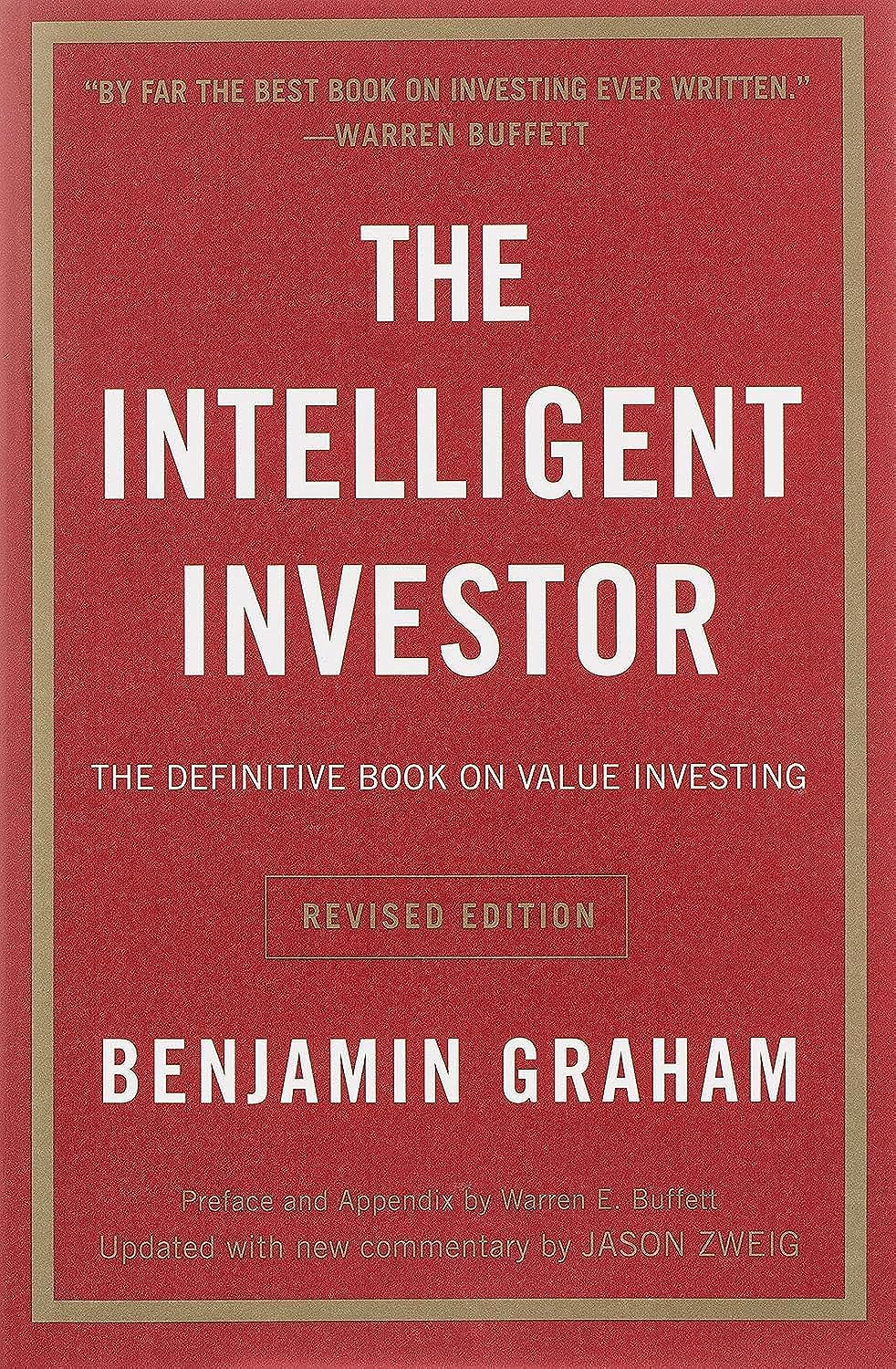
Stop letting market volatility dictate your emotions. Equip yourself with top-rated personal finance books on Amazon to understand asset allocation, conquer behavioral economics, and build an unshakable portfolio.
Browse Investing Books on Amazon4. The Mathematical Magic of Compounding
If you play with the calculator, you will quickly notice a phenomenon: the “Total Interest Earned” will eventually dwarf the “Total Principal Contributed.” This is the magic of compound interest, famously dubbed the “eighth wonder of the world” by Albert Einstein.
Compound interest occurs when the interest you earn on your investments begins to generate its own interest. In the first few years of saving, growth feels painfully slow. It feels like your monthly deposits are doing all the work. However, around year 15 or 20, a critical tipping point occurs. Suddenly, your portfolio generates more money in a single year through interest than you could ever contribute from your salary.
Consider two investors. Investor A invests $500 a month from age 25 to 35 (10 years) and then completely stops. Investor B waits until age 35, and then invests $500 a month every single month until age 65 (30 years). Assuming an 8% return, Investor A will end up with more money at age 65, despite investing $120,000 less of their own capital. Time in the market always beats timing the market.
5. Savings Milestones by Age: Are You on Track?
While the calculator gives you a future projection, you might be wondering how your current balance stacks up against your peers. Fidelity Investments developed a highly regarded set of age-based multiples to help workers gauge their progress. These multiples are based on your current gross salary.
| Your Current Age | Target Savings Multiple | Example Goal (Assuming $80,000 Salary) |
|---|---|---|
| Age 30 | 1x your annual salary | $80,000 |
| Age 40 | 3x your annual salary | $240,000 |
| Age 50 | 6x your annual salary | $480,000 |
| Age 60 | 8x your annual salary | $640,000 |
| Age 67 | 10x your annual salary | $800,000 |
Do not despair if you are behind these benchmarks. They assume uninterrupted saving and no major life crises. However, if you are significantly behind at age 40 or 50, it is a mathematical warning sign that you must aggressively increase your savings rate to avoid elder poverty.
6. The 4% Rule: How to Withdraw Your Wealth safely
Accumulating a massive pile of money is only phase one. Phase two is decumulation—figuring out how to withdraw that money without running out before you die. This is where the famous 4% Rule comes into play.
Developed by financial planner William Bengen in 1994, the rule states that if you have a diversified portfolio of 50% stocks and 50% bonds, you can safely withdraw 4% of the total value in your first year of retirement. Every year after that, you adjust the withdrawal amount strictly for inflation. Historically, portfolios operating under this math survived for a minimum of 30 years.
The 25x Rule (Finding Your Target Number)
You can use the math of the 4% rule to work backward and find your exact target number. Simply estimate your desired annual lifestyle expenses (subtracting any guaranteed income like Social Security) and multiply the difference by 25.
- You need $60,000 a year to live.
- Social Security provides $20,000.
- Your portfolio must generate $40,000.
- $40,000 x 25 = $1,000,000 target portfolio.

Track Every Dollar to Accelerate Growth
You cannot invest what you do not save. Use a premium physical budget planner or an advanced expense tracking ledger to pinpoint leaks in your cash flow and redirect that capital straight into your retirement accounts.
Find Budget Planners on Amazon7. Where to Invest Your Capital for Maximum Growth
A retirement calculator is useless if you leave your money in a savings account earning 0.5% interest. To achieve the 7% to 10% returns required for compounding, you must expose your capital to the market.
For those wondering exactly where to invest money safely for long-term growth, the answer lies in broad-market index funds. Instead of trying to pick winning individual stocks, an S&P 500 index fund allows you to own a tiny fraction of the 500 largest companies in America simultaneously. This instantly diversifies your risk while capturing the overall upward trajectory of the global economy.
As you near retirement, your asset allocation should shift. In your 20s and 30s, you can afford to be 90% or 100% in stocks. By your 60s, you should begin mixing in bonds and fixed-income assets to protect your capital from severe market crashes right as you need to start withdrawing it.
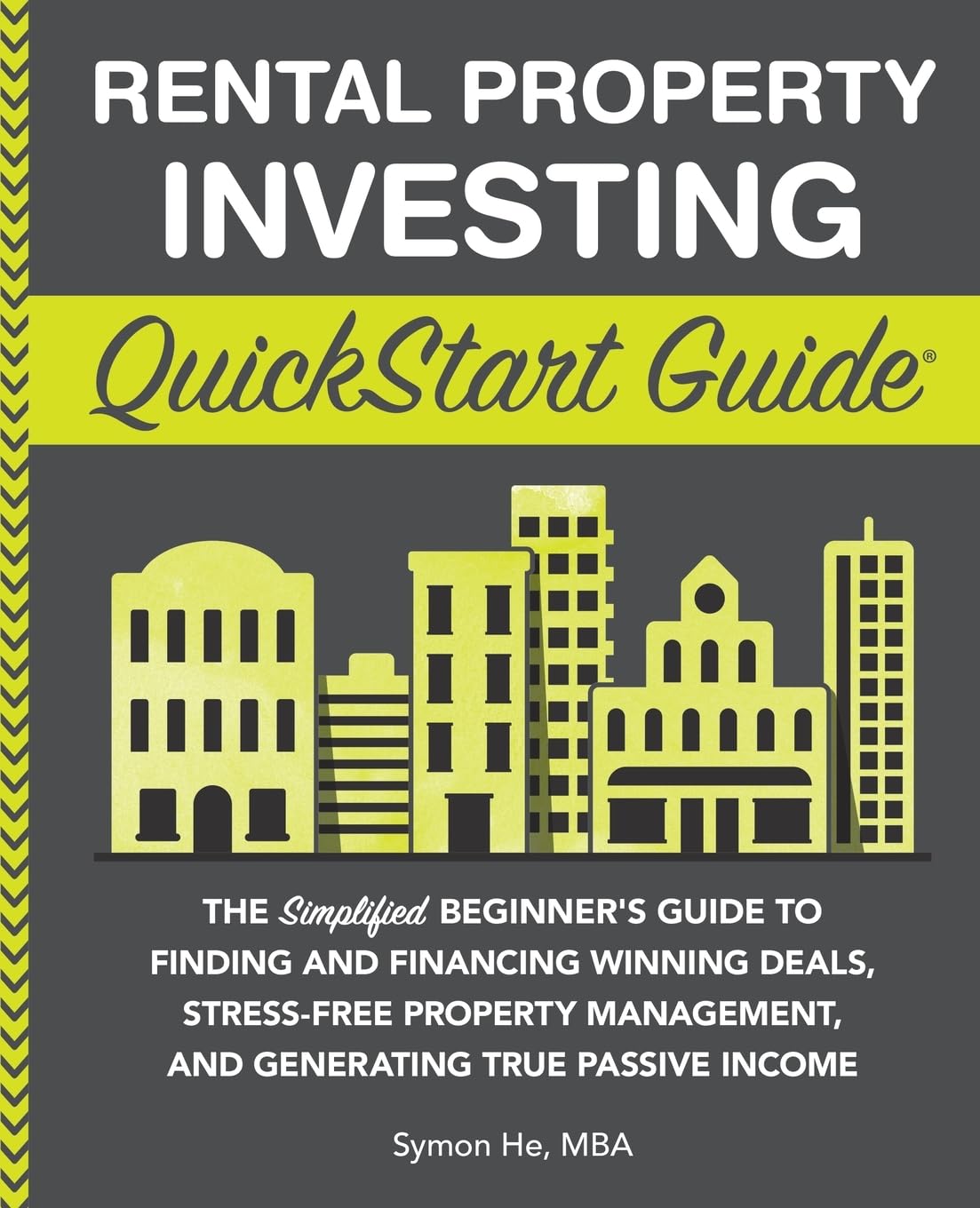
Furthermore, many wealthy retirees look beyond the stock market to build their safety nets. Exploring real estate investing is a phenomenal way to generate passive, monthly rental income that acts as an inflation-proof hedge alongside your 401(k).
8. Comparing Retirement Accounts: 401(k) vs. IRA
The government offers immense tax incentives to encourage citizens to save. Utilizing the correct “wrapper” for your investments is just as important as the investments themselves.
Traditional 401(k) & Traditional IRA
How it works: You contribute pre-tax dollars. This lowers your taxable income for the current year. The money grows tax-deferred, and you only pay income taxes upon withdrawal in retirement.
Best for: High-income earners who expect to be in a lower tax bracket when they retire.
Roth 401(k) & Roth IRA
How it works: You contribute after-tax dollars (you get no tax break today). However, the money grows completely tax-free, and your withdrawals in retirement are 100% tax-free.
Best for: Younger workers or those currently in a lower tax bracket who expect their taxes to rise significantly in the future.
To fully optimize your tax strategy and map out a bulletproof roadmap, integrating professional financial planning tips is critical for maximizing these account limits annually.
9. Advanced Wealth Management: Catch-Up Strategies
If you ran the calculator and felt sick to your stomach looking at the result, you are not alone. Millions of people hit their 50s realizing they have severely underfunded their future. Fortunately, the IRS and modern wealth management strategies offer lifelines.
- Catch-Up Contributions: Once you turn 50, the IRS dramatically increases the amount you are legally allowed to stash in tax-advantaged accounts. In 2026, those over 50 can contribute significantly more to both their 401(k)s and IRAs, allowing for rapid, late-stage portfolio acceleration.
- Delay Social Security: You can claim Social Security at age 62, but doing so permanently slashes your monthly payout. If you delay claiming until age 70, your benefit increases by roughly 8% per year. This guaranteed 8% return is one of the best investments an older worker can make.
- Geographic Arbitrage: If your portfolio is too small to support your lifestyle in New York or California, you can instantly “increase” your wealth by relocating to a state with no income tax or a drastically lower cost of living.

Protect Your Wealth from Taxes
Building wealth is only half the battle; keeping the IRS away from it is the other. Discover advanced tax strategy and estate planning books to ensure your hard-earned retirement savings stay in your pocket.
Explore Tax Strategy Books10. Conclusion: Your Future is Dictated by Today’s Action
Calculating how much you should save for retirement is not an exact science—it is a lifelong calibration. Inflation, market volatility, and changing lifestyle desires will constantly force you to adjust your math. However, the fundamental rules remain absolute: spend less than you earn, invest the difference in diversified, growth-oriented assets, and let the sheer, unbridled power of compound interest do the heavy lifting over decades.
Discover the Best Investments for 2026