The Ultimate Guide to the Best MBA Programs in the U.S. (2026 Edition)
Embarking on the journey to get a Master of Business Administration (MBA) is one of the most significant career decisions you can make. It’s a massive investment of time, money, and effort, but the payoff can be transformative, unlocking leadership roles, higher salaries, and a world-class professional network. Understanding the fundamentals of sound financial planning before you begin will help you approach the cost of your MBA with confidence. The first and most crucial step? Choosing the right program.
With hundreds of business schools across the United States, each with its own culture, strengths, and curriculum, the choice can feel overwhelming. This guide is designed to cut through the noise. We’ll dive deep into the elite programs consistently ranked at the top, explore what makes them special, and provide the insights you need to find the perfect fit for your ambitions. The MBA curriculum itself is deeply rooted in core disciplines—from the accounting equation to advanced organizational strategy—and understanding these foundations early will give you a head start in the classroom.
What are the Best MBA Programs?
The best MBA programs are consistently found at institutions like the Stanford Graduate School of Business (GSB), The Wharton School at the University of Pennsylvania, Harvard Business School (HBS), the University of Chicago Booth School of Business, and Northwestern’s Kellogg School of Management. These schools, often referred to as the “M7” schools, are renowned for their rigorous academics, influential faculty, powerful alumni networks, and outstanding career outcomes for graduates.
📋 Table of Contents
- Decoding the Elite: Top-Tier Business Schools
- Beyond the M7: Strong Programs Worth Considering
- Mastering the GMAT: Your First Hurdle
- Crafting Your Story: The Application Essays
- MBA vs. EMBA: Which Degree Is Right for You?
- Online & Part-Time MBA Programs: A Growing Option
- Post-MBA Career Paths: Where Do Graduates Go?
- Industry-Specific MBA Advice
- Financing Your MBA: Scholarships, Loans & ROI
- Interview Preparation: Cracking the Admissions Interview
- Building Your MBA Network Before You Even Apply
- International Students: Applying to U.S. MBA Programs
- Waitlist Strategy: Turning a Waitlist Into an Acceptance
- Frequently Asked Questions
- Conclusion
Decoding the Elite: A Look at the Top-Tier Business Schools
While rankings fluctuate slightly year to year, a core group of schools consistently dominates the landscape. We’ll explore the DNA of these institutions, giving you a feel for their culture and what they offer beyond the prestige.
1. Stanford Graduate School of Business (GSB)
Why It’s a Top Program: The Epicenter of Innovation
Located in the heart of Silicon Valley, Stanford GSB is synonymous with innovation, entrepreneurship, and technology. Its motto, “Change lives. Change organizations. Change the world,” is deeply embedded in its culture. The school’s proximity to venture capital firms and tech giants provides unparalleled opportunities for students interested in building or joining disruptive companies. GSB is known for its small, intimate class size, fostering a tight-knit and collaborative community.
Key Strengths & Specializations:
- Entrepreneurship & Venture Capital: GSB is the undisputed leader for aspiring founders and investors. Courses like “Startup Garage” provide hands-on experience in launching a venture.
- Technology Management: The curriculum is deeply integrated with the tech industry, covering everything from product management to scaling tech startups.
- Social Impact: With its Center for Social Innovation, GSB has a strong focus on using business principles to solve global challenges.
What It Takes to Get In:
Stanford has the lowest acceptance rate of any major business school (typically 6-7%). They look for individuals with a clear vision, demonstrated leadership, and intellectual vitality. The famous essay question, “What matters most to you, and why?” requires deep introspection and authenticity.
| Metric | Statistic (Approximate) |
|---|---|
| Average GMAT Score | 738 |
| Average GPA | 3.78 |
| Acceptance Rate | ~6% |
| Post-MBA Average Base Salary | $175,000+ |
2. The Wharton School (University of Pennsylvania)
Why It’s a Top Program: The Quantitative Powerhouse
Wharton is arguably the best-known name in business education globally, particularly for finance. It boasts a massive alumni network (over 100,000 strong) and a reputation for rigorous, data-driven analysis. While its finance prowess is legendary, Wharton is a comprehensive powerhouse with top-tier programs across marketing, real estate, healthcare management, and more. Its large class size allows for an incredible diversity of coursework and student backgrounds.
Key Strengths & Specializations:
- Finance: Unmatched in its depth and breadth, covering private equity, investment banking, asset management, and fintech.
- Analytics: Wharton was a pioneer in using data to drive business decisions and continues to lead in this critical area.
- Marketing & Operations: Strong departments that leverage the school’s quantitative focus to create data-driven leaders in these fields.
What It Takes to Get In:
Wharton seeks analytical, data-driven candidates who can handle its quantitative rigor. Their team-based discussion interview format is unique and tests your ability to collaborate and contribute effectively in a group setting.
| Metric | Statistic (Approximate) |
|---|---|
| Average GMAT Score | 733 |
| Average GPA | 3.6 |
| Acceptance Rate | ~14% |
| Post-MBA Average Base Salary | $175,000 |
“An investment in knowledge pays the best interest.” – Benjamin Franklin, Founder of the University of Pennsylvania
3. Harvard Business School (HBS)
Why It’s a Top Program: Forging World Leaders
HBS is arguably the most prestigious MBA program in the world. Its mission is to “educate leaders who make a difference in the world.” The school is famous for pioneering the case method, a teaching style where students step into the shoes of a protagonist in a real-world business scenario and debate potential solutions. This approach hones decision-making skills under pressure and uncertainty like no other. With a massive endowment and an unparalleled global brand, HBS opens doors that few other institutions can.
Key Strengths & Specializations:
- Leadership & General Management: The entire curriculum is designed to mold students into high-impact leaders capable of running complex global organizations.
- The Case Method: Provides an immersive, practical learning experience that develops critical thinking and communication skills.
- Global Brand & Network: The Harvard name carries immense weight worldwide, and its alumni network is a powerful, lifelong asset.
What It Takes to Get In:
HBS looks for “habitual leaders”—individuals who have a track record of making an impact in every organization they’ve been a part of. The school’s case method sharpens your ability to make confident decision-making under uncertainty, one of the most valued skills in modern management. The application essay is open-ended, asking what more you’d like the admissions board to know. This is your chance to showcase your character, judgment, and leadership potential.
| Metric | Statistic (Approximate) |
|---|---|
| Median GMAT Score | 740 |
| Median GPA | 3.7 |
| Acceptance Rate | ~10% |
| Median Post-MBA Base Salary | $175,000 |
4. University of Chicago Booth School of Business
Why It’s a Top Program: The Apex of Academic Freedom
Chicago Booth is an intellectual powerhouse, famous for its “Chicago Approach” to business education. This philosophy emphasizes fundamental disciplines like economics, statistics, and behavioral science to build a framework for analysis that can be applied to any business problem. Booth offers the most flexible curriculum of any top school, allowing students to design their own path with only one required course. This attracts independent, intellectually curious students who are comfortable with ambiguity and want to dive deep into their areas of interest.
Key Strengths & Specializations:
- Flexible Curriculum: Unmatched freedom to tailor your MBA experience to your specific career goals.
- Analytical Rigor: A culture that prizes data, evidence, and challenging assumptions. Home to numerous Nobel laureates in economics. Students are expected to master concepts from double-entry bookkeeping to advanced econometrics.
- Finance & Economics: A dominant force in quantitative finance, investment management, and economic theory.
What It Takes to Get In:
Booth values intellectual curiosity and an analytical mindset. Their unique application essay asks you to respond creatively to a visual prompt, testing your ability to think differently and connect disparate ideas. They want to see how you think, not just what you’ve achieved.
| Metric | Statistic (Approximate) |
|---|---|
| Average GMAT Score | 728 |
| Average GPA | 3.55 |
| Acceptance Rate | ~22% |
| Median Post-MBA Base Salary | $175,000 |
5. Northwestern University Kellogg School of Management
Why It’s a Top Program: The Collaborative Leader-Factory
Kellogg is renowned for producing exceptional team-oriented leaders. Unlike some of its peer institutions that emphasize individual achievement and competitive intensity, Kellogg is celebrated for its deeply collaborative culture. The school’s pioneering approach to marketing education has made it the gold standard for consumer brands, and its strong finance and strategy programs round out a comprehensive MBA experience. Situated in Evanston, Illinois, with a campus facility in downtown Chicago, Kellogg gives students easy access to one of the most vibrant business cities in America.
Kellogg’s LEAD program (Leadership Development) is a signature component that begins even before classes start, immersing students in self-assessment and leadership experimentation. The program draws on foundational theories such as Maslow’s Hierarchy of Needs and McGregor’s Theory X and Theory Y to build a rigorous understanding of human motivation. Students regularly cite the warmth of the community and the “pay-it-forward” mentality of the alumni network as defining features that set Kellogg apart from its peers. If you want to lead large teams, build beloved consumer brands, or drive strategy at a Fortune 500, Kellogg should be at the top of your list.
Key Strengths & Specializations:
- Marketing: Kellogg is widely considered the best marketing MBA program in the world. Its faculty and curriculum are unmatched for brand management and consumer insights.
- Strategy & Consulting: A significant portion of graduates enter management consulting, and McKinsey, BCG, and Bain all recruit heavily from Kellogg.
- Collaborative Culture: Teamwork is not just encouraged—it’s baked into every facet of the curriculum, including team projects, clubs, and orientation.
- Healthcare Management: The Kellogg Health Enterprise Management program is a top choice for professionals aiming to lead in the healthcare and pharmaceutical industries.
What It Takes to Get In:
Kellogg specifically looks for people who are not just individually accomplished, but who make teams and organizations better. The application includes a video component where applicants must answer impromptu questions, giving admissions officers a direct window into your personality, communication style, and fit with the Kellogg culture. Showing your collaborative spirit and genuine interest in others is key.
| Metric | Statistic (Approximate) |
|---|---|
| Average GMAT Score | 727 |
| Average GPA | 3.7 |
| Acceptance Rate | ~20% |
| Median Post-MBA Base Salary | $170,000 |
6. MIT Sloan School of Management
Why It’s a Top Program: Innovation at the Intersection of Tech and Business
MIT Sloan sits at a unique and powerful crossroads: the intellectual firepower of MIT’s engineering and sciences combined with world-class business education. If you want to lead technology-driven change in business, there is arguably no better place on earth. Sloan students have unparalleled access to research labs, AI and machine learning experts, and deep cross-disciplinary collaboration that no standalone business school can replicate. The school’s focus on “action learning”—experiential courses where students solve real problems for real organizations—produces graduates who are immediately operational on day one of their new roles.
The campus culture is intensely curious and action-oriented. The Entrepreneurship & Innovation track is among the most rigorous in the country, and the school’s MIT Media Lab connection gives business students access to bleeding-edge technology research. For professionals in fintech, healthtech, supply chain innovation, or any field where technology is reshaping the industry, MIT Sloan provides an incomparable foundation.
Key Strengths & Specializations:
- Technology & Innovation Management: Leverages MIT’s world-famous engineering ecosystem to produce business leaders who understand technology at a deep level.
- Operations & Supply Chain: MIT’s engineering heritage gives Sloan one of the best operations management programs in the world, critical in today’s global economy.
- Finance & Fintech: The school’s quantitative rigor makes it a top destination for careers in algorithmic trading, quantitative finance, and financial technology.
- Entrepreneurship: With MIT’s innovation ecosystem at its doorstep, Sloan is a launchpad for tech startups and high-growth ventures.
| Metric | Statistic (Approximate) |
|---|---|
| Average GMAT Score | 730 |
| Average GPA | 3.67 |
| Acceptance Rate | ~13% |
| Median Post-MBA Base Salary | $175,000 |
7. Columbia Business School (CBS)
Why It’s a Top Program: The Wall Street Pipeline in the World’s Financial Capital
Located in New York City—the financial capital of the world—Columbia Business School holds a uniquely strategic position. If your post-MBA goal involves investment banking, private equity, hedge funds, or any role on Wall Street, CBS’s location is an unmatched asset. The school’s alumni network runs deep through every major financial institution in Manhattan, and the ability to do internships and informational interviews without ever leaving the city is a tangible competitive advantage. Beyond finance, CBS offers strong programs in media, technology, and real estate, capitalizing on New York’s dominance in these sectors.
Columbia’s January Start Program (J-Term) is a distinctive offering that allows a smaller cohort of students to begin in January rather than August, providing a unique and tight-knit community experience. The school’s Value Investing Program, inspired by legendary investor Warren Buffett’s mentor Benjamin Graham, is world-famous and attracts some of the most talented aspiring investors globally.
Key Strengths & Specializations:
- Investment Banking & Private Equity: The school’s NYC location makes it the premier feeder school for Wall Street roles.
- Value Investing: The Heilbrunn Center for Graham & Dodd Investing at CBS is the birthplace of value investing as an academic discipline.
- Media & Entertainment: CBS leverages New York’s position as the global center of media, advertising, and entertainment.
- Real Estate: The Paul Milstein Center for Real Estate is one of the top real estate MBA specializations in the country. Graduates enter a field where real estate investing expertise is highly valued.
| Metric | Statistic (Approximate) |
|---|---|
| Average GMAT Score | 729 |
| Average GPA | 3.6 |
| Acceptance Rate | ~16% |
| Median Post-MBA Base Salary | $175,000 |
Beyond the M7: Exceptional Programs Worth Serious Consideration
While the M7 schools get most of the attention, several other business schools offer outstanding MBA programs that can be a better fit depending on your career goals, preferred geography, or learning style. These schools are consistently ranked in the top 15–20 nationally and are respected globally.
Dartmouth Tuck School of Business
Often called the most tight-knit MBA community in America, Tuck’s small class size in rural Hanover, New Hampshire creates an unusually close student body. What Tuck lacks in urban excitement, it more than compensates for in depth of relationships and alumni loyalty. Tuck consistently ranks at the top for student satisfaction and career placement rates in consulting and finance. The school’s general management focus and emphasis on leadership make it an exceptional choice for those who want a transformative community experience rather than a big-city MBA.
Tuck’s alumni network, while smaller than those of larger schools, is renowned for being extraordinarily engaged and willing to help fellow Tucks. The “Tuck community” is not just marketing copy—it is a measurable and frequently cited competitive advantage that graduates carry throughout their careers. If peer relationships and community depth rank highly in your decision criteria, Tuck deserves very serious consideration.
Yale School of Management (Yale SOM)
Yale SOM occupies a distinct and increasingly important niche in the MBA landscape: the intersection of business, public policy, and social impact. For professionals who want to lead organizations at the boundary of the private and public sectors—nonprofits, NGOs, government agencies, social enterprises, or mission-driven businesses—Yale SOM is arguably the most relevant MBA program available. Its integrated curriculum, which examines business problems through multiple stakeholder lenses (employees, customers, investors, society), is innovative and forward-thinking.
Yale SOM’s connection to Yale University’s broader intellectual resources—including its law school, Jackson School of Global Affairs, and School of the Environment—offers cross-disciplinary learning opportunities that are hard to find elsewhere. The school also has an impressive record of producing leaders in healthcare management and impact investing.
Duke University Fuqua School of Business
Fuqua is famous for two things: a deeply collaborative culture often called “Team Fuqua,” and exceptional programs in health sector management and social entrepreneurship. Located in Durham, North Carolina’s Research Triangle, Fuqua offers easy access to a growing technology and healthcare ecosystem. The school’s Duke Center for the Advancement of Social Entrepreneurship (CASE) is one of the most influential centers for impact-driven business education in the world.
Fuqua’s Global Executive MBA and Weekend Executive MBA options make it a strong choice for working professionals who cannot or do not want to leave their careers for a full-time program. The school is also increasingly recognized as a strong feeder school for consulting and tech companies, and its career services are consistently praised by students.
University of Michigan Ross School of Business
Michigan Ross pioneered the concept of “action-based learning” with its signature Multidisciplinary Action Projects (MAP), a semester-long consulting project where student teams work directly with major companies to solve real business challenges. This experiential approach gives Ross graduates a practical edge and a portfolio of real-world business problem-solving experience before they even graduate. Ross is a particularly strong choice for careers in automotive, manufacturing, consulting, and the broader Midwest business ecosystem. Understanding organizational structure is central to the school’s curriculum, as graduates are expected to design and lead complex organizations from day one.
The school’s strong connections to automotive giants like Ford, GM, and Stellantis, as well as a growing tech recruiting presence, make it a versatile platform. Its MBA program also consistently earns top marks for career services, student life, and overall return on investment relative to cost. Ross graduates are well-versed in strategic planning—both its financial and non-financial benefits—which makes them effective across industries.
NYU Stern School of Business
NYU Stern shares something important with Columbia: a prime location in New York City, making it another powerful gateway to Wall Street and the city’s vast business ecosystem. Stern is particularly well-regarded for finance, luxury brand management, and entrepreneurship in an urban setting. The school’s “iMBA” and “Fashion & Luxury MBA” tracks are innovative specialized offerings that leverage New York’s unique industry mix. Stern also offers a strong part-time MBA program for working professionals in the city, making the degree accessible without leaving one’s current role.
Mastering the GMAT: Your First Hurdle
A high GMAT (or GRE) score is a critical component of your application. It’s a signal to admissions committees that you have the quantitative, verbal, and analytical skills to succeed in a demanding academic environment. Don’t leave this to chance. Investing in high-quality preparation materials is essential. Here are some of the most trusted resources available on Amazon to help you conquer the exam.
💡 GMAT Focus Edition: What’s Changed?
The GMAT was significantly revamped into the GMAT Focus Edition, which is now shorter (2 hours 15 minutes), eliminates the Analytical Writing Assessment (AWA) section, and now includes a Data Insights section that replaces the old Integrated Reasoning section. The three core sections are Quantitative Reasoning, Verbal Reasoning, and Data Insights. Make sure any prep materials you purchase are updated for the GMAT Focus Edition.

GMAT Official Guide 2023-2024 Bundle
The essential trio from the makers of the GMAT. Includes the main guide, plus verbal and quantitative reviews with hundreds of real past exam questions.
View on Amazon
Manhattan Prep GMAT All the Quant
If quant is your weak spot, this is your bible. Manhattan Prep is famous for breaking down complex math concepts into understandable strategies.
View on Amazon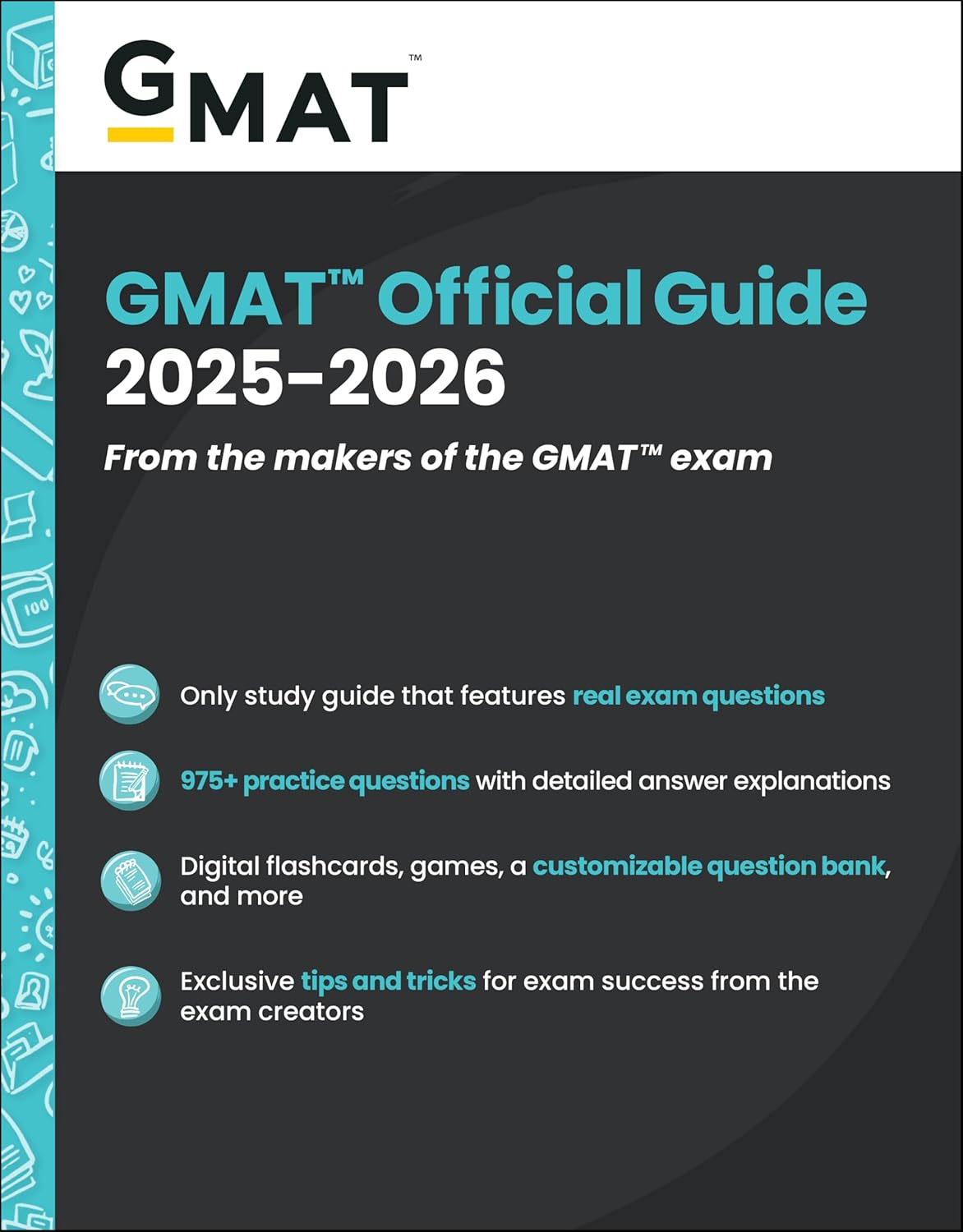
Kaplan GMAT Prep Plus 2024
A comprehensive resource that includes 6 practice tests, proven strategies, and online video lessons to guide your study plan from start to finish.
View on AmazonGMAT Preparation Strategy: A 3-Month Study Plan
Successfully preparing for the GMAT requires a structured, disciplined approach. A key skill tested throughout the exam is quantitative reasoning—the same foundation covered in subjects like the golden rules of accounting and financial analysis. Sharpening these concepts early will give you a meaningful advantage on test day. Here is a high-level 3-month plan that has helped thousands of applicants reach their target scores:
- Month 1 – Diagnostic & Foundation Building: Take a full-length practice test to establish your baseline score and identify your weakest areas. Focus this month entirely on content review—working through math fundamentals, critical reasoning frameworks, and data interpretation strategies. Do not take more than one or two timed practice tests during this phase; the goal is building knowledge, not measuring it.
- Month 2 – Skill Building & Strategy: Begin applying your content knowledge to timed practice sets. Focus on your weakest question types. Work through all official practice questions in the GMAT Official Guide for your target areas. Take a full practice test at the end of this month to measure your progress and recalibrate your study priorities.
- Month 3 – Test Simulation & Refinement: Take a full-length practice test every week under real testing conditions (timed, no interruptions). Review every mistake in detail to understand the concept gap behind each error. Focus on pacing strategy and mental stamina. In the final week, do light review only and prioritize rest and confidence.
Crafting Your Story: The Application Essays
Your essays are where you transform from a set of statistics (GMAT, GPA, years of experience) into a compelling, three-dimensional person. This is your opportunity to share your motivations, your vision for the future, and why a specific program is the essential next step in your journey. Learning to write persuasively and authentically is a skill that will serve you well beyond the application process.
The most common mistake applicants make is writing essays that are little more than a prose version of their résumé. Admissions officers have already read your résumé. They want to know who you are and why this matters. The most memorable essays are specific, personal, and vivid. They reveal character through story rather than assertion. Don’t tell the reader you are a leader—take them inside a defining moment and let them feel your leadership instincts in action.
The Anatomy of a Winning MBA Essay
- A compelling opening: Start in the middle of the action, not at the beginning. Drop the reader into a specific moment, a decision, or a scene that immediately establishes your voice and stakes. Avoid opening with clichés like “Since I was a child, I have always been passionate about…”
- Clear goals articulation: Most programs ask about your short-term and long-term career goals. Be specific. Vague answers like “I want to be a leader in finance” signal a lack of self-awareness. Better: “Within five years of graduating, I aim to be a Vice President of Corporate Development at a mid-cap consumer packaged goods company, leading M&A strategy.”
- Genuine “Why this school?” content: This is where most essays fall flat. Generic praise like “Wharton’s world-class faculty and diverse student body” tells an admissions officer nothing they haven’t heard a thousand times. Do the research. Reference specific professors whose research aligns with your interests, specific programs or clubs you plan to join, and the specific ways the school’s culture fits your learning style.
- Demonstrated self-awareness: Great leaders know their weaknesses. If an essay asks about a failure or challenge, resist the urge to turn it into a thinly-veiled success story. Own the failure genuinely, explain what you learned, and show how you have applied that learning.

65 Successful Harvard Business School Application Essays
An invaluable look at what works. Analyze real essays from accepted HBS students to understand the art of storytelling and personal branding in your application.
View on Amazon
On Writing Well: The Classic Guide to Writing Nonfiction
This isn’t an admissions book; it’s a masterpiece on clear, effective writing. Applying its principles of simplicity and clarity will make your essays stand out.
View on AmazonMBA vs. EMBA: Which Degree Is Right for You?
One of the most fundamental decisions prospective business school students face is whether to pursue a traditional full-time MBA or an Executive MBA (EMBA). These two degrees serve very different audiences and career objectives, and choosing the wrong format can undermine the entire investment.
Full-Time MBA
Best for professionals with 3–7 years of experience who want to make a significant career pivot, build a new network from scratch, or accelerate their trajectory into leadership. Requires leaving your current job for approximately two years. Offers maximum access to recruiting cycles, campus life, and the full immersive experience.
Executive MBA (EMBA)
Best for senior professionals with 10+ years of experience who want to formalize their business knowledge, earn a credential to support a promotion, or expand their network at a senior level—without leaving their current role. Classes are typically held on weekends or in intensive week-long modules. Employers often sponsor EMBA candidates.
Part-Time / Evening MBA
Best for professionals who want to earn an MBA while continuing to work full-time, typically because they are not yet ready to leave their current role or cannot afford to forego their salary. Completion typically takes 3–4 years. Strong option for those seeking knowledge and credential without career disruption.
Key Differences at a Glance
| Factor | Full-Time MBA | EMBA |
|---|---|---|
| Average Work Experience | 4–5 years | 12–15 years |
| Program Duration | 21–24 months | 18–24 months (weekends) |
| Career Switching | Excellent | Limited |
| Employer Sponsorship | Rare | Common |
| Typical Tuition Cost | $100K–$160K | $150K–$200K+ |
| On-Campus Recruiting | Full access | Limited |
The EMBA decision is typically clearer: if your organization is sponsoring your degree, you are not seeking to change industries, and you are already in a senior leadership track, the EMBA is an efficient and cost-effective choice. If you are seeking a career pivot, trying to break into highly competitive fields like investment banking or consulting where on-campus recruiting is essential, or simply want the full two-year immersive experience, the full-time MBA is the better path.
Online & Part-Time MBA Programs: The Fastest-Growing Segment
The landscape of MBA education has been permanently changed by technology and the COVID-19 pandemic, which forced even the most tradition-bound institutions to develop online learning capabilities. Today, online and hybrid MBA programs from top universities offer a level of rigor, flexibility, and prestige that was unimaginable a decade ago. For the right candidate, an online MBA can deliver an extraordinary return on investment.
It would be misleading, however, to suggest that online and in-person MBA programs are equivalent for all career objectives. The on-campus recruiting pipelines, the spontaneous hallway conversations that lead to partnerships, and the intensive shared experiences that forge lifelong bonds are difficult to replicate virtually. The best online MBA programs are genuinely excellent for knowledge acquisition and credentialing—but if your primary goal is breaking into a new industry via the school’s recruiting relationships, a full-time program will typically serve you better.
Top Online MBA Programs to Consider
- Indiana University Kelley School of Business (Online MBA): Consistently ranked as the #1 online MBA program in the country by multiple publications. Kelley’s online MBA delivers near-identical curriculum to its highly regarded residential program at a fraction of the cost.
- University of North Carolina Kenan-Flagler (MBA@UNC): A pioneer in the online MBA space, offering a rigorous curriculum with live virtual classes, small cohorts, and strong career services.
- Carnegie Mellon Tepper School of Business (Online Hybrid MBA): A hybrid model combining online learning with periodic residencies, offering the rigor of a top-15 program with significant flexibility.
- University of Southern California Marshall School of Business (MBA.PM): A highly respected part-time MBA designed for working professionals in the Los Angeles area with a growing online component.
- University of Texas McCombs School of Business (Texas MBA Online): A strong, affordable option for professionals seeking a well-recognized business credential with technology and energy sector specializations.
✅ Pro Tip: Evaluate Online Programs Rigorously
When evaluating online MBA programs, ask these critical questions: Does the school’s career center actively support online students, or only residential ones? Do employers who recruit from this school’s residential program also recruit from the online program? What percentage of online MBA graduates successfully transitioned careers? What is the average salary increase post-degree? The answers will tell you far more than any ranking.
Post-MBA Career Paths: Where Do Top Graduates Go?
Understanding where MBA graduates actually end up is essential to calibrating your expectations and choosing the right program for your target career. While the dream of post-MBA compensation is well-publicized, the reality is nuanced and highly dependent on the school, the industry, and the individual’s level of preparation and networking.
Management Consulting: The Single Largest MBA Employer
Management consulting firms—McKinsey & Company, Boston Consulting Group, Bain & Company (together known as “MBB”), and Tier 2 firms like Deloitte, Oliver Wyman, and Strategy&—are consistently the largest recruiters of MBA graduates from top programs. MBB firms typically hire 20–30% of the graduating class at elite schools. The starting package for a first-year MBA associate at MBB ranges from $190,000 to $225,000 in total compensation, including signing bonus and year-end performance bonus. The MBA is a near-requirement for entering consulting at the associate level (post-MBA), which is a significant step above the analyst level (undergraduate entry).
Investment Banking & Private Equity
Wall Street-bound MBA graduates enter as associates at investment banks (Goldman Sachs, Morgan Stanley, JPMorgan, etc.) or private equity firms (KKR, Blackstone, Apollo, etc.). First-year associate compensation at bulge-bracket banks typically ranges from $200,000 to $250,000 all-in, with the potential for significantly higher numbers in strong years. Breaking into elite PE firms directly from an MBA is extremely competitive; most successful candidates either recruited through on-campus processes or had pre-MBA experience at a reputable bank or PE firm. For those interested in building long-term wealth through equities, understanding the landscape of the world’s highest dividend-paying stocks is a useful supplement to your financial education.
Technology Companies
Tech giants like Google, Amazon, Meta, Microsoft, and Apple—as well as high-growth startups—hire significant numbers of MBA graduates for product management, business development, strategy, and marketing roles. Total compensation at large tech companies can rival or exceed consulting and banking packages when including equity. The MBA is particularly valuable for transitioning into product management roles at tech companies, which typically require business strategy skills alongside technical fluency.
Entrepreneurship & Venture Capital
A growing number of MBA graduates—particularly from Stanford, Harvard, and MIT—are starting companies directly out of school or joining early-stage startups. While the immediate compensation sacrifice can be steep, the long-term upside can dwarf any traditional career path. Many top schools have startup fellowships, accelerator programs, and seed funding vehicles designed specifically to support graduating founders. If you’re planning this path, developing a strong understanding of the best investment strategies for 2026 and beyond will help you advise your own ventures and attract early investors.
Post-MBA Salary by Industry: Quick Reference
| Industry / Role | Typical Total Compensation (Year 1) |
|---|---|
| Management Consulting (MBB) | $190,000 – $225,000 |
| Investment Banking (Bulge Bracket) | $200,000 – $250,000 |
| Private Equity (Post-MBA Associate) | $250,000 – $350,000+ |
| Technology (Product/Strategy) | $175,000 – $250,000 |
| Corporate Strategy / Development | $150,000 – $185,000 |
| Healthcare / Pharma Management | $140,000 – $180,000 |
| Consumer Goods / Brand Management | $140,000 – $165,000 |
| Social Impact / Nonprofit Leadership | $85,000 – $130,000 |
Industry-Specific MBA Advice: Finding the Best Program for Your Goals
One of the most important insights that experienced MBA applicants and admissions consultants emphasize is this: the “best” MBA program for you is almost never the one with the highest overall ranking. It is the one with the deepest and most relevant connections to your target industry. Here is targeted advice for the most popular post-MBA career paths.
If You Want to Work in Finance (Banking, PE, Hedge Funds):
Prioritize Wharton, Columbia, Booth, or Stern based on your preference for school culture and geography. The school’s proximity to financial hubs matters enormously—on-campus recruiting events, networking dinners, and informal interviews are far easier to access when recruiters don’t have to fly across the country. Your pre-MBA experience matters greatly; bulge-bracket banks and top PE firms generally expect candidates to have prior banking or consulting experience, even post-MBA.
If You Want to Work in Consulting:
Any M7 school is well-positioned for MBB recruiting, but Kellogg, HBS, Wharton, and Booth have particularly strong consulting pipelines. A strong consultant also needs a solid grasp of the core principles of management and how organizations operate at a structural level. The most important factor is your performance in case interview preparation. Starting case prep in the summer before your first year—or even earlier—is not excessive. Firms like McKinsey and BCG run intensely competitive on-campus processes, and even top-MBA candidates get rejected if they haven’t done sufficient case practice.
If You Want to Work in Tech or Product Management:
Stanford and MIT are the clear top choices for technology careers, due to their ecosystems and direct recruiting relationships with Silicon Valley’s best companies. That said, Wharton, Kellogg, and Harvard all have robust tech recruiting. Look for programs that offer product management courses, technology strategy electives, and strong alumni networks within the specific companies you are targeting.
If You Want to Start a Company:
Stanford GSB is the undisputed leader for entrepreneurship, but MIT Sloan, Harvard, and Columbia (with its NYC startup ecosystem) are also excellent launchpads. Look for schools that offer substantial entrepreneurship funding, incubators, and active venture capital alumni networks. The school’s culture matters enormously—you want an environment that celebrates and normalizes risk-taking, not one that pressures everyone into a consulting or banking “prestige track.”
If You Want to Work in Healthcare Management:
Wharton, Kellogg, Yale SOM, and Fuqua are the standout programs for healthcare management. Wharton’s Health Care Management Program is widely considered the finest in the country, with deep ties to pharmaceutical companies, hospital systems, and health insurance firms. Yale’s cross-disciplinary approach, combining business with policy and public health resources, is ideal for those interested in healthcare policy and systems reform.
Financing Your MBA: Scholarships, Loans & ROI Analysis
The total cost of a two-year, full-time MBA at a top-10 school—including tuition, fees, housing, food, health insurance, books, and the opportunity cost of foregone salary—can easily exceed $350,000 to $400,000. This is a sobering number that demands serious financial planning and analysis before you commit.
Understanding the Full Cost of an MBA
When calculating the true cost of an MBA, most candidates make the mistake of only looking at tuition. The more complete picture includes: annual tuition (typically $75,000–$85,000 per year at top programs), annual living expenses ($30,000–$50,000 depending on the city), books and program fees ($5,000–$10,000 per year), and—most significantly—the opportunity cost of two years of foregone salary, which for a mid-career professional might represent $150,000–$250,000 in total lost earnings. When you add all of these together, the true economic cost of a top MBA can approach $500,000 for some candidates. Smart candidates treat the MBA as just one component of a broader wealth management strategy, thinking carefully about how to deploy the salary premium they earn post-graduation.
Scholarships & Fellowship Opportunities
The good news is that merit-based scholarships are widely available, even at the most elite business schools. Many candidates are surprised to learn that top schools offer significant scholarships to attract particularly strong candidates, especially those from underrepresented industries or backgrounds that add diversity to the cohort. There are also numerous external scholarships available from foundations, corporations, and professional associations that are independent of any specific school.
- School-Based Merit Scholarships: Most top programs offer fellowships of $20,000–$60,000+ per year to candidates who significantly strengthen their class. To maximize your chances, apply in Round 1 when scholarship pools are fullest.
- Forté Foundation Fellowships: Designed to fund outstanding women pursuing MBA degrees, these fellowships are offered through partnerships with dozens of top business schools.
- Consortium for Graduate Study in Management: A diversity-focused organization that provides full-tuition fellowships to underrepresented minority students at member schools including Kellogg, Darden, Ross, and others.
- National Black MBA Association Scholarships: Substantial scholarship opportunities for Black business students at top-ranked programs.
- Toigo Foundation MBA Fellows Program: Targets underrepresented minorities pursuing careers in finance.
- Employer Tuition Reimbursement: Many large corporations offer tuition reimbursement programs for employees who pursue part-time or evening MBA programs while continuing to work. Before you apply anywhere, check whether your current employer has such a policy.
Federal Student Loans and Private Financing
For students who cannot cover costs through scholarships, savings, and employer support, federal graduate student loans (specifically Graduate PLUS Loans) are typically the most accessible and flexible option. These loans do not require a credit check beyond confirming the absence of adverse credit history, and they offer income-driven repayment options post-graduation. Private loans from banks and specialized lenders are also available but typically offer less flexibility. If you plan to pursue a career in public service, nonprofit work, or government, investigate the Public Service Loan Forgiveness (PSLF) program, which can forgive your remaining federal loan balance after ten years of qualifying payments.
Calculating Your MBA Return on Investment (ROI)
Ultimately, the financial case for an MBA comes down to a straightforward return on investment analysis: how much does your compensation increase post-MBA, and how long does it take to recover your total investment? For graduates of top programs entering high-paying fields like consulting, banking, or tech, the payback period is typically 4–6 years—and the lifetime earnings premium of an MBA from an elite school can exceed $1 million. One of the most powerful post-MBA financial habits is reinvesting your salary increases into diversified vehicles. Understanding the difference between index funds vs. mutual funds is an essential starting point for building long-term wealth. Furthermore, the principle of earning interest on interest means that the sooner you start investing your post-MBA salary increases, the more dramatically your wealth compounds over time. For graduates pursuing public interest careers or lower-paying industries, the financial math is harder, and the decision should be based more heavily on the non-financial benefits of the degree.
⚠️ A Candid Warning About MBA ROI
Do not let the dazzling average salary numbers blind you to the distribution. Averages are pulled up by graduates entering finance and consulting. If your post-MBA goal is in healthcare management, education, or the public sector, your expected salary will be significantly lower—often $90,000–$130,000—while your loan burden will be identical to your finance-bound classmates. Run your own numbers honestly before committing to a six-figure debt.
Interview Preparation: Cracking the Admissions Interview
The MBA admissions interview is your opportunity to bring your application to life. For most schools, being invited to interview is a strong positive signal—it means the admissions committee has reviewed your file and believes you have the credentials to succeed. Now they want to meet you. The interview is largely about fit, communication, and confirming that the person who shows up matches the person described in the application.
Types of MBA Admissions Interviews
- Blind Interview (HBS Style): The interviewer has only read your résumé, not your full application. This format rewards candidates who can tell their story compellingly and conversationally, without assuming the interviewer knows your background. HBS famously uses this format.
- Application-Based Interview: The interviewer has read your full application and will probe deeper into specific experiences, achievements, and goals you’ve described. Be prepared to elaborate on anything in your essays or résumé with specific, concrete details.
- Team-Based Discussion (Wharton Style): A group of applicants is put together to discuss a business case or ethical dilemma. The admissions team observes how you contribute, listen, build on others’ ideas, and manage group dynamics. This is not about dominating the conversation—it is about demonstrating collaborative leadership.
- Video/Kira Interview (Kellogg Style): You record responses to impromptu questions without preparation time. This tests your composure, communication clarity, and personality under pressure. Practice with tools like Kira Talent’s practice platform to become comfortable speaking naturally on camera.
The Most Common MBA Interview Questions
- “Walk me through your résumé.” (Have a tight, 3-minute narrative ready.)
- “Why do you want an MBA, and why now?” (Be specific about your career trajectory and the gap the MBA fills.)
- “Why this school?” (Go beyond generic praise—cite specific programs, professors, and clubs.)
- “Tell me about a time you led a team through a challenging situation.” (Prepare 3–4 behavioral stories using the STAR method: Situation, Task, Action, Result.)
- “Tell me about a failure and what you learned.” (Authenticity is everything here.)
- “Where do you see yourself in 5 years? In 10 years?” (Demonstrate both ambition and self-awareness.)
- “What will you contribute to our community?” (This is a fit question—understand what the school values and show how you embody it.)
- “Do you have any questions for me?” (Always have thoughtful questions ready. This is not the time for logistics questions about housing.)
✅ Interview Tip: The STAR Method
For any behavioral question (“Tell me about a time when…”), use the STAR framework: describe the Situation, clarify your specific Task within it, detail the specific Actions you took (focus on “I” not “we”), and quantify the Result wherever possible. Stories with specific, measurable outcomes are far more memorable and credible than vague, general descriptions.
Building Your MBA Network Before You Even Apply
Most applicants dramatically underestimate the role that proactive networking plays in a successful MBA application—and in the value of the degree itself. The MBA is fundamentally a networking credential as much as an academic one. Admissions officers know this, which is why demonstrated knowledge of and engagement with their community is a meaningful signal in your application.
Pre-Application Networking: How and Why
Before you submit a single application, you should have had genuine conversations with at least 5–10 current students or recent alumni from each school you’re targeting. These conversations serve multiple purposes: they help you determine if the school is actually a good fit (the vibe on the ground often differs from the marketing materials), they give you specific, authentic content for your “why this school” essays, and they create warm connections that can sometimes provide an inside track in the admissions process.
- Attend admissions events: Every top school hosts information sessions, virtual events, and campus visits. Attend as many as possible and make a genuine, memorable impression. Sign in with your full name—attendance is tracked and factored into “demonstrated interest” at many schools.
- Use LinkedIn strategically: Search for current students and alumni from your target schools who work in your industry or graduated from your undergraduate institution. Send concise, personalized messages requesting a 20-minute informational conversation. Most people are happy to help, especially for their alma mater.
- Connect with admissions ambassadors: Most schools have official student ambassador programs. Reach out to ambassadors who share your background or career interests for the most relevant conversations.
- Attend MBA fairs: Events like the QS World MBA Tour, GMAC MBA Tour, and the MBA Exchange bring representatives from dozens of top schools together in one place. These are efficient opportunities to make initial connections and gather information.
Building Your Network After Enrollment
The value of your MBA network doesn’t materialize automatically—it requires consistent, intentional cultivation. The most networked graduates are not necessarily the most outgoing; they are the most deliberate. During your two years, make a habit of having coffee or a meal with two new classmates, alumni, or faculty members every week. Attend as many club events, speaker series, and career treks as your schedule allows. Follow up after every meaningful conversation. Send thank-you notes. Share relevant articles. Introduce people in your network to each other when you see a genuine reason to connect them. These habits, practiced consistently, compound into a professional network of extraordinary power. Once you enter your post-MBA role, sharpening skills like reading and interpreting balance sheets and applying proven business efficiency strategies will help you deliver results that extend your reputation well beyond your graduating cohort.
International Students: Navigating the U.S. MBA Application Process
International students represent a significant and highly valued portion of U.S. MBA programs—typically 30–45% of any given class at a top school. Schools actively seek international diversity because it enriches classroom discussions, reflects the global nature of modern business, and builds the kind of cross-cultural competency that today’s employers value highly. However, applying as an international student comes with a distinct set of considerations and challenges.
Key Considerations for International Applicants
- TOEFL or IELTS Requirements: Most U.S. business schools require non-native English speakers to demonstrate English proficiency through the TOEFL or IELTS examination. Minimum scores vary by school (Wharton requires a TOEFL score of 100; HBS requires 109), so check each school’s specific requirements carefully. Some schools waive this requirement for candidates who have completed at least two years of undergraduate or graduate education taught exclusively in English.
- Visa Considerations (F-1 Student Visa): Admitted international students will need to obtain an F-1 student visa to study in the United States. Your school’s international student office will guide you through the process, which requires demonstrating sufficient financial resources to cover your tuition and living expenses.
- OPT and STEM Extension: After graduation, international students are eligible for Optional Practical Training (OPT), which allows you to work in the U.S. for up to one year in a job related to your degree. If your MBA program is classified as a STEM degree (as is the case at Stern, Ross, and others), you may be eligible for a 24-month OPT extension, giving you three years of work authorization post-graduation.
- H-1B Visa Lottery: After OPT expires, most international professionals need an H-1B visa to continue working in the U.S. These visas are subject to an annual lottery with acceptance rates that have been frustratingly low in recent years. This is a significant risk factor that international students must account for when planning their post-MBA careers in the U.S.
- Translating Your Story for a U.S. Audience: Many international applicants have accomplished extraordinary things in their home countries that simply don’t translate well to a U.S. admissions context without careful framing. If you are an accomplished professional in India, China, Brazil, or Korea, work to contextualize your achievements for an American audience—explain the size and significance of your organization, the competitive context of your industry, and the specific impact of your work in terms that an American reader with no context will immediately grasp.
Waitlist Strategy: Turning a Waitlist Into an Acceptance
Being placed on a waitlist is simultaneously encouraging and frustrating. It means the school sees your potential and hasn’t eliminated you from consideration—but it also means you’re in limbo, waiting on a decision that may not come until the summer before classes begin. A proactive, thoughtful waitlist strategy can make the difference between a waitlist turning into an acceptance or a rejection.
What to Do When You’re Waitlisted
- Send a concise waitlist update letter: Most schools will give you the opportunity to submit additional materials after being waitlisted. Take this opportunity seriously. Write a focused 1–2 page letter that: (a) reaffirms your genuine enthusiasm for the program, (b) addresses any weaknesses in your original application that you believe contributed to the waitlist decision, and (c) provides meaningful updates about your professional progress since submitting your application (a promotion, a major project completion, a new leadership role, a GMAT rescore).
- Retake the GMAT if your score was borderline: If your GMAT score was below the school’s median and you believe you can score significantly higher with additional preparation, a retake can be a powerful addition to your waitlist update. An improvement of 30+ points is meaningful to admissions committees.
- Obtain an additional recommendation letter: A new recommendation letter from someone who can speak powerfully to your qualifications from a different angle than your original recommenders can add meaningful new information to your file.
- Visit campus (if you haven’t already): A campus visit after being waitlisted—where you meet with admissions officers, sit in on a class, and engage with students—demonstrates genuine interest and gives you fresh, specific content for your update letter.
- Keep your options open: Do not put your life on hold waiting for a waitlist decision. Continue to engage fully with the other schools you have been admitted to. If you receive a waitlist decision late in the cycle, you may need to make a deposit at another school to protect your options. This is entirely appropriate and expected.
📊 Waitlist Statistics to Know
Waitlist conversion rates vary enormously by school and year. In some years, schools admit very few—or even zero—students from the waitlist (if early rounds were particularly strong). In other years, with unexpected withdrawals or shifts in yield, waitlists move significantly. At top schools, waitlist conversion rates have historically ranged from 5% to 30%, depending on the year. The most important thing you can do is stay engaged, stay positive, and stay proactive—while protecting your future by maintaining solid backup options.
Choosing the Right MBA Application Round: Round 1 vs. Round 2 vs. Round 3
The vast majority of top MBA programs run two or three application rounds per year, with deadlines typically falling in September/October (Round 1), January (Round 2), and March/April (Round 3). The round in which you apply can have a meaningful impact on your chances of admission and your access to scholarship funding.
Round 1 (September/October):
Round 1 is generally considered the optimal round for most applicants. The applicant pool is competitive but manageable, scholarship funds are fully available, and admissions officers are fresh and fully engaged. Applying in Round 1 demonstrates genuine commitment and gives you the maximum time to respond to interview invitations and waitlist opportunities. The primary downside is the compressed preparation timeline if you are beginning your application process in the summer.
Round 2 (January):
Round 2 is the most competitive round in terms of raw application volume—it is when the majority of all applicants submit. That said, it remains a strong round with meaningful scholarship funding still available, and most schools fill 40–60% of their class in Round 2. If you submit a genuinely strong application in Round 2, you have an excellent shot at admission. Do not apply in Round 2 with a rushed or underprepared application simply because the deadline is more convenient.
Round 3 (March/April):
Round 3 is significantly more difficult than Rounds 1 and 2. By this point, most class seats have been filled, scholarship funds are largely depleted, and admissions committees are looking to fill very specific gaps in their incoming class. Unless you have a genuinely compelling, late-breaking reason for applying in Round 3—an unexpected job loss, a major achievement that only became finalized recently—you are strongly advised to wait and apply in Round 1 or 2 of the following year rather than submitting a Round 3 application.
Letters of Recommendation: Choosing and Preparing Your Recommenders
Strong letters of recommendation are among the most underrated components of the MBA application. Admissions committees use recommendations to triangulate between what you’ve said about yourself in your essays and what people who’ve actually worked with you observe. A glowing, specific, story-rich recommendation from a direct supervisor who knows your work intimately is worth far more than a lukewarm letter from a prestigious name who barely knows you.
Whom to Ask
Most schools require two recommendations, typically from professional supervisors or managers. The ideal recommender is someone who: has directly observed your work and leadership over a sustained period (not just a single project), can speak to your potential for growth and impact, is enthusiastic about writing on your behalf, and will invest the time to write something specific and compelling. Colleagues, mentors, or clients can serve as strong recommenders if they meet these criteria—but a direct supervisor is almost always the strongest choice when possible.
How to Prepare Your Recommenders
Do not simply ask someone to write a recommendation and leave it at that. Meet with each recommender for at least an hour to walk them through: your goals and why you want an MBA, the specific programs you are applying to and what each values, two or three specific stories or examples from your work together that you’d like them to reference, and any aspects of your candidacy that you’d like them to amplify or contextualize. Provide them with a copy of your résumé and your draft essays. The better prepared your recommender is, the better their letter will be—and the more confident and specific their writing will come across to admissions committees. If you are asking a senior finance professional to recommend you, briefly walking them through the key functions of a financial manager in the context of your target role will help them frame your achievements in the most relevant language.
Frequently Asked Questions (FAQ)
What is the difference between the GMAT and the GRE?
Both are standardized tests accepted by most business schools. The GMAT (Graduate Management Admission Test) was specifically designed for business schools and has a unique Integrated Reasoning section. The GRE (Graduate Record Examinations) is a more general graduate school test. The GMAT’s quantitative section is often considered more challenging and analytical, while the GRE’s verbal section has a greater emphasis on vocabulary. Choose the test that plays to your strengths.
How much work experience do I need for a top MBA program?
The average amount of post-college work experience at top programs is typically 4-5 years. This is a guideline, not a rule. Admissions committees are more interested in the quality and impact of your experience than the sheer number of years. They want to see a track record of professional growth, leadership, and accomplishment.
Is an MBA worth the cost?
For most graduates of top-tier programs, the answer is a resounding yes. The return on investment (ROI) comes from several areas: a significant increase in post-MBA salary, access to a powerful and lifelong network, career switching opportunities, and the development of advanced leadership and management skills. However, it’s crucial to calculate the total cost (tuition + living expenses + opportunity cost of lost salary) and be clear about your career goals to ensure it’s the right decision for you. We recommend pairing this analysis with our guides on where to invest your money and how much to save for retirement, so you can model your full financial picture before committing.
Can I get into a top MBA program without a GMAT or GRE score?
Increasingly, many top programs offer “test-optional” or “test-flexible” policies, particularly for candidates with strong undergraduate GPAs from rigorous academic institutions, or for candidates with several years of strong professional track records. However, submitting a strong GMAT or GRE score remains a meaningful differentiator in a competitive applicant pool, and waiving the requirement should be a deliberate strategy, not a default choice. If your score is well above the school’s median, always submit it.
What GPA do I need for a top MBA program?
Median undergraduate GPAs at M7 schools typically range from 3.55 to 3.78. However, GPA is evaluated in context: the rigor of your undergraduate institution, the difficulty of your major, and the trajectory of your grades over time all matter. A 3.3 GPA from MIT in electrical engineering is viewed very differently than a 3.3 GPA from a less rigorous institution. If your GPA is below the median for your target schools, a strong GMAT score, an addendum explaining extenuating circumstances, or strong post-undergraduate academic work can help mitigate the gap.
How many MBA programs should I apply to?
Most admissions experts recommend applying to between 5 and 8 programs, spanning reach schools (programs where your stats are below the median but you have a compelling story), target schools (programs where your profile is competitive), and safety schools (programs where you are comfortably above the median). Applying to fewer than 4 programs concentrates your risk too much; applying to more than 10 makes it very difficult to write tailored, high-quality essays for each school. Quality over quantity is the consistent advice from those who have successfully navigated the process.
Should I hire an MBA admissions consultant?
A good MBA admissions consultant can be a valuable investment, particularly for candidates who are uncertain about their school selection strategy, struggle with essay writing and personal branding, or are applying with an unusual background that requires careful framing. A great consultant will help you identify your most compelling story, coach you through the essay process, and prepare you rigorously for interviews. That said, the best consultants cannot save a fundamentally weak application—GMAT, GPA, and work experience are table-stakes requirements that no amount of consulting can overcome. Costs range from $2,000 for hourly coaching to $15,000+ for comprehensive, school-by-school packages.
What is the best time of year to start preparing for the MBA application?
Ideally, you should begin your preparation at least 12–18 months before your target Round 1 deadline. This gives you enough time to: take and retake the GMAT, research schools thoroughly and visit campus, build relationships with recommenders, write and extensively revise your essays, and work with admissions consultants if desired. Trying to pull together a top-quality application in 2–3 months almost always results in rushed, underprepared materials that fall short of the high bar set by your competition.
Conclusion: Your Journey Starts Now
Choosing an MBA program is a deeply personal decision. The “best” school is not just about rankings; it’s about finding the culture, curriculum, and community where you will thrive. Stanford might be perfect for the aspiring tech founder, while Wharton is ideal for the future private equity partner. HBS and Kellogg excel at molding general managers and leaders. Booth and MIT serve the analytically rigorous and intellectually independent. Columbia and Stern are gateways to New York’s financial and cultural industries. Tuck builds extraordinary community. Yale develops purpose-driven leaders at the intersection of business and society.
The process of applying to top MBA programs is itself a transformative exercise in self-reflection. Thousands of applicants report that the process of writing their essays—of articulating what they value, what they’ve accomplished, and where they want to go—is clarifying and energizing in ways they didn’t anticipate. Take it seriously. Invest in the process. Write your essays dozens of times. Seek feedback from people who will be honest with you. Practice your interview answers until they feel natural rather than rehearsed.
Use this guide as a starting point. Dive deeper into the schools that resonate with you, connect with current students and alumni, and attend virtual information sessions. The application process is a marathon, not a sprint. It requires self-reflection, strategic planning, and meticulous execution. Start preparing early, invest in the right resources, and focus on telling your unique story.
The world needs leaders who are not just technically competent, but who are self-aware, ethically grounded, globally minded, and genuinely driven to create value for the organizations and communities they serve. The best MBA programs exist to produce exactly this kind of leader. If that description resonates with who you are and who you aspire to be, the investment is worth making.
Your future as a leader starts with this single, pivotal choice. Good luck!