Mint vs YNAB: Which Budgeting App Actually Changes Your Financial Life?
A side-by-side breakdown of philosophy, features, cost, and real-world impact — so you can choose the tool that will finally make your money work for you.
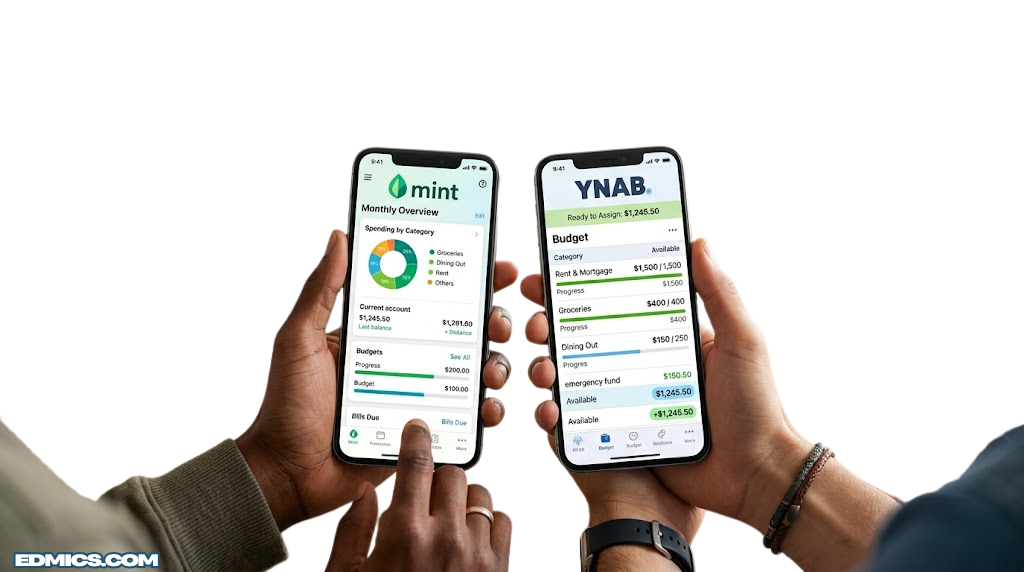
Two Apps, Two Entirely Different Philosophies
Every personal finance journey reaches the same crossroads: you open a budgeting app, add your bank accounts, and wait for clarity to arrive. The question is what happens next — and that is precisely where Mint and YNAB diverge so dramatically that calling them competitors feels misleading. They solve fundamentally different problems.
Mint connected to your accounts, pulled transactions automatically, and sorted them into categories. It handed you a mirror and said: here is where your money went. Beautiful reporting, zero friction — and zero prompting to change anything.
YNAB starts with a question rather than a report: what do you want your money to do this month? Every dollar you have gets assigned a job before it gets spent. It is less a record-keeper and more a decision-making framework that runs continuously.
Understanding this distinction before you pick a tool will save you months of frustration. If you want effortless visibility with no behavioral change required, the Mint model appeals — though its shutdown has left users searching for alternatives. If you want a system that measurably reshapes your finances over time, YNAB is in a different category entirely.
This guide runs both apps through every angle that matters: features, cost, philosophy, security, real-world impact, and fit for different financial situations. By the end, you will know which one belongs in your pocket — and why.
A note on Mint’s status: Intuit shut down Mint and redirected users to Credit Karma. This comparison remains highly relevant because millions of users are actively choosing between YNAB and Mint-like alternatives, and because the philosophical differences between the two systems reflect a wider choice every budgeter faces.
For anyone thinking more broadly about their financial picture, understanding where a budgeting app fits within a larger strategy is valuable — our guide on financial planning tips offers context on how day-to-day budgeting connects to longer-term wealth goals.

Try YNAB Free for 34 Days
No credit card required. Connect your accounts and start assigning every dollar a job today.
Check Price on Amazon →Mint: The Free Tracker That Defined a Category
Mint launched in 2007 and became the dominant free personal finance app for over a decade. Its value proposition was radical for its time: connect every financial account in one place and get an automatic, real-time picture of your money without lifting a finger. At its peak, Mint had over 25 million users — a testament to how powerful the combination of zero cost and zero friction turned out to be.
What Mint Did Well
Mint’s core loop was elegant: it pulled transactions from banks, credit cards, loans, and investment accounts; automatically categorized each one; and presented dashboards showing spending by category, net worth over time, and bill reminders. It required no ongoing data entry and generated reports that felt effortless to consume.
Its free credit score monitoring was genuinely useful, especially at a time when credit scores were harder to access. Bill tracking integration meant Mint could alert users to upcoming payments and flag unusual charges — features that worked well for people who simply wanted to stay informed rather than actively manage their budget.
Mint’s Fundamental Limitation
Mint was brilliant at telling you what happened. It was never designed to help you make different decisions. The categories and budgets it created were recommendations at best — and because nothing in the system created urgency or consequence, most users eventually drifted into a pattern of checking their Mint dashboard the way people check their weight on a scale: with awareness but without meaningful action.
This is the core of what researchers call the “intention-action gap” in personal finance. Information alone rarely changes behavior. Mint gave people exceptional information. YNAB gives people a behavioral system. These are very different products.
Mint: Honest Pros and Cons
- Completely free with no subscription
- Effortless setup — accounts sync automatically
- Strong spending reports and historical data
- Free credit score monitoring included
- Bill tracking and payment reminders
- Net worth dashboard across all accounts
- Wide bank and institution compatibility
- Low learning curve — usable immediately
- Passive — shows history, doesn’t change behavior
- Automatic categorization errors are common
- No proactive budgeting framework
- Ad-supported model with product recommendations
- No zero-based budgeting capability
- Weak debt payoff planning tools
- No rollover budget logic
- Service has been discontinued by Intuit
For a deeper look at how tracking your numbers fits into a broader financial framework, the concept of prioritizing your budget effectively is a useful companion read — especially if you’re trying to bridge the gap between awareness and action.

Financial Planning Essentials
Pair your budgeting app with the right physical tools to stay organized and on track.
View on Amazon →YNAB: The Budgeting System That Actually Changes Behavior
YNAB — You Need A Budget — was built on a conviction that most budgeting tools fail for the same reason: they track rather than guide. Founded in 2004 and relaunched as a subscription web and mobile service, YNAB is built around a method, not just software. The software exists to support the method. This distinction matters more than any individual feature.
YNAB’s claim is bold but consistently supported by user data: new users save an average of $600 in their first two months and over $6,000 in their first year. When a $99 annual subscription produces those outcomes, the math is obvious. The question is whether you will actually follow the system — and that depends on understanding what the system is asking of you.
YNAB’s Four Rules: The Heart of the System
YNAB’s method rests on four principles that interact as a coherent framework. Understanding them is essential to understanding why YNAB produces results that passive trackers cannot.
Rule 1 — Give Every Dollar a Job is zero-based budgeting in its purest form. When money arrives in your account, you immediately allocate it across categories until the balance reads zero. This is not about restricting spending — it is about intentionality. Every dollar either has a purpose or sits in a holding category called “Ready to Assign.” Nothing floats unassigned.
Rule 2 — Embrace True Expenses is the insight that breaks most budgets. Your car insurance might only bill twice a year, but that bill is not a surprise — it is a predictable expense you should be saving for monthly. YNAB prompts you to identify all large, irregular costs (annual subscriptions, car maintenance, medical deductibles, holiday gifts) and set aside a fraction each month. This is what eliminates the financial “emergencies” that derail most people’s plans.
Rule 3 — Roll With the Punches acknowledges that life departs from plans. If you overspend on groceries, you do not fail — you move money from another category and keep going. This replaces guilt with adjustment, which is why YNAB users stick with the system long enough to see results.
Rule 4 — Age Your Money is the ultimate goal: spending money that arrived in your account 30 or more days ago. When you reach this point, you are no longer living paycheck to paycheck. You are spending last month’s income on this month’s expenses, which gives you a genuine financial buffer and eliminates the anxiety of timing.
This framework connects deeply to one of the most important principles in personal finance: the concept behind compound interest and the value of money over time. YNAB’s aging-your-money rule is, in essence, a behavioral version of the same principle.
YNAB: Honest Pros and Cons
- Proven behavior-change methodology
- Zero-based budgeting creates true intentionality
- Outstanding debt payoff and goal tracking
- Excellent for irregular and variable income
- Real-time shared budgets for couples
- Strong community, workshops, and support
- Regular feature updates and mobile app quality
- 34-day free trial, no credit card required
- $99/year subscription cost
- Learning curve — method must be understood first
- Requires regular manual engagement
- No investment portfolio tracking
- No credit score monitoring
- Fewer integrations than Mint had
- Can feel overwhelming in the first two weeks
- Not ideal for pure passive observation

The YNAB Method — Budgeting Workbook
Reinforce the four rules with a physical budgeting journal designed for YNAB users.
See on Amazon →Feature-by-Feature Comparison
A direct comparison reveals where each tool shines and where it falls short. This table covers every feature category that matters for day-to-day budgeting.
| Feature | Mint | YNAB |
|---|---|---|
| Price | Free | $99/yr or $14.99/mo |
| Bank Sync | Yes — automatic | Yes — automatic |
| Transaction Import | Automatic | Auto + manual |
| Budget Methodology | Category limits | Zero-based budgeting |
| Proactive Budgeting | No | Yes — core feature |
| Rollover Budgets | No | Yes — built in |
| Goal Tracking | Basic savings goals | Deep goal + debt tools |
| Debt Payoff Planner | No | Yes |
| Spending Reports | Excellent | Good — improving |
| Net Worth Tracking | Yes — strong | Basic tracking |
| Investment Tracking | Yes | No |
| Credit Score | Yes (free) | No |
| Bill Reminders | Yes | Via subscriptions tracking |
| Shared Budgets | No | Yes — real-time |
| Irregular Income Support | Estimates only | Excellent — built for it |
| Mobile App Quality | Good | Excellent |
| Web App | Yes | Yes |
| Free Trial | Entirely free | 34 days, no card |
| Customer Support | Email / help docs | Live chat, workshops, community |
| API / Integrations | Limited | Extensive (Zapier, Splitwise, etc.) |
The table above makes one thing clear: in pure feature count, the two apps are actually competitive. Where they diverge dramatically is in what kind of feature matters most to you. Mint led in passive monitoring features. YNAB leads in everything that requires intentional action.
This mirrors the broader split in personal finance tools — a distinction very similar to what you see when comparing index funds vs. mutual funds: one approach is passive and low-maintenance, the other is more active but historically produces better personalized outcomes.
Cost Analysis: Is YNAB Worth the Subscription?
The single most common objection to YNAB is its price. Paying for a budgeting app feels counterintuitive when the goal is to spend less money. This is exactly the framing YNAB has to overcome — and its user outcome data is the answer.
The math on YNAB’s value proposition is not subtle. If a $99 annual subscription generates $6,000 in savings for the average user, the return on investment is approximately 60x. Even if you assume YNAB’s advertised figures are optimistic and discount them by half, a 30x ROI on a productivity subscription is exceptional.
Mint’s “Free” — At What Cost?
Mint was not actually free in the economic sense. Its business model depended on advertising financial products to users — credit cards, loans, insurance — generating revenue from referral commissions when users clicked through. The result was a dashboard that subtly pointed users toward new credit products rather than toward behavioral change.
This is not a moral condemnation of Mint’s model — it is simply an accurate description of the incentive structure. When a product is free, the user experience is built around the advertiser’s goals, not exclusively the user’s. YNAB’s subscription model means its only incentive is to make users more financially healthy, because retention depends on whether the product actually works.
The real cost question: It is not “Mint free vs. YNAB $99.” It is “spending an unknown amount more per year due to passive tracking vs. spending $99 and potentially saving $3,000–$6,000.” Framed that way, the decision changes significantly.
Thinking about financial tools in terms of their true return connects to broader concepts around investment principles — where the total cost of any financial product should always be weighed against its real-world outcome, not just its sticker price.
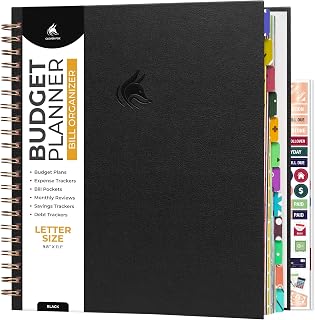
Budget Planner — 12-Month Financial Organizer
A physical planner to complement your digital budgeting tool, for weekly check-ins and goal reviews.
Buy on Amazon →The Budgeting Philosophy Behind Each Tool
Software is downstream of philosophy. To evaluate Mint and YNAB fairly, you need to understand the worldview embedded in each product — because that worldview determines what the software is optimized to do.
Mint’s Implicit Philosophy: Awareness Is Enough
Mint operated on the assumption that seeing your spending data clearly and accurately is sufficient to motivate better decisions. This is the dominant assumption in most financial reporting tools, and it is not without merit — awareness absolutely matters. The problem is that awareness alone has a weak track record of producing lasting behavioral change.
Behavioral economists have documented this gap extensively. People who track their spending without a proactive framework tend to feel informed but not transformed. The data becomes background noise: acknowledged, reviewed occasionally, rarely acted upon in ways that compound meaningfully over time.
YNAB’s Implicit Philosophy: Intentionality Before Spending
YNAB embeds a fundamentally different assumption: that budgeting must happen before spending, not after. This is zero-based budgeting as a behavioral philosophy, not just an accounting technique. When you assign your dollars jobs before they are spent, you are making dozens of small, conscious tradeoff decisions each month — and those decisions, repeated over time, are what actually change financial trajectories.
The philosophical difference also shows up in how each app handles mistakes. Mint categorized your overspending in red and showed you a variance report. YNAB assumes you will overspend categories sometimes — that is expected — and gives you a mechanism to adjust rather than simply document the failure.
This connects to sound principles in decision-making frameworks. As our resource on decision-making frameworks explores, the most effective decisions happen when constraints are set proactively rather than evaluated after the fact.
Zero-Based Budgeting vs. Traditional Budgeting
| Dimension | Traditional (Mint-style) | Zero-Based (YNAB) |
|---|---|---|
| Timing | Reviews past spending | Plans future spending |
| Unallocated Cash | Floats freely | Must be assigned |
| Overspending | Red flag on report | Move money, keep going |
| Irregular Expenses | Appear as spikes | Planned monthly, no surprises |
| Behavior Change | Relies on willpower | Embedded in system |
| Paycheck Cycle | No specific mechanic | Rules 1 + 4 break it |
Category-by-Category: Who Wins Where?
Rather than declaring one app universally better — which would ignore the legitimacy of different use cases — here is an honest category breakdown based on real-world performance.
Understanding where your money should ultimately go connects naturally to broader wealth-building strategies. Our guide on wealth management strategies outlines how disciplined budgeting serves as the foundation for long-term asset growth.

Debt Payoff Tracker — Visual Progress Planner
Map your debt snowball or avalanche visually while YNAB tracks the numbers digitally.
View on Amazon →Which App Is Right for You? Eight Specific Scenarios
The choice between Mint and YNAB (or a Mint-style alternative) is not binary — it depends on your current financial situation, behavioral style, and specific goals. Here is an honest breakdown for eight common scenarios.
Choose Mint-Style Tracking If You…
- Already have strong spending habits and just want visibility
- Have a single financial goal that requires only awareness (like reviewing your net worth monthly)
- Need investment portfolio tracking integrated with your cash flow view
- Have zero interest in engaging with your budget more than once a month
- Are already financially secure and want consolidation, not transformation
Choose YNAB If You…
- Are living paycheck to paycheck and want to break the cycle
- Have specific debt payoff or savings goals with a timeline
- Have irregular or freelance income that makes traditional budgeting difficult
- Share finances with a partner and need real-time synced visibility
- Have tried tracking apps before and found they did not produce change
- Want a system that handles irregular expenses without budget-busting surprises
- Are willing to invest 10–15 minutes per week in active engagement
The Honest Scenario Truth
The vast majority of people who seek out a budgeting app are looking for change, not just reporting. They want to spend less, save more, eliminate debt, or stop feeling anxious about money. For all of those goals, YNAB is the appropriate tool. The only scenarios where a passive tracker genuinely fits better are ones where the financial behavior is already what the person wants it to be.
If retirement planning is part of your broader goal — which it should be for most users evaluating budgeting tools — our guide on how much to save for retirement connects the daily budgeting work to the longer-term picture in concrete terms.
Making the Switch: Getting Started With YNAB
The most common reason people hesitate on YNAB is not the cost — it is the perceived complexity. The four rules sound abstract until you do the actual setup, at which point most users report that the system “clicked” within a few days. Here is the practical path from zero to a functioning YNAB budget.
Practical Setup Tips for New YNAB Users
- Start fresh, not from history. Do not import six months of transactions into YNAB. Start budgeting from today — the app’s value comes from proactive planning, not past analysis.
- Use YNAB’s free onboarding workshops. They run live multiple times a week and dramatically accelerate the learning curve. The “Getting Started” workshop specifically is excellent for first-timers.
- Build fewer categories than you think you need. New users often over-complicate their category structure. Start with 15–20 core categories and expand as needed.
- Budget only money you actually have. If your paycheck hits tomorrow, do not budget it today. This is Rule 1 in practice and it is essential.
- Approve every transaction. YNAB imports transactions automatically but expects you to review and approve each one. This is where the behavioral engagement happens — a few seconds per transaction, a few minutes per day.
Transitioning From Mint
If you were a Mint user moving to YNAB, the mental shift is the hardest part. Mint trained users to be observers. YNAB requires you to become a participant. Give yourself two to three weeks before evaluating whether it is working — that is typically how long it takes for the system to feel natural rather than effortful.

Money Saving Challenge Kit
A physical complement to digital budgeting — visual savings trackers that reinforce the discipline of assigning every dollar a purpose.
Shop on Amazon →The Best Alternatives to Both Mint and YNAB
Neither Mint nor YNAB is the only option. The personal finance app market has matured significantly, and several strong alternatives are worth knowing — especially for users whose needs fall between the two philosophies.
| App | Best For | Price | Philosophy |
|---|---|---|---|
| Personal Capital (Empower) | Investment + net worth tracking | Free | Passive / wealth view |
| Monarch Money | Modern Mint replacement, couples | $99/yr | Semi-active tracking |
| Copilot | iOS users who want polish + AI | ~$70/yr | Smart passive tracking |
| EveryDollar | Dave Ramsey followers | Free–$80/yr | Zero-based (simpler) |
| Simplifi by Quicken | Spending plans + watchlists | $48/yr | Hybrid tracking |
| Honeydue | Couples only — joint visibility | Free | Shared passive tracking |
For users who were specifically using Mint for its investment tracking and now need an alternative, the comparison between Personal Capital vs. Mint covers that transition in detail. For those comparing accounting and financial management software more broadly, the QuickBooks vs. FreshBooks comparison is relevant for small business owners managing both personal and business finances.
Why No App Fully Replaces YNAB’s Method
It is worth noting that EveryDollar and a few other apps try to implement zero-based budgeting, but YNAB’s implementation of the four-rule system, its community, its onboarding workshops, and the maturity of its mobile experience remain meaningfully ahead of any direct competitor. If zero-based budgeting is what you are after, YNAB is still the reference implementation.
Privacy, Security, and Data: What You’re Actually Agreeing To
Connecting your bank accounts to any third-party app involves a genuine privacy and security decision that many users make without fully understanding the terms. Both Mint and YNAB handle this differently, and the differences matter.
YNAB’s Security Approach
YNAB uses bank-level 256-bit encryption for all data in transit and at rest. Bank syncing is handled through partners like Plaid and MX, which use read-only access — meaning the app can see your transactions but cannot move money or initiate transactions on your behalf. YNAB’s business model is subscription-based, which means its revenue does not depend on analyzing or monetizing your financial data.
Mint’s Data Model
Mint was similarly secure on a technical level — also using Plaid and read-only bank access, with 256-bit encryption. The privacy concern with Mint was structural rather than technical: as a free, ad-supported product, Mint’s business model involved using financial behavior data to surface personalized financial product offers. Your spending data informed which credit cards, loans, and insurance products you were shown. This was disclosed in the terms of service, but many users were not aware of the extent of it.
The Read-Only Guarantee Matters
Both apps use read-only bank access, which is the most important security assurance for users worried about connecting financial accounts. Read-only access means that even if the app’s servers were compromised, an attacker could see transaction data but could not transfer funds. This is a meaningful protection layer that distinguishes these apps from direct account access.
Practical advice: Review the privacy policy of any personal finance app before connecting accounts. Look specifically for whether financial data is shared with third-party advertisers and whether that data sharing can be opted out of.
For those who store sensitive financial documents and want to ensure physical and digital security of their records, our review of top fireproof document safes for home covers physical security options that complement digital financial management.

Secure Your Financial Documents
A fireproof, waterproof home safe for tax records, bank statements, and important financial documents.
View on Amazon →Final Verdict: The Honest Bottom Line
After covering philosophy, features, cost, security, and real-world use cases, the honest verdict is not complicated — but it does depend on what you are trying to achieve.
If you want to know where your money went → Mint model
Mint-style apps — and its current-day alternatives like Monarch Money or Copilot — are the right fit if your goal is visibility, reporting, and consolidation with minimal effort. If your finances are already in good shape and you simply want a clear dashboard, this approach suits you well.
If you want to change where your money goes → YNAB
For everyone looking to break the paycheck-to-paycheck cycle, eliminate debt, build savings, or finally feel in control of their money — YNAB is not just better than Mint. It is in a different category. The four-rule system, the zero-based methodology, the shared budgeting capability, and the proven financial outcomes make it the most effective consumer budgeting tool available. At $99 per year, it is one of the highest-ROI purchases most households can make.
The Overall Score
| Category (out of 10) | Mint | YNAB |
|---|---|---|
| Ease of Use | 9/10 | 7/10 |
| Budgeting Power | 4/10 | 10/10 |
| Financial Impact | 4/10 | 10/10 |
| Reporting & History | 9/10 | 7/10 |
| Investment Tracking | 7/10 | 2/10 |
| Debt Payoff Tools | 2/10 | 10/10 |
| Couples / Sharing | 2/10 | 9/10 |
| Irregular Income | 4/10 | 10/10 |
| Privacy / Business Model | 5/10 | 9/10 |
| Value for Most Users | 6/10 | 10/10 |
| Overall | 5.2/10 | 8.4/10 |
For users exploring the broader landscape of financial tools — from budgeting apps to investment platforms — our comparison of Fidelity vs. Charles Schwab and overview of ETFs vs. mutual funds provide natural next steps once your budgeting foundation is solid.
The goal of mastering your budget is not just to reduce spending — it is to create the financial space to make smart investments and build genuine long-term wealth. Budgeting tools are the first layer. Getting that layer right accelerates everything that follows.
Frequently Asked Questions
-
Mint was shut down by Intuit and its users were redirected to Credit Karma. However, the Mint brand and comparison continue to be referenced because millions of users are looking for alternatives with similar free tracking features. The philosophical legacy of Mint — passive, automated tracking — lives on in apps like Monarch Money, Copilot, and Personal Capital (now Empower).
-
YNAB costs $14.99 per month or $99 per year when billed annually — a meaningful discount for the annual plan. A 34-day free trial is available with no credit card required, which is unusually generous in the subscription app market and gives you more than a full month to experience the method before committing.
-
For people serious about gaining control over their spending and eliminating debt, the evidence strongly supports YNAB’s value. Users report saving an average of $600 in their first two months and over $6,000 in their first year — a return of roughly 60x on the $99 annual cost. The qualifier is that results depend on actually engaging with the system. Passive users who never internalize the four rules will not see those outcomes.
-
Mint was a passive tracker — it categorized spending after it happened and gave you reports. YNAB is an active budgeting system — you assign every dollar a job before you spend it, using zero-based budgeting principles. Mint told you what happened. YNAB helps you decide what will happen. This philosophical difference produces very different behavioral outcomes over time.
-
Yes, YNAB covers everything Mint offered in terms of day-to-day budgeting and goes considerably deeper. It syncs bank accounts, tracks transactions, categorizes spending, and adds proactive budget planning and debt payoff tools that Mint lacked. The one area where it does not match Mint is investment portfolio tracking — for that, Personal Capital (now Empower) is the better companion.
-
Yes — YNAB was specifically designed to handle irregular income, which is one of its standout advantages. Its core rule — only budget money you currently have — means freelancers and gig workers budget actual dollars received rather than projected earnings. When income is inconsistent, you simply do not assign categories until money actually arrives, avoiding the phantom-budget problem that trips up variable-income users in percentage-based budgeting systems.
-
Mint was easier for absolute beginners in the sense that it required no setup or mental framework — connect accounts, done. YNAB has a learning curve because you need to internalize the four rules to use it effectively. However, YNAB’s free trial, onboarding workshops, and active support community make that curve much more navigable than it used to be. For beginners who are serious about improving their finances rather than just observing them, starting with YNAB from day one is often better than building passive tracking habits that are hard to change later.
-
The strongest alternatives include Personal Capital (now Empower) for net worth and investment tracking, Monarch Money for a modern Mint replacement with better couple support, Copilot for iOS users who want design-forward AI-assisted tracking, and EveryDollar for users who follow Dave Ramsey’s debt snowball methodology. For the purest zero-based budgeting experience with the most developed methodology and community, YNAB remains the clear leader in that category.
-
Yes. YNAB supports shared budgets so both partners can view and update the same budget in real time from separate devices on a single subscription. This makes it one of the strongest budgeting tools for couples managing joint finances — both people can see exactly what has been spent and what is remaining in any category, eliminating the information asymmetry that causes financial friction in many relationships.
-
YNAB does not offer detailed investment portfolio tracking or analysis. It focuses purely on day-to-day and monthly budgeting cash flow. For investment tracking — brokerage accounts, retirement accounts, net worth including equities — Personal Capital (now Empower) is the most capable free tool. Many users run both: YNAB for active budgeting and Personal Capital for investment oversight.
-
YNAB is significantly better for debt payoff. Its dedicated debt payoff categories, Rule Two (embrace true expenses), goal-tracking features, and the behavioral framework of zero-based budgeting are purpose-built for redirecting spending toward eliminating debt systematically. Mint showed debt balances but had no structural mechanism for accelerating payoff. If debt elimination is your primary goal, YNAB is the clear choice.
-
For most people trying to change financial behavior — especially those dealing with debt, variable income, or the paycheck-to-paycheck cycle — zero-based budgeting consistently outperforms traditional percentage-based approaches like the 50/30/20 rule. The reason is behavioral: zero-based budgeting forces you to make active decisions about every dollar, whereas traditional budgeting sets guidelines that are easy to drift from. The 50/30/20 rule is an excellent starting framework for understanding allocation, but YNAB’s zero-based system is a more effective tool for executing it in practice.
Conclusion: Stop Tracking, Start Transforming
Mint and YNAB represent two fundamentally different answers to the same question: how do you help people manage money better? Mint’s answer was to automate visibility. YNAB’s answer was to automate intentionality. The data on which approach produces better financial outcomes is clear.
If you are reading this because Mint’s shutdown left you looking for a replacement and you are content with passive tracking, there are good alternatives — Monarch Money and Copilot have both built strong products in that space. But if you are honest with yourself about whether passive tracking has produced meaningful financial change in your life, this is the moment to try something different.
YNAB’s 34-day free trial requires no credit card and comes with live onboarding workshops that will get you through the learning curve in under a week. The cost of not changing your financial habits — in dollars, in stress, in missed savings — vastly exceeds $99 per year for virtually every household that has struggled with money.
The apps are tools. The transformation comes from the method. YNAB gives you both.
Ready to Put Every Dollar to Work?
Start your 34-day YNAB free trial — no credit card, full access. And explore related financial tools and guides below to build your complete money system.